Multi-million-dollar debts in luxury.
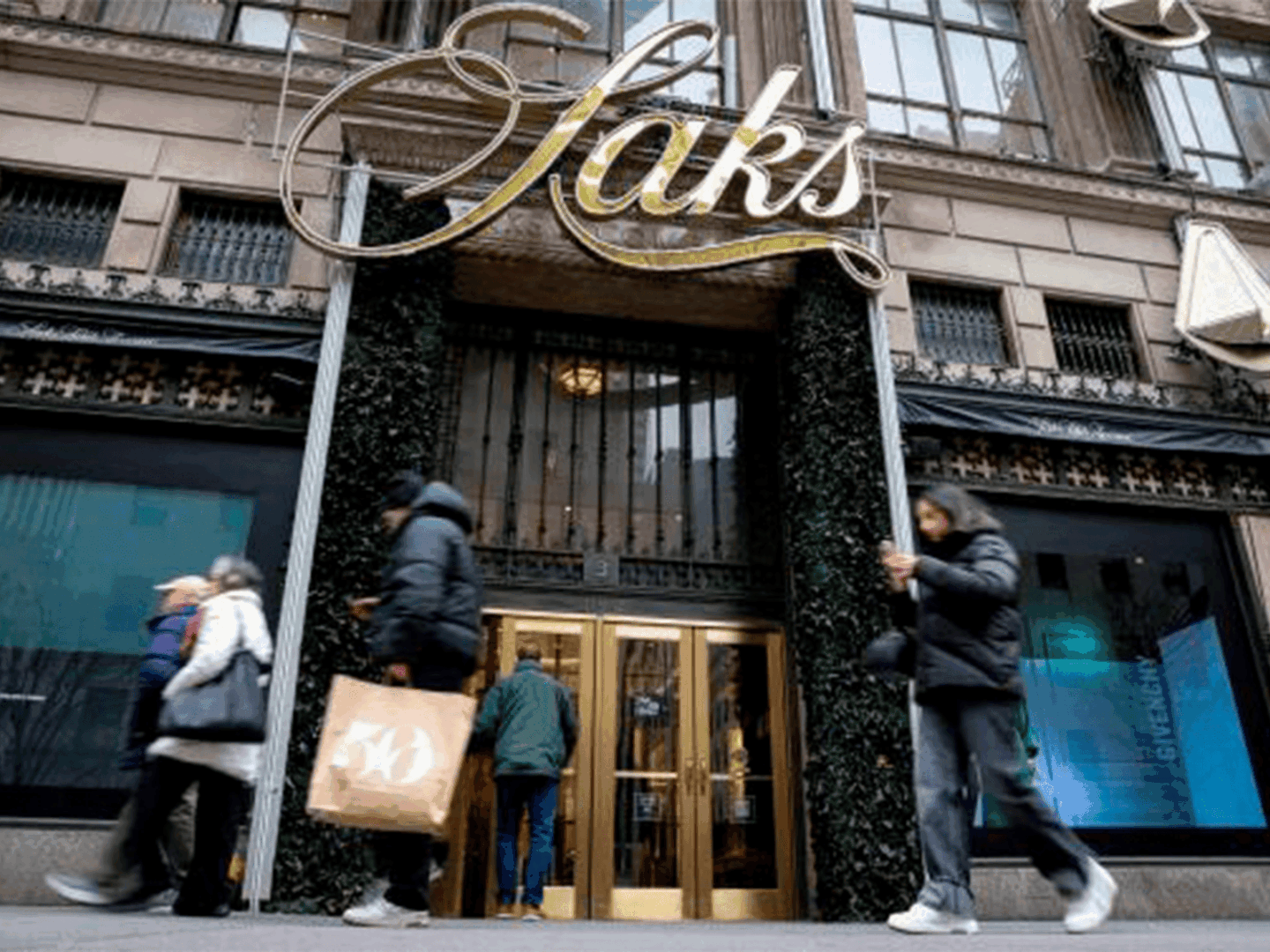
Saks Global’s recent bankruptcy filing has exposed a complex web of debt. In particular, the situation directly affects some of the world’s most influential luxury houses.
According to court documents filed in Texas, the retail group has accumulated more than $700 million in obligations to its 30 largest unsecured creditors. In addition, total estimated liabilities range between $1 billion and $10 billion, highlighting the scale of the financial challenge.
Among the most significant creditors is Chanel, which tops the list with an outstanding debt of $136 million. It is followed by Kering, the group behind Gucci and Balenciaga, with $60 million.
Other affected companies include Capri Holdings ($33.3 million), LVMH ($26 million), Christian Louboutin ($21.5 million) and The Estée Lauder Companies ($16 million).
An uncertain outlook
Against this backdrop, Saks Global — parent company of Saks Fifth Avenue, Neiman Marcus and Bergdorf Goodman — is facing a particularly delicate moment in its relationship with suppliers. In bankruptcy proceedings, unsecured creditors are generally paid last. As a result, there is significant uncertainty surrounding the recovery of outstanding payments.
While major luxury conglomerates have greater capacity to absorb potential losses, the impact is far more severe for independent designers. In fact, many of these brands rely on the group for up to 50% of their revenue, placing their long-term viability at risk.
Operational continuity despite the crisis
Despite the situation, several brands are expected to continue working with the group. Saks Global has secured $1.75 billion in new financing. With this move, the company aims to stabilise its operations and ensure future payments to suppliers.
In this way, Saks seeks to preserve industry confidence and maintain its role as one of the leading luxury distribution channels in the United States.
Sigue toda la información de HIGHXTAR desde Facebook, Twitter o Instagram