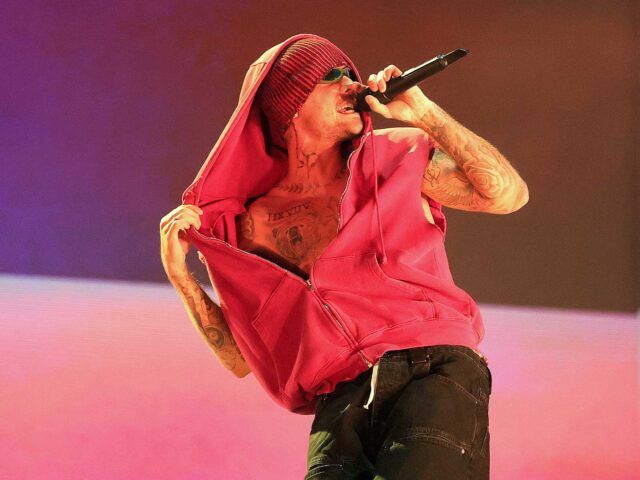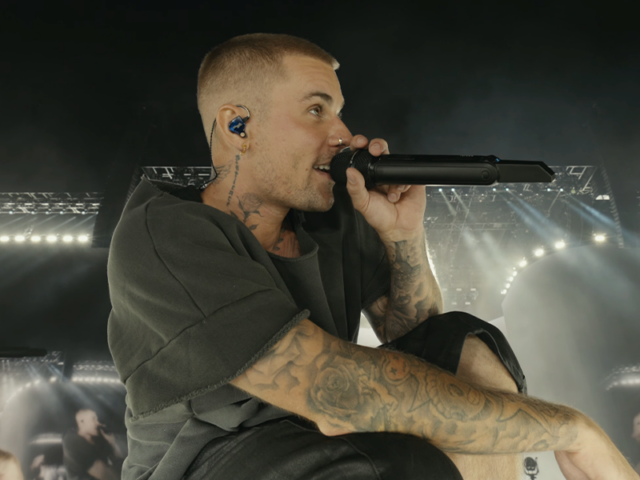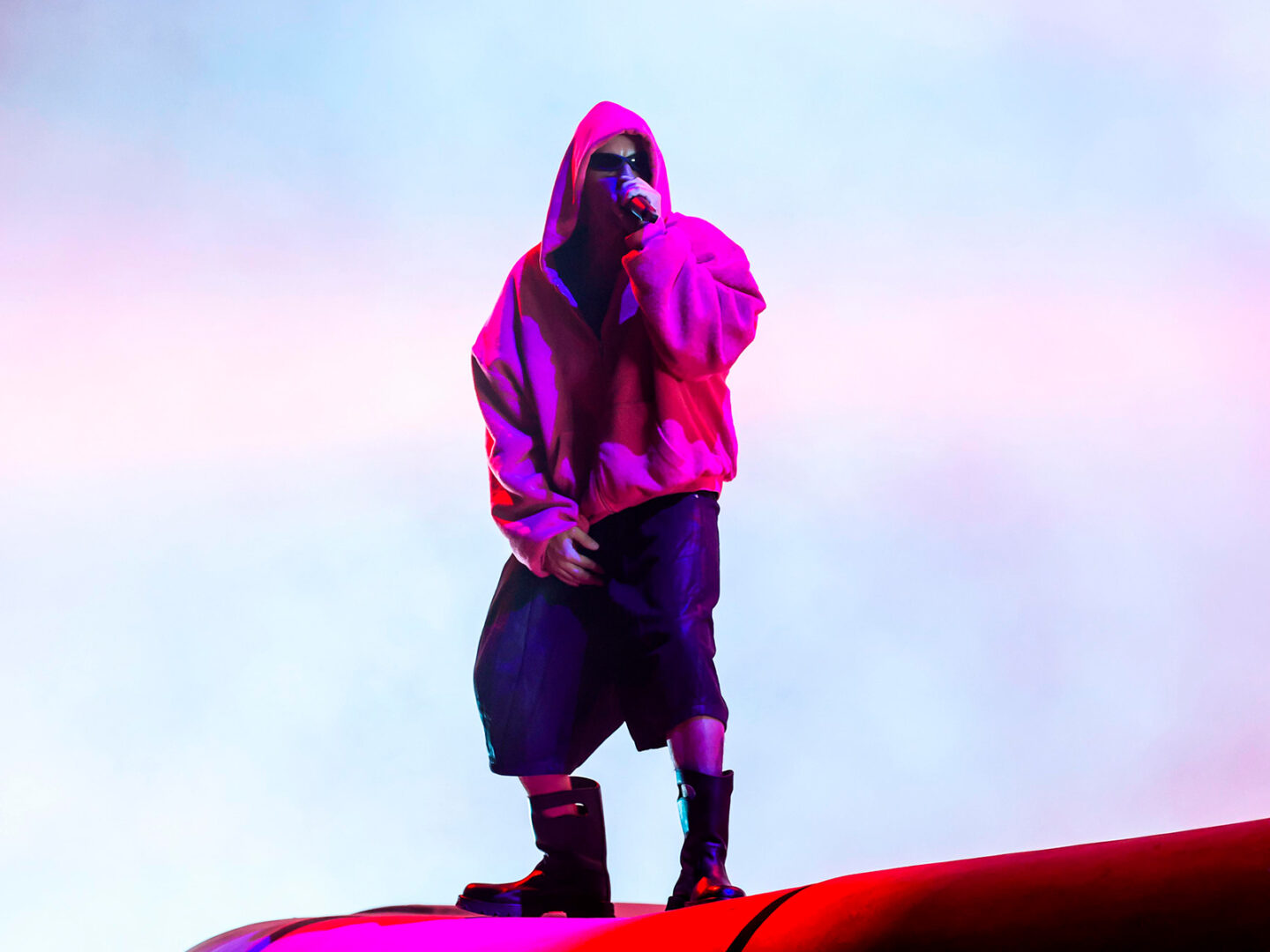
There’s a question that’s been hanging in the air ever since Justin Bieber sat down in front of a laptop at Coachella to sing “Baby” and “Never Say Never” over YouTube videos: Why would someone in his position do something like that?
The immediate reaction has been predictable. There’s been talk of apathy, of disrespect toward the audience, even of a kind of performative sabotage. There are others who have been delighted, though. Bieber wasn’t winging it on a small stage, but raking in around ten million…
But perhaps the key lies in stopping to view the gesture itself as just another one of the singer’s whims, and starting to understand it as a well-founded decision within the context of his situation in the industry.
Bieber didn’t choose YouTube because he lacked resources—that much is clear. He chose YouTube because that’s where it all began. Before the stadiums, before the tours, before the contracts, there was that rudimentary format and the formula for his success: a boy singing in front of a screen. Returning to that format in the context…
In 2023, Bieber sold his catalog to Hipgnosis Songs Capital for over $200 million. He can still perform those songs live—any artist can do so; there’s no real restriction there—but not all the rights that come into play during a concert work the same way.
On one hand, there are copyright royalties—the composition—which are generated every time a song is performed in public and collected through organizations like ASCAP, BMI, or the SGAE- in Spain-. On the other hand, there are the rights to the recording—the master—which come into play when the original version of the song is used. That’s where the equation changes. Bieber can keep singing his old songs without a problem, but much of the economic value associated with those songs no longer flows directly to him. And that’s why he’s decided to distance himself. Not from the public, but from the place those songs occupy within his own business.
What we saw at Coachella was a rather explicit way of drawing that line. The hits are still there, but they’ve lost their centrality. They don’t disappear, but they aren’t celebrated the way they used to be either. They become the reference point, turning him into a living legend, but performing them on YouTube as if he’d only been in the music business for a year isn’t just an aesthetic choice; it’s also a way to diminish their symbolic weight.
In contrast, just look at the case of Taylor Swift, who has chosen to re-record her albums to regain control of her catalog and, with it, its economic and emotional value. Two opposing strategies that reveal something quite simple: music has always been an asset, but now it is understood as such in a much more explicit way. Not only because it generates revenue, but because it is part of an intellectual property system that can be sold, licensed, fragmented, and exploited over time.
A song is not just an emotion or a shared memory; it is a set of rights—publishing, recording, and performance rights—that generate money every time they are played, covered, or used in any context. The value may be diluted among record labels, managers, and intermediary structures, but the reality is that it is measured, packaged, and negotiated like any other financial asset. And each artist decides what to do with it.
What makes Justin Bieber’s gesture controversial isn’t so much the way he does it as what it implies. A concert is the place where the connection between artist and audience is reaffirmed, where “the hits” become a collective celebration that the singer himself enjoys by bringing it to life. Here, however, there is a certain coldness. It’s as if Bieber himself were saying: this has already happened; this is no longer the focus.
Perhaps that is why it is perceived as a lack of commitment. Because it breaks a deeply ingrained expectation: that the artist must be moved—and move us—by his own repertoire. But at a time when we are aware that the industry turns songs into financial assets, that bond also changes.
So perhaps the question isn’t why Justin Bieber sang on YouTube. The question is why we keep expecting him to do so as if nothing had changed.
Sigue toda la información de HIGHXTAR desde Facebook, Twitter o Instagram
You may also like...