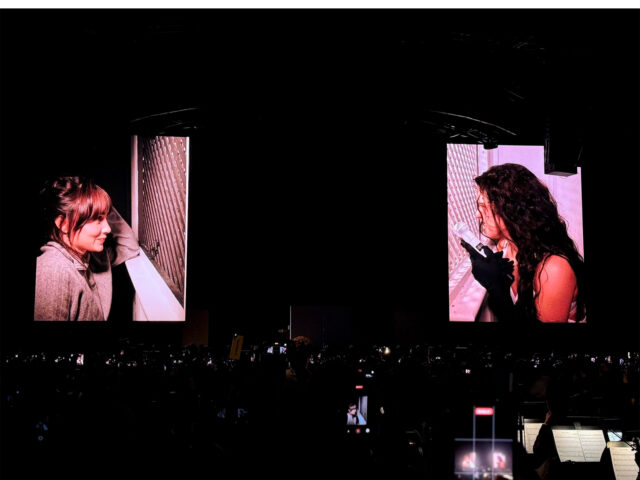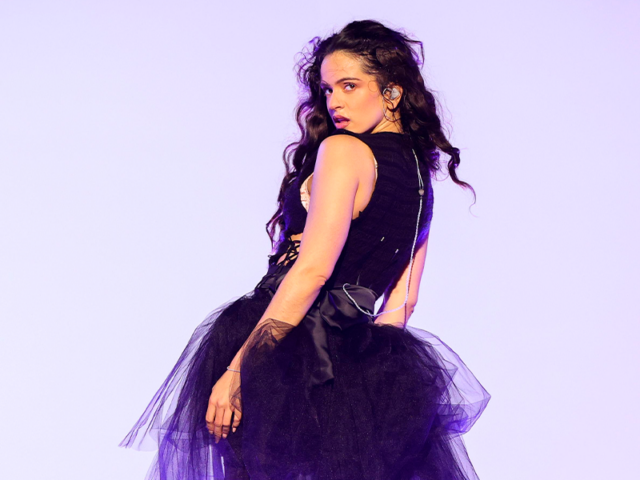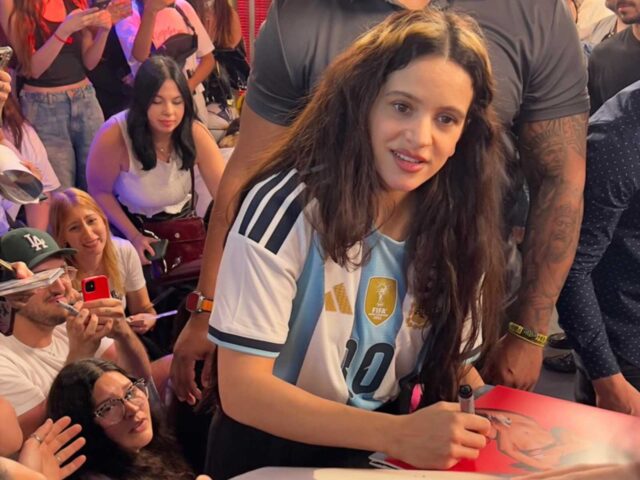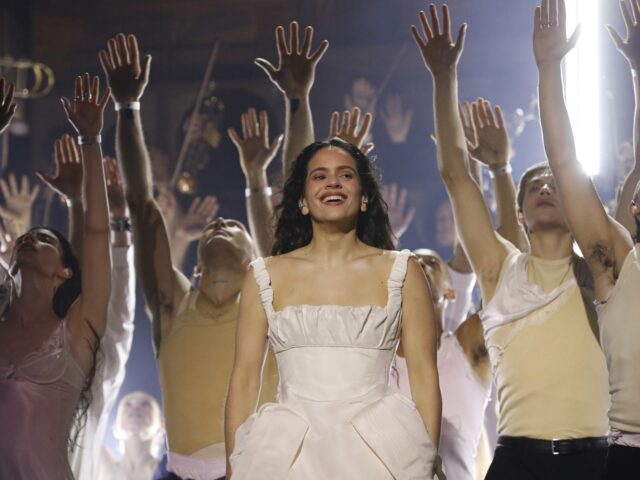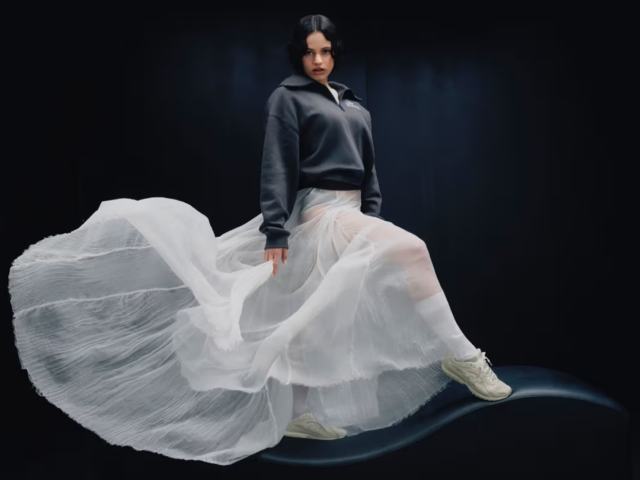
When this interview took place a few months ago, Priscilla Delgado’s role in the third season of Euphoria, alongside Zendaya and Rosalía, was shrouded in mystery. Now, with the second episode just released, her role is revealed as a new obsession for Zendaya’s character—one that promises plenty of drama. Without giving away spoilers, Priscilla recalls how, weeks before our meeting, she called Rosalía to catch up and perhaps meet in Madrid before the show’s promotion. Rosalía replied: “I’m in Callao with some friends—why don’t you come?” Priscilla didn’t make it in the end, but she laughs as she remembers that day when Rosalía unveiled the cover of her latest album, surrounded by fans in Madrid’s Gran Vía.
It’s 9 o’clock in the morning and Priscilla Delgado has arrived at the studio with a smile on her face, giving out hugs. She has very fair skin and large, expressive eyes; her hair is tousled and she has a petite frame with a waspish waist. She bears a certain resemblance to one of her all-time favourite actresses, Natalie Wood, and, like her idol, exudes naturalness and sensuality effortlessly. Born in Puerto Rico in 2002 and raised in Madrid – she is the daughter of a Spanish father and a Puerto Rican mother – she began working as an actress as a child. She was barely eight years old when she made her mark with her Bambi-like gaze as the youngest member of the cast in Los protegidos. Her CV is packed with other series and a good handful of films: Amador, by Fernando León de Aranoa, Las brujas de Zugarramurdi by Álex de la Iglesia, and Julieta by Pedro Almodóvar.
In 2015, she made her first film in English, El mal que hacen los hombres (directed by Ramón Térmens), and it was then that she began working with her current agents in the United States. From that point on, she started attending auditions in English, and at the age of 17 she moved to Los Angeles, where she soon began her drama training at The Lee Strasberg Theatre & Film Institute. She tells us the rest herself.
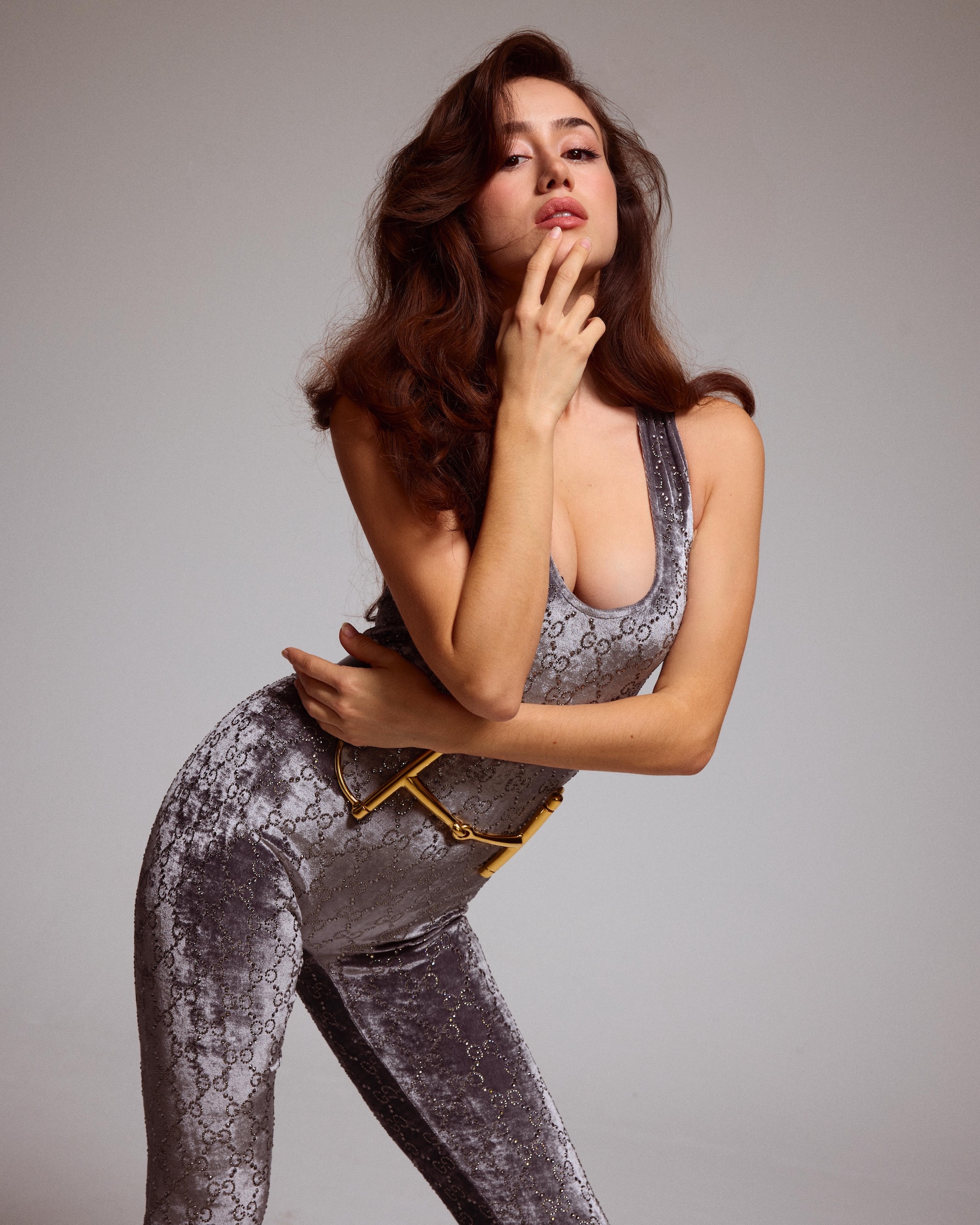
HIGHXTAR (H) – You were just a little girl the first time you stood in front of a camera. Do you remember how it felt?
PRISCILLA (P) – Sure. It was for a advert for Castilla-La Mancha. It was the first casting I ever went to, and it was a dream come true. I was five years old, and it was a lovely, dreamlike scene, set amongst some windmills. For me, stepping onto a film set has always been a place where I can let my creativity run wild – a place where I feel happy.
(H) – You haven’t stopped since then. Is it a calling or sheer determination?
(P) – When I was eight, I was the one asking my parents for it, and even before that. I think that without a calling, I wouldn’t have carried on. That has always been a part of me. Perhaps there’s no rational explanation for such an early calling, but I was always a child with a strong desire to express myself. And my family understood that introducing me to an adult world at such a young age was a very delicate matter.
(H) – How did they manage it?
(P) – Choosing things very carefully, being there for me. It’s a miracle my mum isn’t here today, but she usually comes with me everywhere, including to the Euphoria set. When I came back from filming, she was there every day to hold my hand or give me a kiss on the forehead or a hug to put my mind at ease and to ensure I still had a safe space amidst all this madness.
(H) – And how did you manage to juggle work with school and your studies?
(P) – Well, to be honest. Just the other day I was telling a friend that whilst they were teaching us how a clock works, I was actually making a film in Logroño, so it took me a while to get the hang of it… But I’ve always had a tutor on set. Thank goodness the teachers have always been very understanding, and I’ve had a few who were really determined to make sure I did what I was supposed to do. And I’m fonder of those teachers than of the ones who made things easier for me.
I changed schools several times, but Ramiro de Maeztu was the best of them all, because they didn’t make it easy for you. And the subjects I learnt the most from were those where I didn’t get the 8s or 9s I liked to get, but rather a bare 5. Later, when I moved on to sixth form, I went to Jesús Maestro, a Teresian school that suited me very well. I’d never had an experience in the classroom where the day began with the word of God. It was a time of peace amidst the turmoil of adolescence, in which faith was also very much present.
(H) – Are you a believer?
(P) – Yes. Although, given my profession and my age, my story might seem a bit unusual. But God has always been present in my home: my father is a believer, and so is my mother. And it has always helped me a great deal to give thanks in some way at night, whether by talking to God or to myself.
(H) – It’s still a form of therapy, after all…
(P) – Yes, well, but we mustn’t overlook the importance of that either; it shouldn’t be ignored. I believe in therapy, but I’m a very private person and the idea of baring my soul or going into great detail about my life makes me feel a bit self-conscious. I did it occasionally in Puerto Rico, during the Covid period, which was very difficult for me. I had a really hard time. Even so, I think it’s essential to be willing to ask for help when we need it.
Despite the shock of Covid, I was lucky enough to spend some time with my grandmother, who passed away shortly afterwards, but life gave us the chance to share that moment of global standstill. The whole family decided there was no better option than to spend that time with her.
(H) – Do you have any other grandparents?
(P) – No. My father had me when he was older. But I talk to him a lot, and I really like him, so in a way he represents the grandparents I never got to know, and who would have been a great comfort to me.
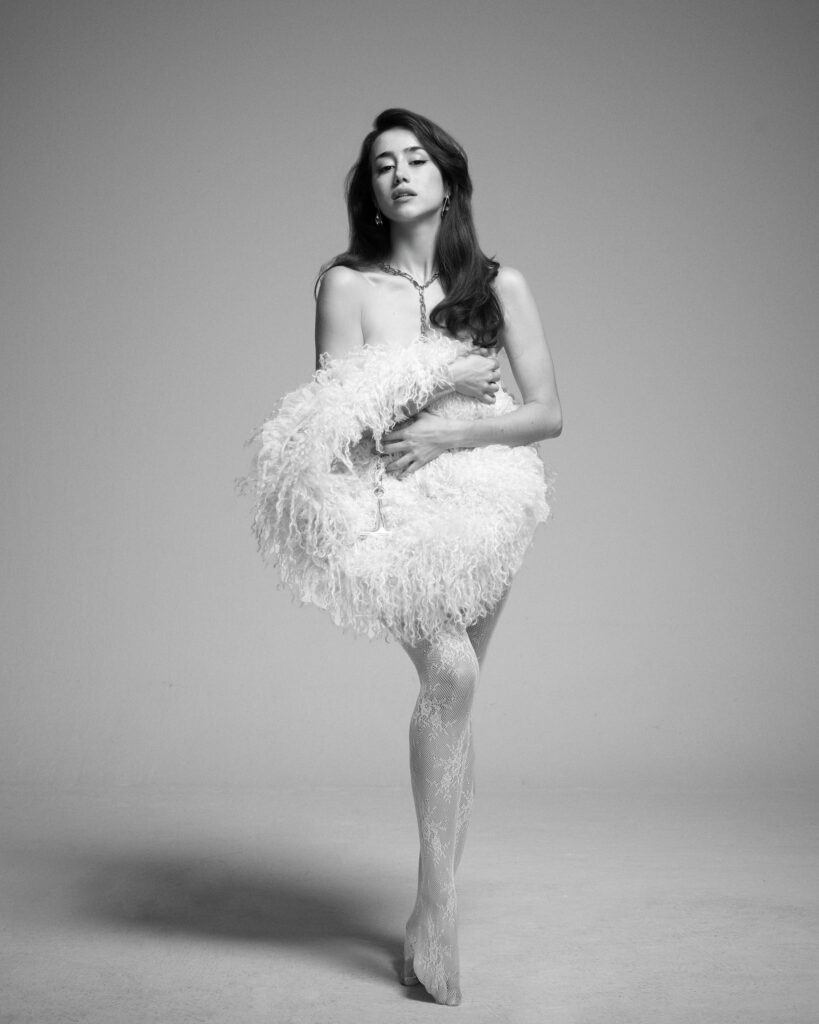
TRAINING AND INFORMATION
Priscilla speaks slowly and calmly, choosing her words carefully and accompanying each one with a subtle wave of her hands. Her expressions and certain turns of phrase reveal a blend of accents, suggesting that this actress has spent time living on both sides of the Atlantic. “I’m from Madrid and Puerto Rico,” she has said on occasion about her Puerto Rican roots, so we also talk about Bad Bunny and his activism beyond music. She points out that, thanks to his latest work, the singer has earned the respect of other generations, “and to say that ‘if you want to see me, come to Puerto Rico’, I think is brave and brilliant”.
Perhaps because of her long career, Priscilla knows both sides of the camera well, where one’s life always seems laid bare. “I hardly ever ask for photos now because I’m too shy, but when I was little I once bumped into Juan Echanove and asked him for a photo. We spoke for a moment and I remember clearly that he emphasised something strongly: ‘Study, study hard and educate yourself,’ she says. Just this afternoon – she reveals – she has tickets to see the actor in his latest play at the Teatro Español.
(H) – Training isn’t just about acting; it’s also about what you read, what you experience…
(P) – One of the things people say nowadays is that information overload actually reduces the amount of information we take in, doesn’t it? And I think that’s one of the problems facing our generation. I’m also concerned about how to distinguish fake news, especially with artificial intelligence. That’s certainly going to be an issue… That’s why I believe an actor has to be constantly learning, whether by being present in the world, being observant, and being willing to learn from others.
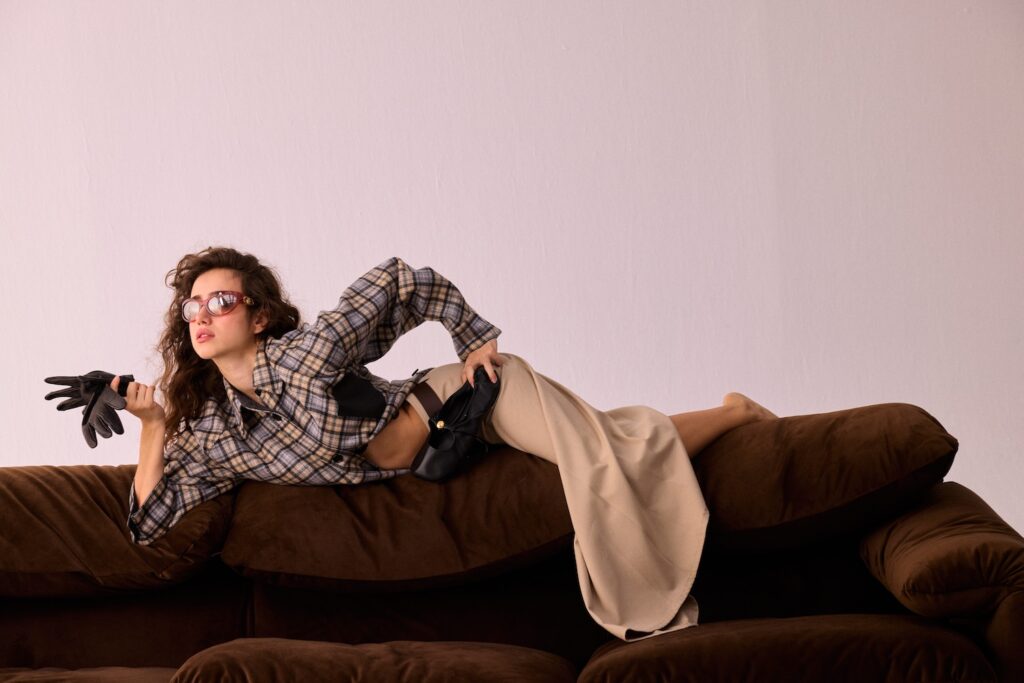
This may well be one of the reasons why it is such a stimulating profession – always different and ever-changing – because it gives you the opportunity to gain a deep and ongoing understanding of little-known aspects and stories.
(H) – How do you notice the generation gap at work?
(P) – I’ve always been the youngest in the group, and sometimes that makes it difficult to earn respect in a world of adults. But then, once they get to know you, it happens naturally. Working with people my own age is also really lovely. There’s something about having just stepped out into the world and that ambition to tell stories and create that’s very hard to resist.
“I’ve always been the youngest in the group, and sometimes that makes it hard to earn respect in a world of adults. But working with people my own age is also really lovely. There’s something about having just stepped out into the world and that ambition to tell stories and create that’s very hard to resist.”
(H) – That must have helped you mature a bit faster than others your age.
(P) – Yes, and above all, being surrounded by information and by people who’ve already been through a lot and have plenty of experience. Imagine being a young girl in the midst of growing up and being able to see, hear and experience first-hand the minds and worlds of people like Pablo Berger, León de Aranoa, Almodóvar, García Sánchez and now Sam Levinson. I’ve been very lucky to be able to learn from and enjoy their insights first-hand.
(H) – One question that always hangs over public figures is whether or not to talk about politics.
(P) – If you’re in the spotlight, I understand that you have a responsibility. But I also believe we should let those who actually have the information speak – those who truly know what they’re talking about. Politics, whilst absolutely necessary and essential for the progress of our society and social causes, is unfortunately sometimes a divisive issue. But I believe there are far more reasons that unite us, and that’s when it’s important to speak out.
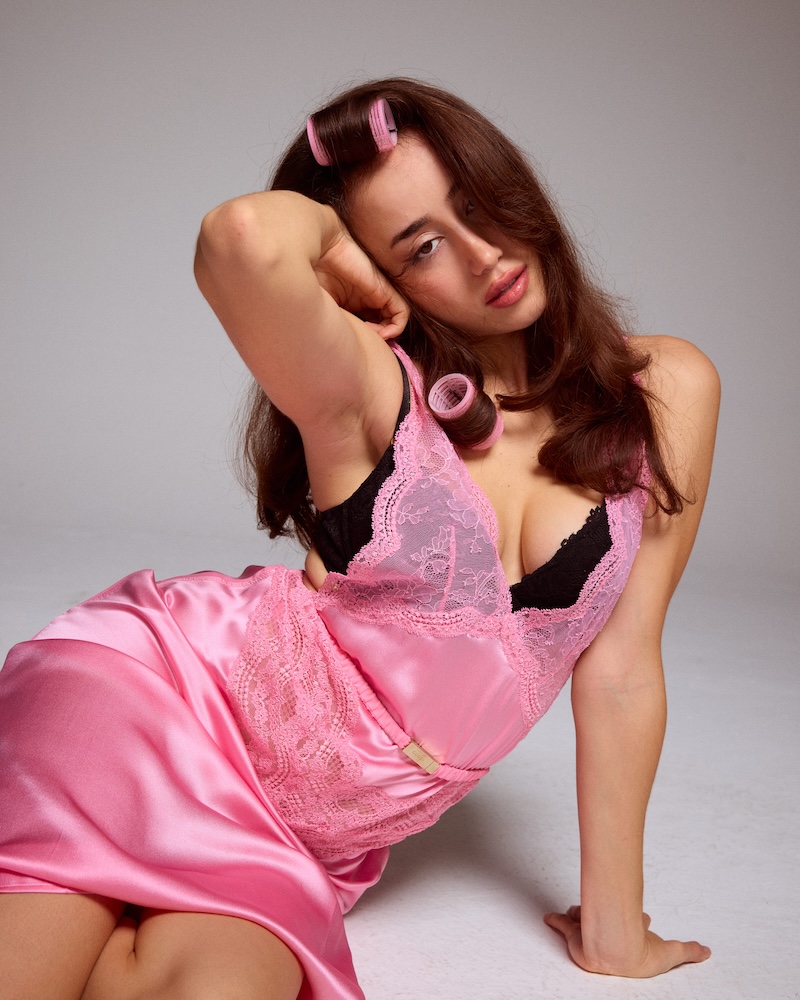
THE PRESENT, FAMILY AND THE FUTURE
At one point in the conversation, Priscilla talks about motherhood; although that isn’t something she’s planning in the immediate future, she points out “all the options available, including those that go beyond the biological clock”. Being a woman, young and attractive is also a label that inevitably affects women more than men: “I understand that appearance, and especially for us women, is something people notice. But for me, it’s essential to realise that this cannot be more important than the quality of the work.”
Beyond work, it’s surprising that she still lives with her family: “I live on my own from time to time. I have my own flat, but I’m in no hurry to live on my own and I usually live with my family. I’m taking it easy. I know there will come a time when they won’t be here anymore, so I’m making the most of it to commit them to memory,” she says. Meanwhile, she makes the most of those moments in everyday life to cook: “It’s something I’ve inherited from my father. I really enjoy creating my own dishes. But what inspires me most is travelling. Getting to know other cultures up close,” she adds.
(H) – Your job isn’t an easy one. Have you ever felt scared?
(P) – I’m not going to lie to you. Every time you’re faced with a new project or find yourself on a new set, it’s always a bit scary. But the fact that not everything is under control isn’t a bad thing. I think that’s what makes the project ambitious.
(H) – And what are your ambitions as an actress?
(P) – As actors, we’re always somewhat at the mercy of the roles that come our way. But I’m still finding my way: I’m very young and my career has been very gradual too, so I approach whatever comes my way with humility, as far as possible; I want to take it step by step. Although now I’m seeing it from a different perspective, given what an international project like the one I’m here to work on entails. And I’m still working out that question a bit.
(H) – Everyone asks you about Zendaya or Rosalía, and although you can’t reveal anything, what was it like working with them?
(P) – When you work with someone you deeply admire, you prefer to keep quiet and listen to what the other person has to say. But it’s been a privilege to watch her work, not just as an actress, but as the show’s producer. She oversees the process.
(H) – Finally, for those who don’t know you yet, how would you describe yourself?
(P) – Priscilla is someone who is still getting to know herself. I don’t know who I am yet… I might have an idea, but I’m still forming my view on what I want to do, where I want to go, what my priorities in life are, what the value of things is, how the world works… and this is a matter that goes beyond the professional sphere.
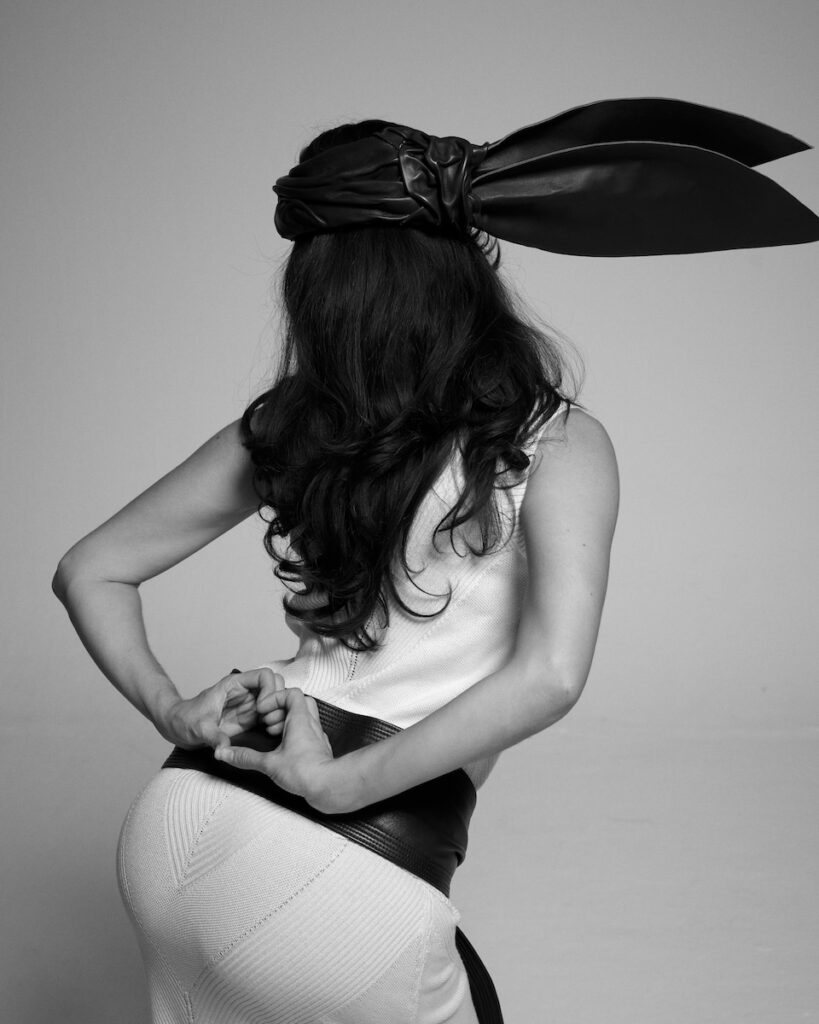
Priscilla Delgado features in this interview in issue 3 of HIGHXTAR, conducted by Paloma Leyra, with photography by Fede Delibes and styling by Alfredo Santamaría.
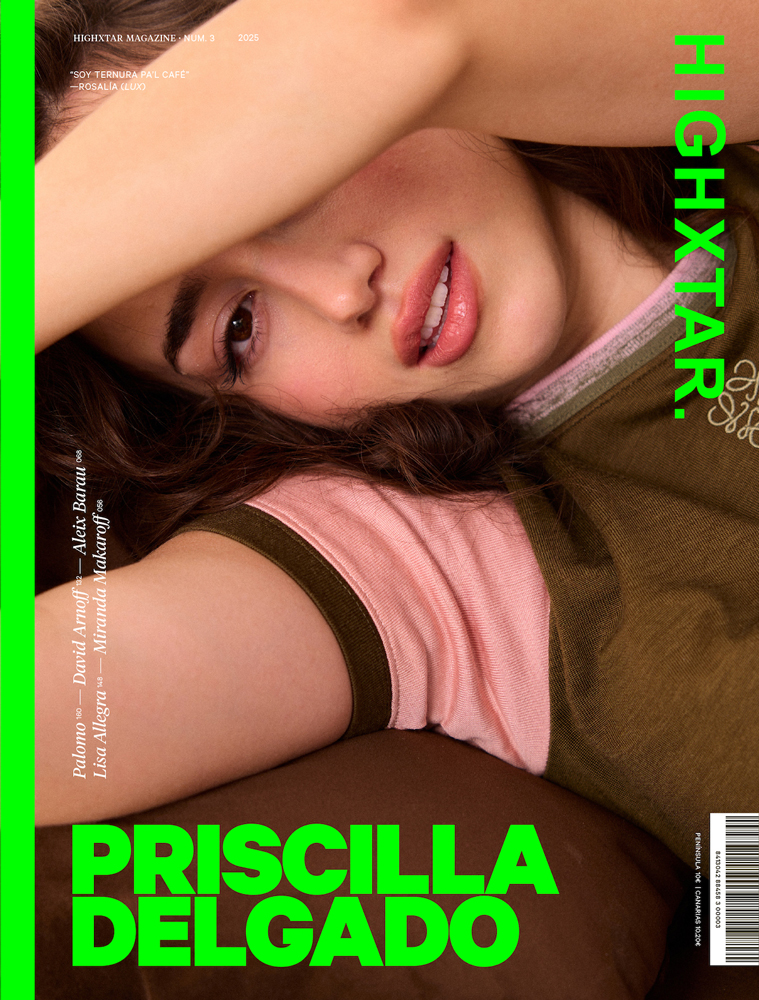
CREDITS
Photography: Fede Delibes (@fededelibes)
Creative direction: Alfredo Santamaría (@gothic__sport)
Make-up and hair Miguel Ángel G. Tragacete (@tragacetemakeup) for Dior Beauty
Photography assistant Bosco Wasthere
Styling assistant Agustina Piriz (@agustinapirizc)
Make-up and hair assistant Iera Sarasketa (@ierasaras.muah)
Production Odyssey (@odysseyfam)
Executive Producer María Rodicio (@maria.rodicio)
Producers Lara Rodicio (@lararodicio), Consuelo Malumbres
Production Assistant Toño Montilla
Set Umbo Space (@umbospace) / Talent Management Mambo Creatives (@mambo.creatives)
Sigue toda la información de HIGHXTAR desde Facebook, Twitter o Instagram
You may also like...