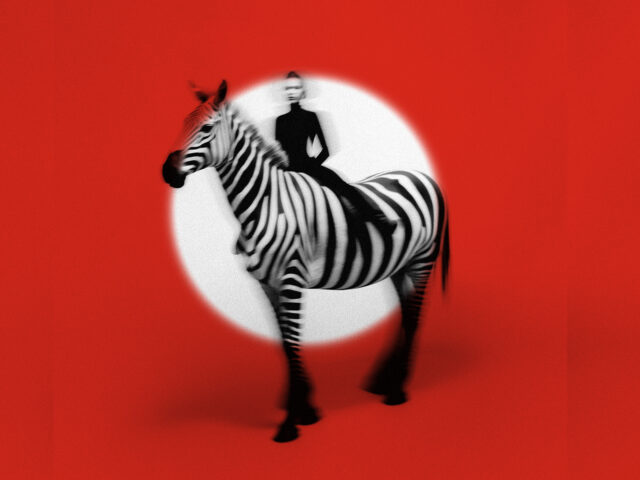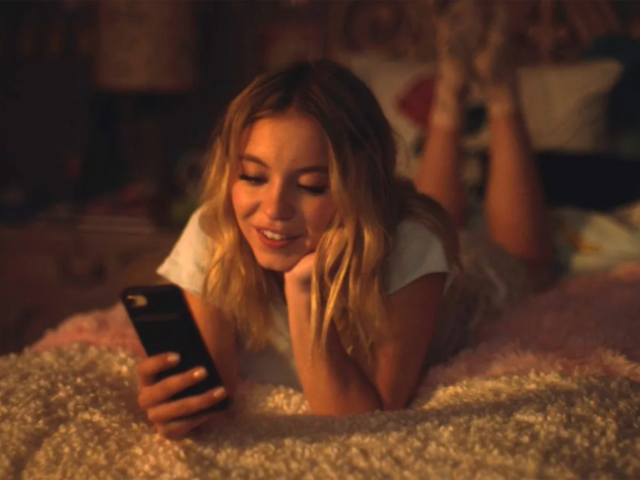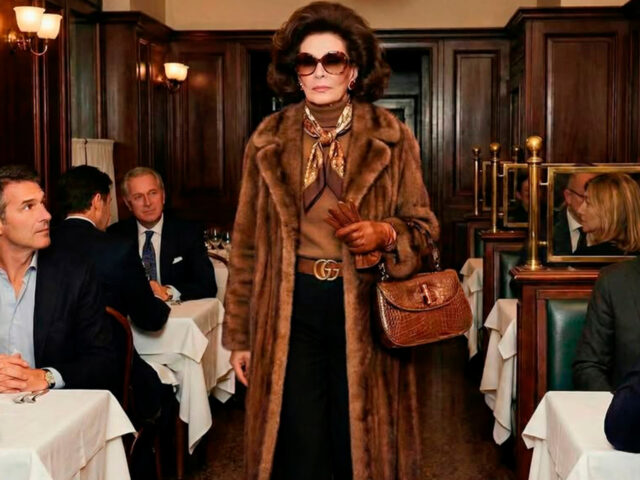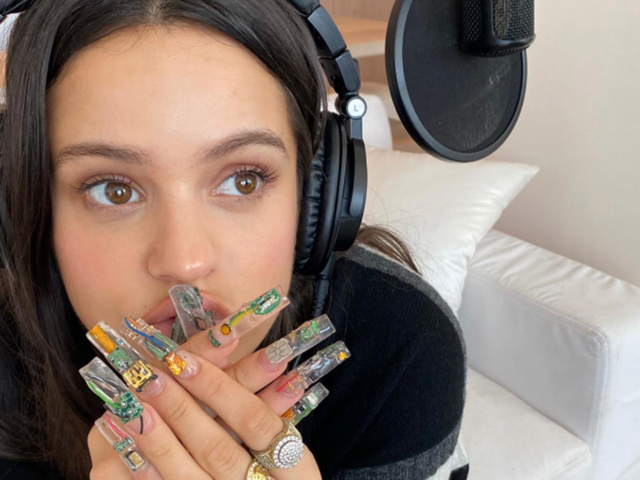
Why has 2016 returned before it’s even become a thing of the past? Why does the rise of generative AI feel like a natural extension of a system that has been rewarding repetition for years? Why are we still so determined to look to the past before looking to the future? Have we stopped creating anything new?
Celebrities digging up their 2016 photos to compare them with their 2026 looks. The Tumblr aesthetic becoming aspirational content for a generation that didn’t even experience it in its first iteration. Fashion, music, and visual culture seem trapped in a constant loop where the familiar circulates more freely than the unknown. Is it simply a lack of creativity, or have we built an ecosystem where repetition has become the dominant language?
Because we’re no longer talking about inspiration, or even nostalgia in the classic sense. We’re talking about a culture that not only recycles images, but is fully aware that it’s doing so and turns that repetition into content. But reducing this phenomenon to a supposed lack of creativity would perhaps be oversimplifying things. Perhaps what’s happening is something more complex: a structural shift in how culture is produced, distributed, and validated.
The theory of cultural cycles has helped explain how trends work. The idea is simple: roughly every twenty years, certain aesthetics return, reinterpreted by a new generation that did not experience them firsthand. Georg Simmel argued as early as the beginning of the 20th century that fashion operates through a constant tension between imitation and differentiation. Later, Herbert Blumer expanded on that idea, arguing that trends are not simply top-down impositions, but processes of collective selection. And in Postmodernism, or the Cultural Logic of Late Capitalism, Fredric Jameson analyzed how postmodern culture developed an increasingly dependent relationship with stylistic recycling and nostalgia as forms of cultural production.
Within that logic lay a fundamental condition: distance. Repetition worked because there was sufficient time to reinterpret the past, reshape it, and redefine its meaning under new social, economic, or technological conditions. Today, that distance has practically vanished. The internet has turned the archive into a simultaneous space. Everything is available all the time. The past is no longer behind us: it coexists with the present on the same visual plane. And that means we live in a constant loop of temporal spaces. Without critical distance, the reference ceases to evolve and becomes mere reproduction.
Recommendation systems operate on the same principles. Platforms like TikTok, Instagram, and YouTube do not operate based on cultural criteria. They operate based on statistical criteria. Their goal is not to promote the new, but to maximize specific metrics: watch time, engagement, completion rate, and retention. In other words, they prioritize what is most likely to work based on past behavior. The algorithm doesn’t reward novelty. It rewards probability. And what’s probable almost always resembles something that has worked before.
If an aesthetic, a format, or a type of content resembles patterns that have previously generated engagement, it is more likely to be distributed—these are the trends. Something radically new, on the other hand, starts at a structural disadvantage: it lacks prior data to back it up. This does not mean that new ideas do not exist. It means that the system is designed to amplify the recognizable more easily. And that has obvious cultural consequences: aesthetic homogenization, repetition of formulas, a constant sense of déjà vu.
If the system rewards the recognizable, then the return of certain aesthetics is an almost inevitable consequence. Take the current 2016 revival, for example. Not because there is a particularly strong nostalgia for that era—the time gap is too short to support that idea—but because 2016 represents one of the last moments when digital culture seemed to be moving forward with a clear direction and recognizable codes.
Between 2015 and 2017, trends took hold that continue to shape the present. In terms of the fashion industry, this was the definitive integration of streetwear into luxury, the logic of the “drop” as a consumption strategy, the aestheticization of merchandise, the construction of visual identities deeply tied to the internet, and so on. But there was one important difference: the ecosystem had not yet been completely colonized by the algorithmic optimization that today dominates almost everything. There were clearer cultural hierarchies, dominant narratives, and a sense of progress.
Today, however, we live alongside thousands of simultaneous micro-aesthetics, multiple overlapping references, and a constant fragmentation where nothing seems to take hold long enough to become dominant. The return to 2016 itself seems less like an exercise in nostalgia than a search for certainty in a world that, unfortunately, has less and less of it.
Our relationship with the archive has instead become a foundational resource, a raw material from which everything else emerges. Much of contemporary creation does not stem from absolute invention, but rather from the selection, mixing, and recontextualization of pre-existing elements. The creator ceases to be solely an author and becomes an editor, a curator, a director of meaning. Is this a crisis of originality? Has anything ever truly been created from scratch?
Even the most radical proposals are usually built on previous references, cultural shifts, or conscious appropriations. What has changed is the criteria by which we understand creativity. The new is no longer always measured by its ability to invent an unprecedented form, but by how it reorganizes what already exists.
Let’s look at generative AI. At its core, it doesn’t introduce a completely new logic. Rather, it formalizes and accelerates a dynamic that has long defined much of contemporary cultural production. Because generative models don’t create from scratch. They learn from massive datasets, detect patterns, identify relationships, and produce new combinations based on what already exists.
The concern that AI raises regarding creativity may not have so much to do with the idea that machines can create, but rather with revealing the extent to which our own culture was already operating under a surprisingly similar logic. If contemporary culture was already built on remixing, AI simply industrializes that process. The difference lies in scale and speed. But then, have we stopped creating anything new, or have we simply changed the way we do it—or is it that what’s new enough can’t be appreciated because it doesn’t reach enough people to make a splash?
Because ideas still exist, and innovation hasn’t disappeared entirely. What seems to have changed is the system that decides what circulates, what gets amplified, and what ultimately defines the present, as “the purely new” finds it increasingly difficult to establish itself against what is already recognizable. Because when everything is designed to reward the familiar, risk ceases to be profitable.
And perhaps that is the real problem. Not whether human beings have stopped creating something new, but whether we have built a culture that is increasingly less able to recognize what truly is.
Sigue toda la información de HIGHXTAR desde Facebook, Twitter o Instagram
You may also like...