Has Soccer Become an Elite Sport?
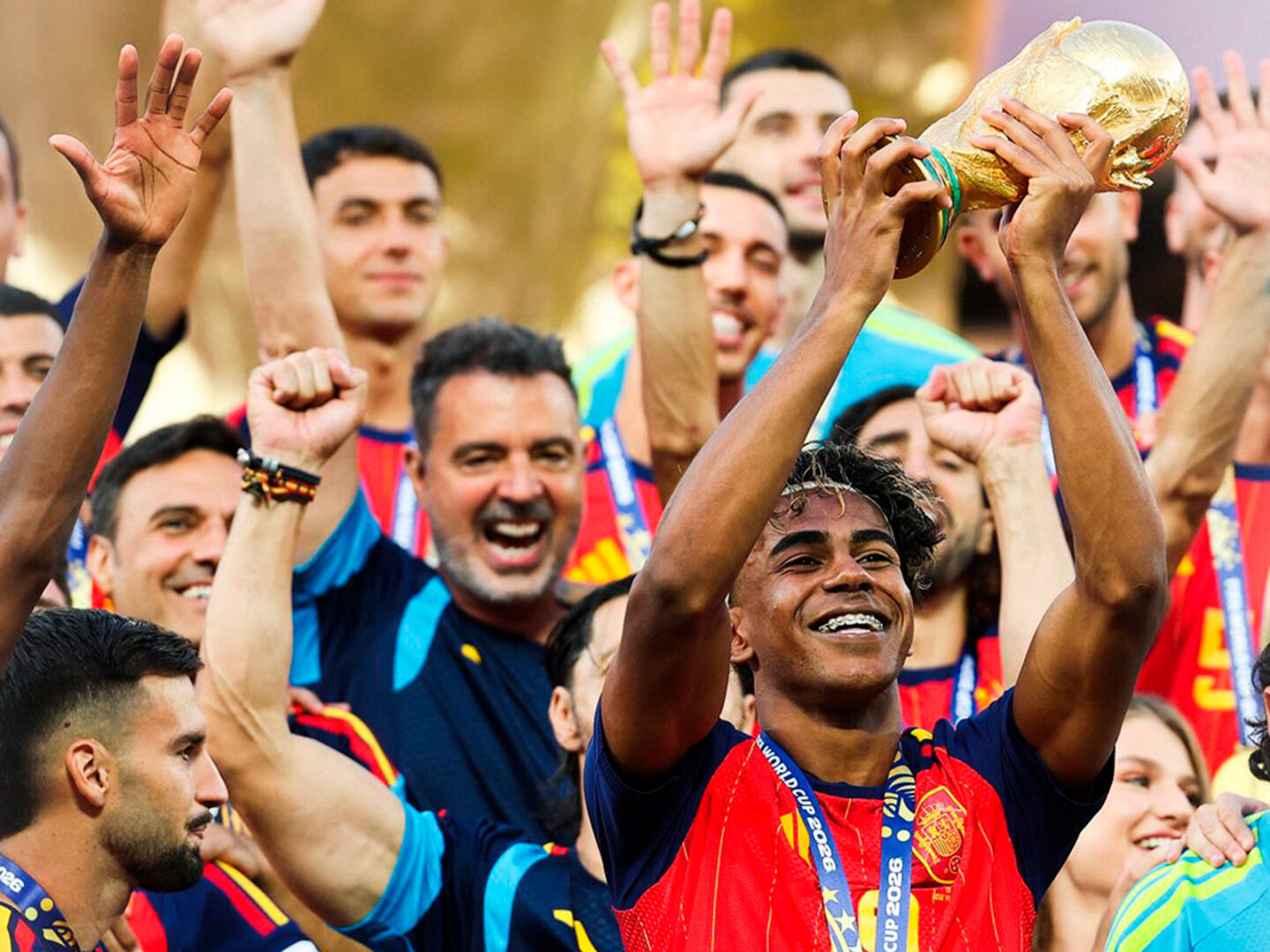
We’re still recovering from the World Cup, although some people are probably still paying off their credit cards. The last official tickets for the final between Spain and Argentina were sold for between €7,000 and €50,000. On the resale market, prices climbed as high as €90,000. Special flights from Buenos Aires sold out despite costing around $5,000 in economy and $10,000 in business class. And while thousands of Argentine fans arrived in New York after making enormous financial sacrifices, Paco Amoroso was posting Instagram Stories from one of the stadium’s hospitality suites, casually eating caviar.
This isn’t a criticism of Paco Amoroso. In fact, that image may be the most accurate representation of this World Cup: fans willing to spend years’ worth of savings just to secure a seat, while, only a few metres away, brand guests experienced the final through premium hospitality. Same match, different product.
The 2026 World Cup wasn’t just the biggest tournament in history, featuring 48 national teams and 104 matches. It also revealed just how far the price of passion can be stretched. FIFA introduced a dynamic pricing system that allowed ticket prices to fluctuate according to demand. During the group stage, official tickets reached up to $575, compared with $220 for the highest-priced equivalent ticket at Qatar 2022. On resale platforms, some exceeded $1,000. For the final, the average resale price on SeatGeek surpassed $11,000.
And it worked. By the time the tournament had reached its 44th match, attendance had already surpassed 2.85 million spectators, with stadiums operating at 99.6% capacity. FIFA projected more than $3 billion in ticket revenue. High prices didn’t discourage fans. If anything, they revealed just how much people were willing to pay.
That may be the most significant takeaway from this World Cup: not that a ticket could cost €50,000, but that someone was willing to buy it.
Unlike many other sports, football has always been defined by its accessibility. You didn’t need to belong to a private club, invest in expensive equipment or have access to exclusive facilities. A ball and two objects on the ground were enough to create a goal. The sport itself remains just as democratic as ever. What is becoming increasingly exclusive is the possibility of being there when something like a World Cup happens. Football itself hasn’t become a luxury. Experiencing it from the inside has.
This isn’t simply about more expensive tickets. It’s about a different business model. This was the first World Cup in which FIFA adopted dynamic pricing, the same system airlines, hotels and artists such as Taylor Swift and Oasis have been using for years. The higher the demand, the higher the price. Passion stops being just the engine of the spectacle and becomes an economic variable.
The logic is simple: if millions of people are willing to do almost anything to experience a World Cup, why should every ticket cost the same? FIFA’s answer was decisive. During the group stage alone, stadium occupancy reached almost 99.6%, attracting more than 2.8 million spectators before the knockout rounds had even begun. FIFA ultimately confirmed what it had probably suspected all along: the next level of growth wasn’t about building larger stadiums, but about monetising the emotions of those determined to get inside.
Because nobody needs a €50,000 ticket to watch a football match. What that money buys isn’t a better view of the pitch. It buys access. It buys exclusivity. It buys the opportunity to enter a space that the overwhelming majority of people will never experience.
And perhaps that is the real transformation of football as an event. Luxury is no longer about owning certain things. It’s about accessing experiences that others can’t. Just as restaurants now have waiting lists that stretch for years, concerts offer VIP packages and festivals divide audiences into multiple access tiers, the World Cup has adopted the same logic. The match itself hasn’t changed. What changes is the distance from which each person gets to experience it.
Moreover, access is no longer bought solely with money. It can also be earned through attention. During this World Cup, many of the images we saw from the VIP boxes did not feature fans who had paid for a ticket, but rather guests of sponsors. Musicians, actors, athletes, and, above all, content creators occupied many of those spaces because their presence is part of the brands’ communication strategy.
It’s not a free perk. It’s a brand investment.
Brands no longer pay just to display their logo at the stadium. They pay to have “the World Cup experience” circulate on Instagram, TikTok, or YouTube through people capable of turning a seat into a story and an invitation into millions of social media impressions. Hospitality is no longer just a public relations space; it has become a content set. Because, yes, for a month, the World Cup has likely been the biggest showcase on the planet.
The final itself confirmed this shift toward total entertainment with the addition of a Super Bowl-style halftime show featuring Shakira, Justin Bieber and BTS. It’s no longer enough to simply host the most important game on the planet; organizers must also build a musical, media, and cultural event around it that can capture the world’s attention. Soccer remains at the center, but it’s increasingly sharing the spotlight with the logic of show business.·””
And when content becomes the currency, its protagonists change as well. The tournament no longer just creates heroes on the field; it also propels new figures off the field. It’s no coincidence that profiles like that of Inés García, Lamine Yamal’s partner, reached 1.5 million followers in less than 24 hours, or that Claudia Rodríguez, Marc Cucurella’s wife, went from about 160,000 to more than 500,000 followers during the competition. In just a few weeks, the World Cup expanded its reach and turned them into the focus of digital conversation. Because the World Cup no longer just crowns a national team—it also creates new digital role models.
This paradigm shift ultimately affects even the fan experience. In the past, the best seat went to whoever could afford it. Today, in many cases, it also goes to whoever can return that favor in the form of reach, engagement, and visibility. Access is no longer measured solely in euros; it’s also measured in followers.
Sigue toda la información de HIGHXTAR desde Facebook, Twitter o Instagram