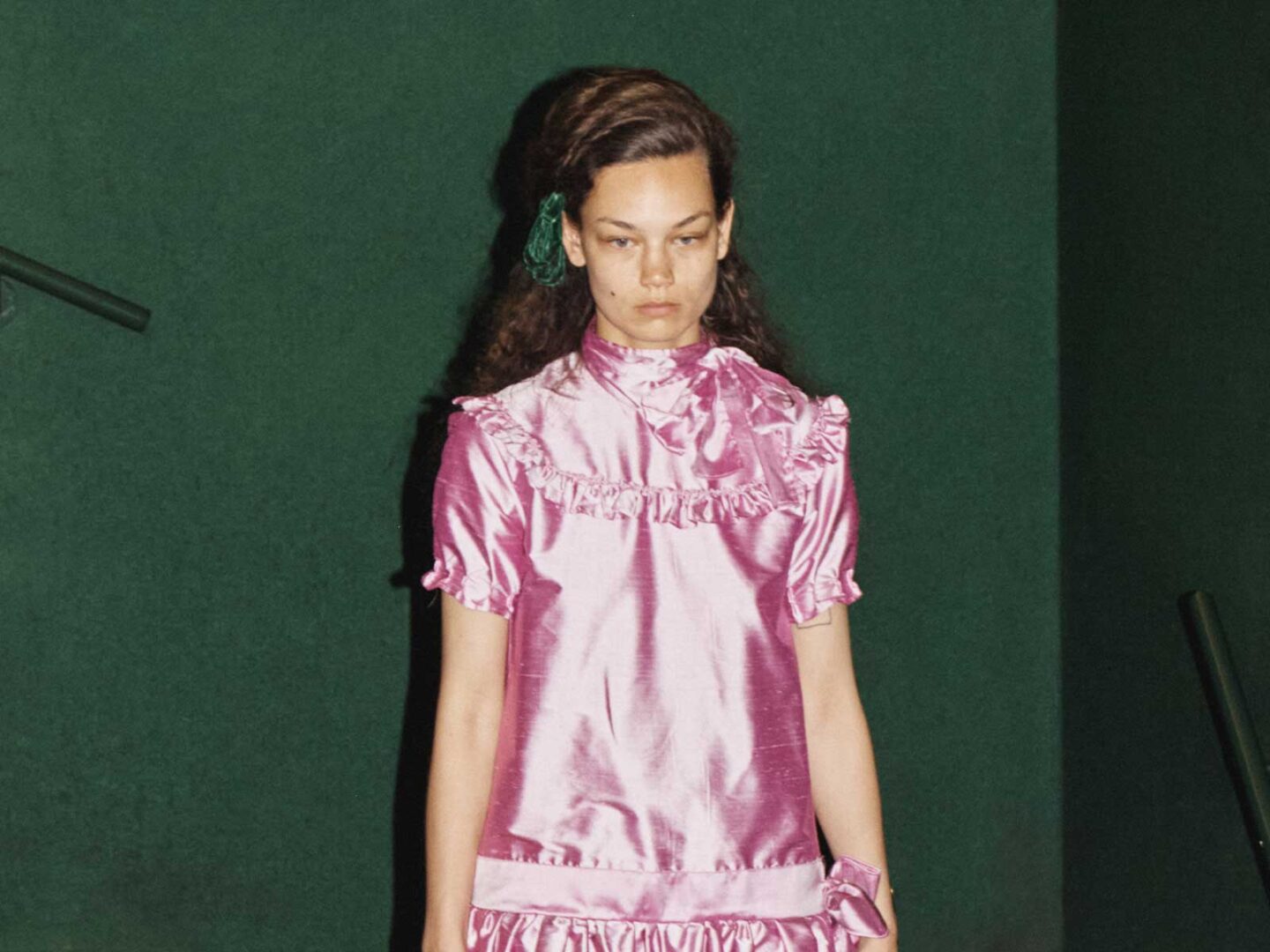
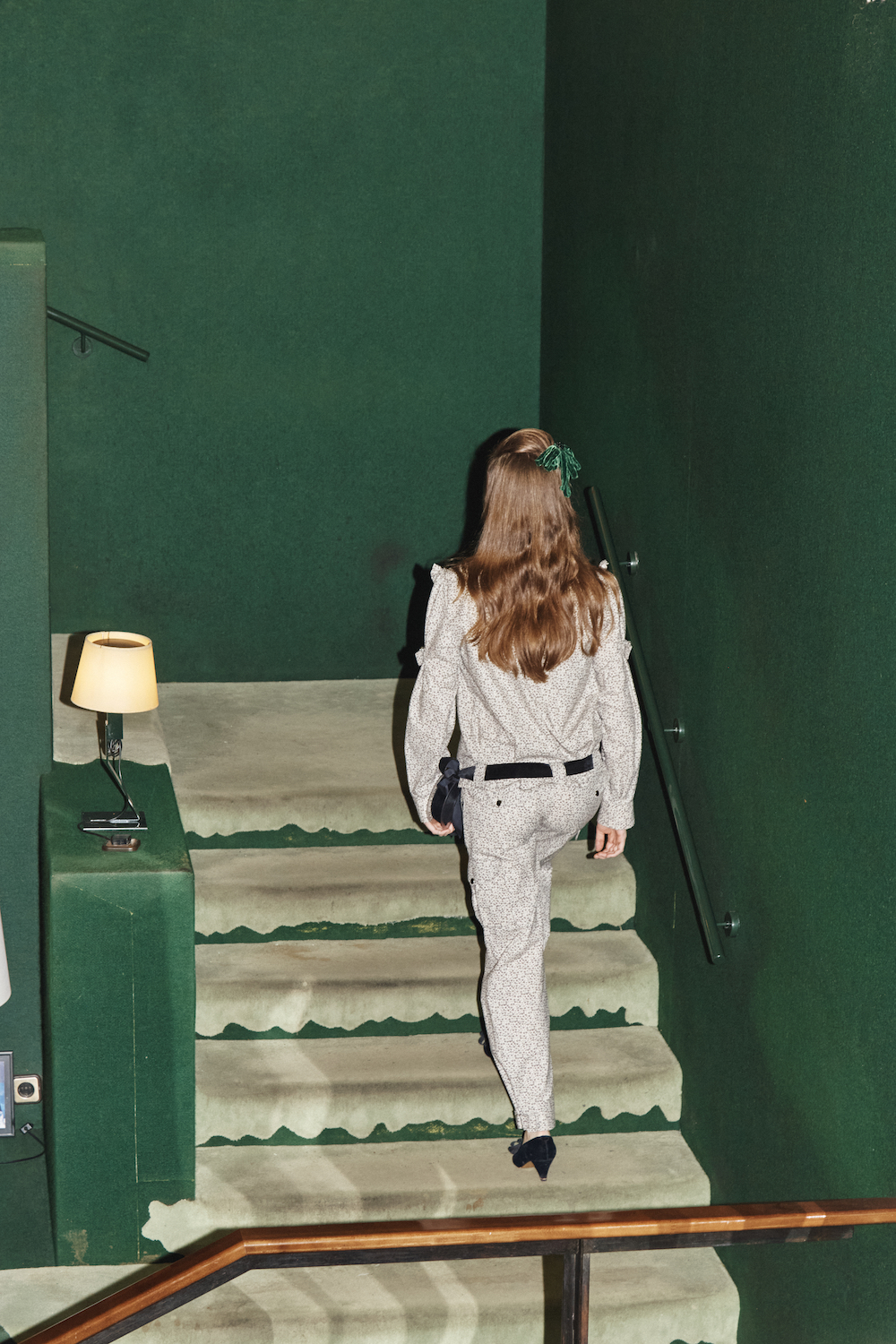
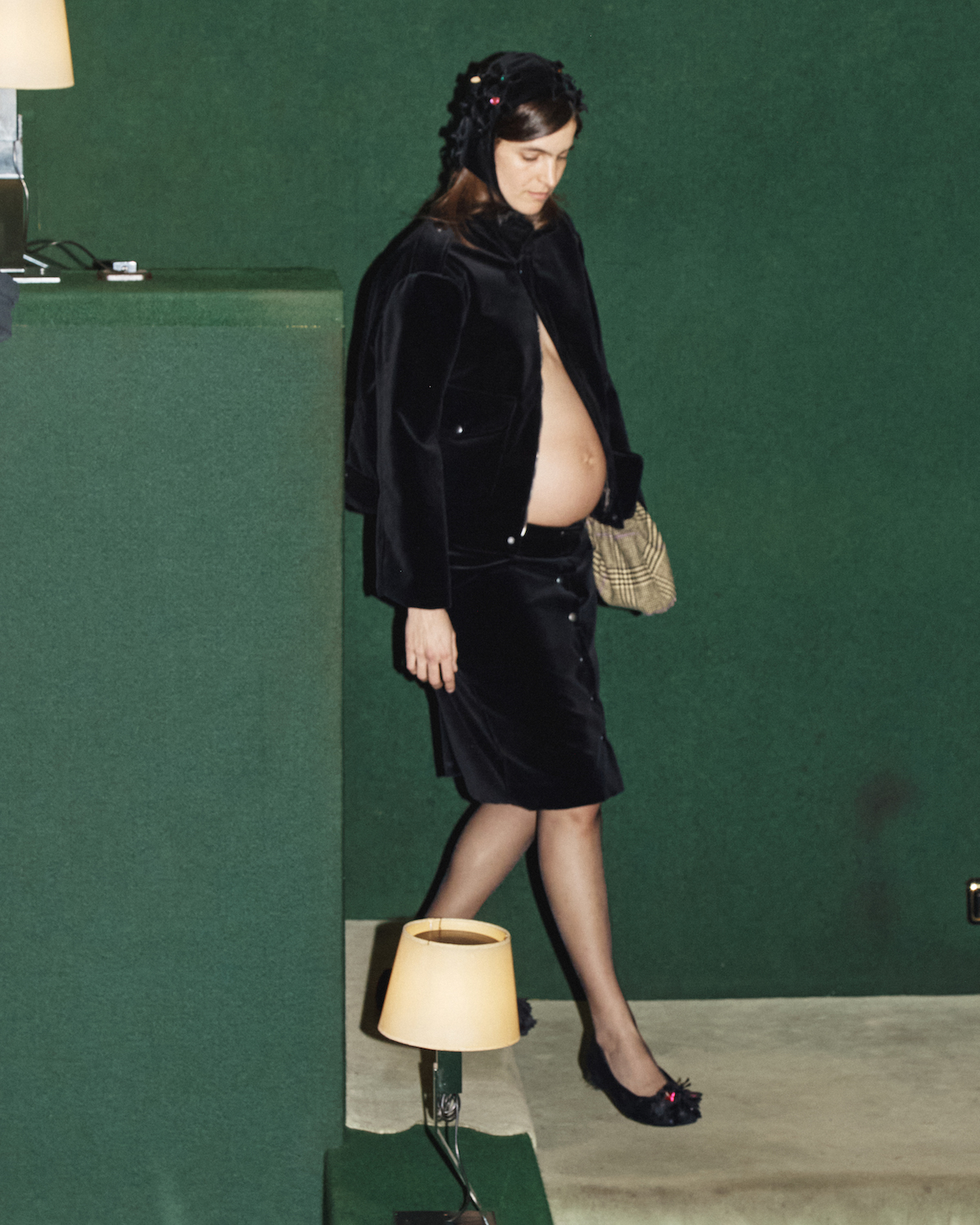
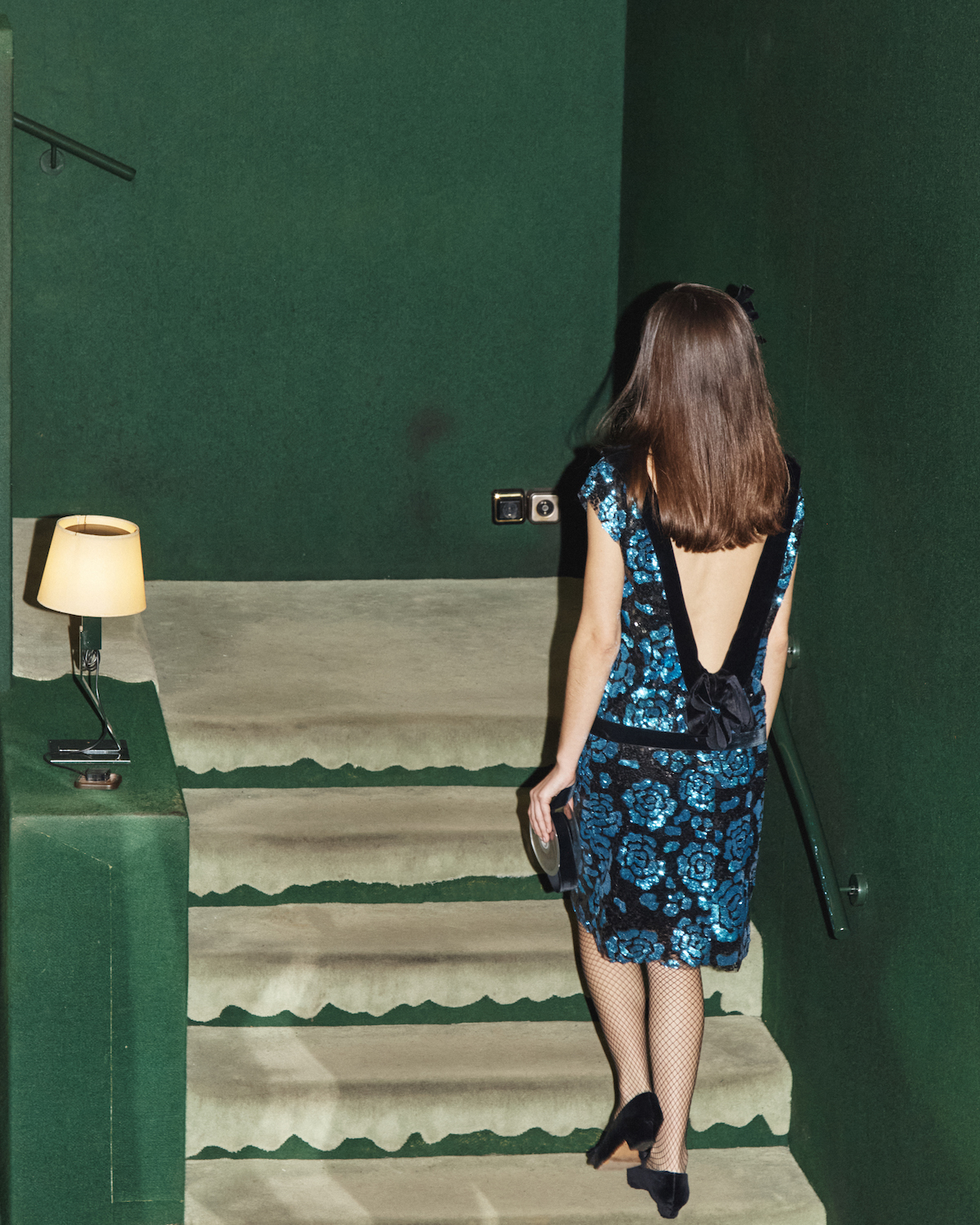
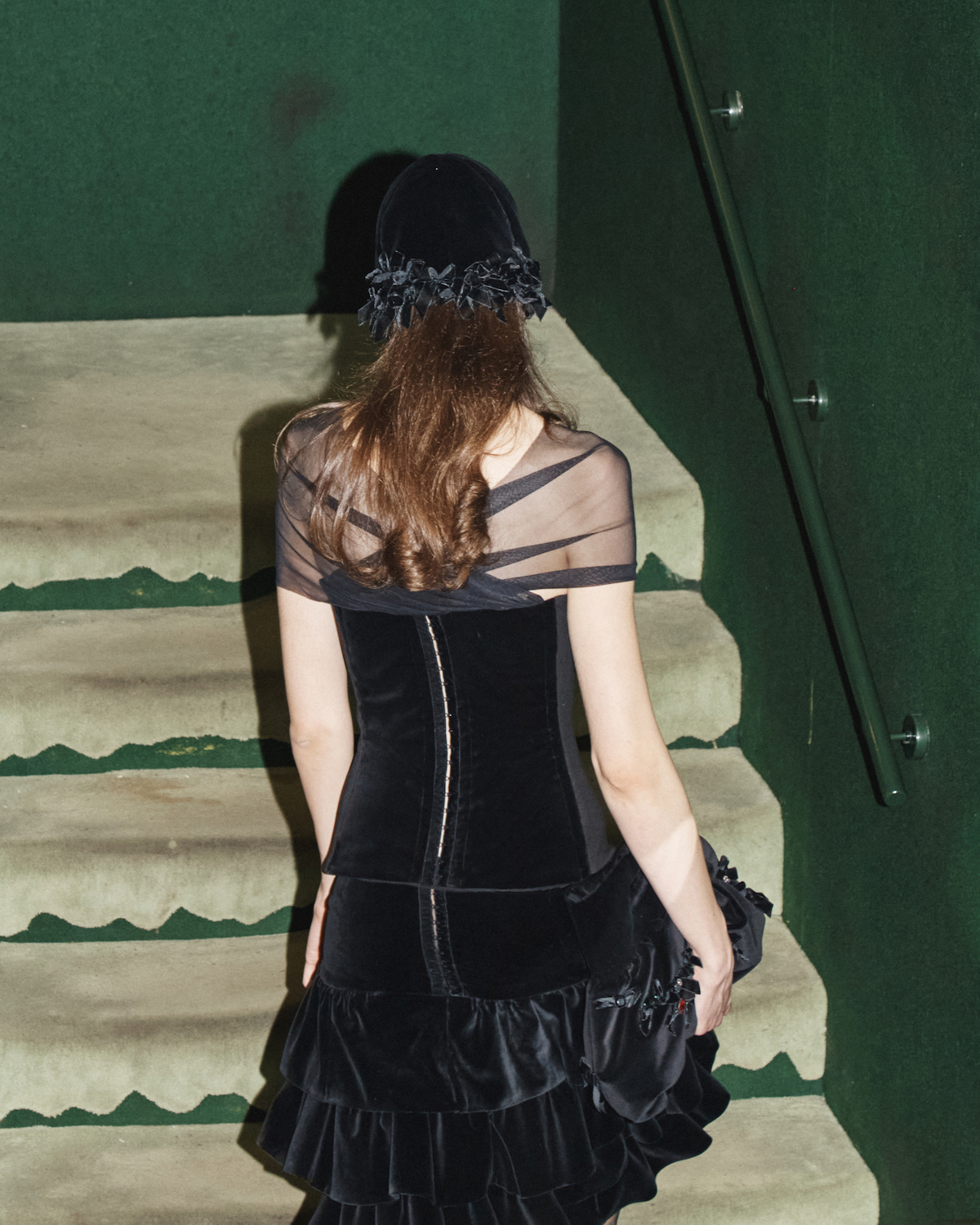
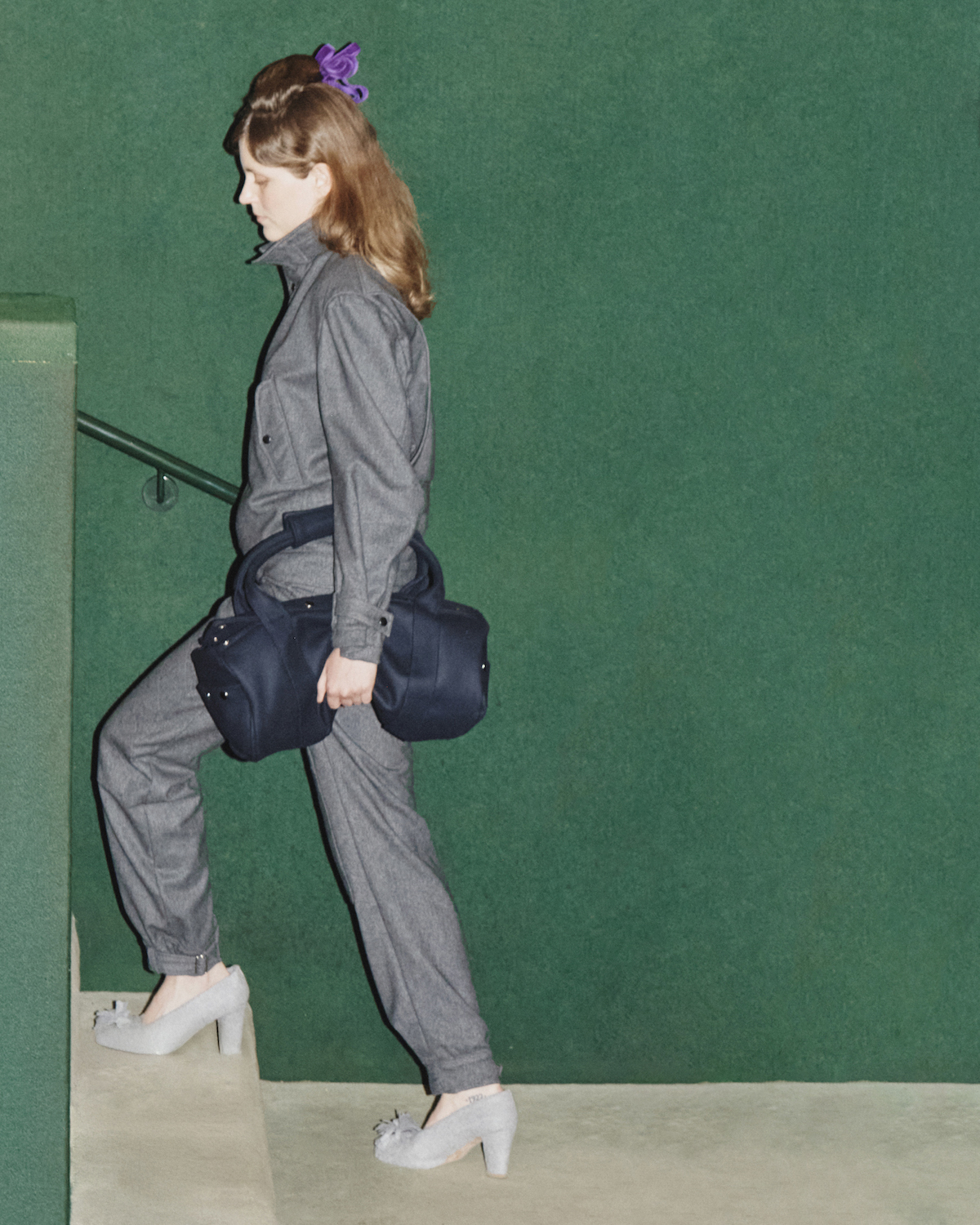
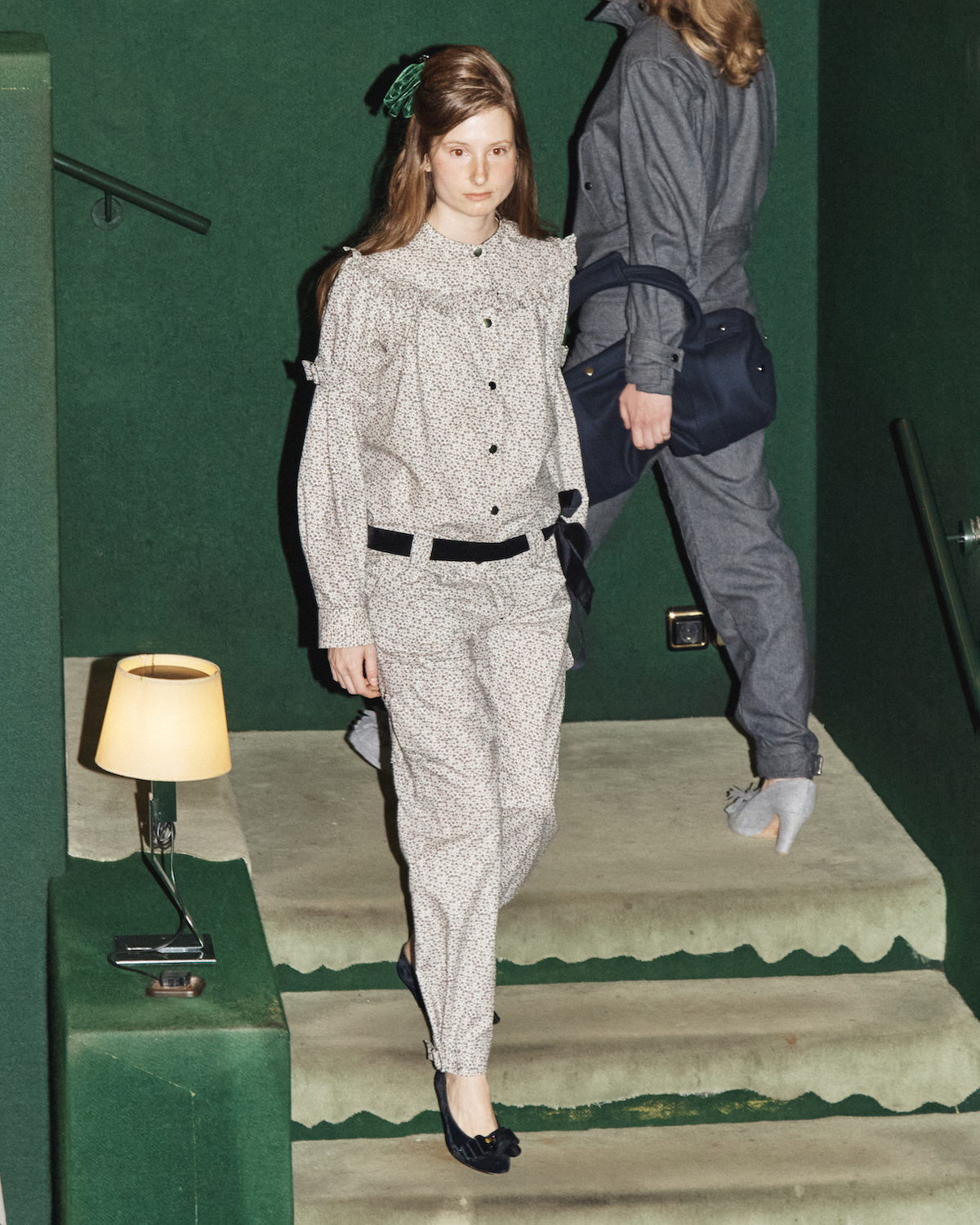
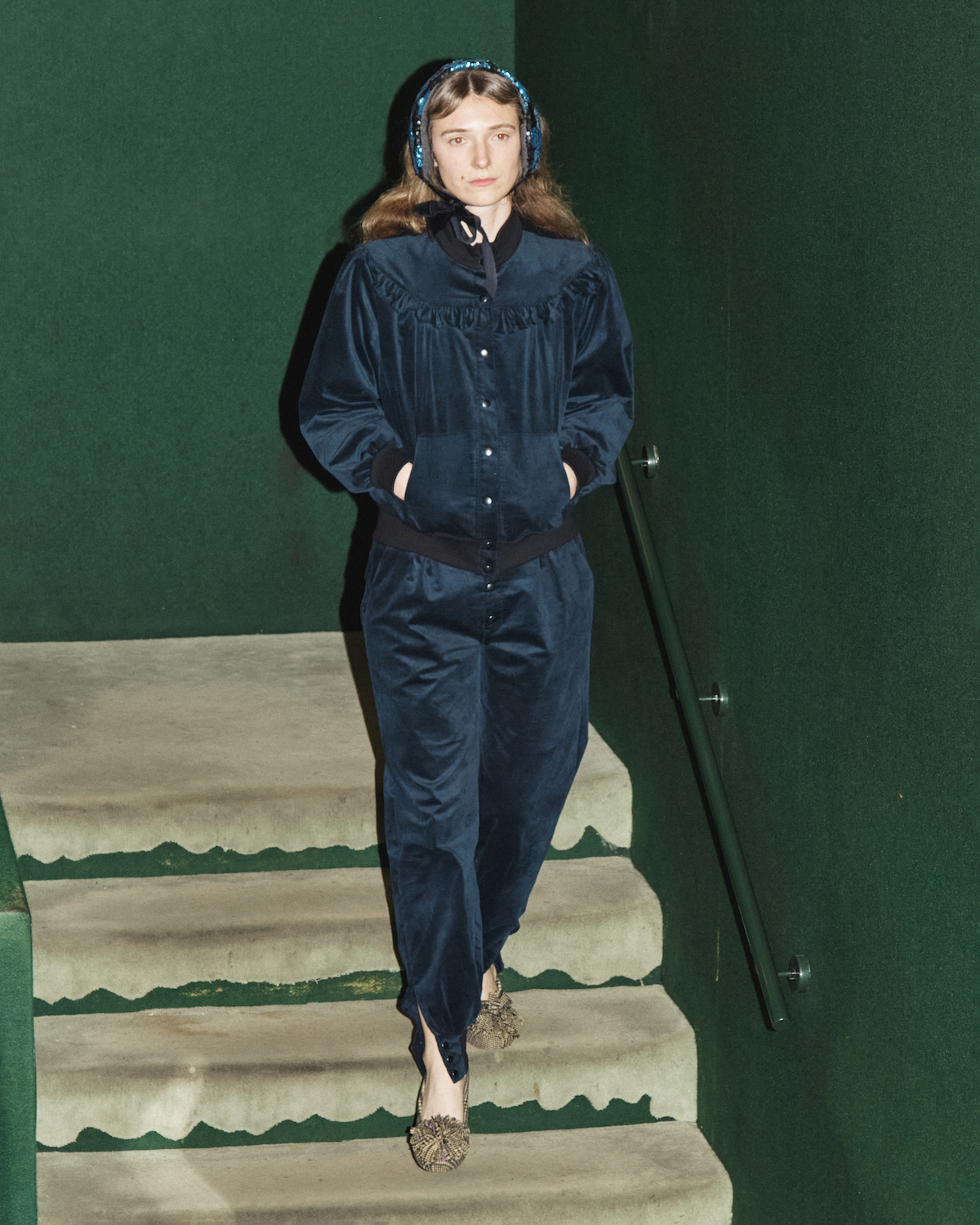
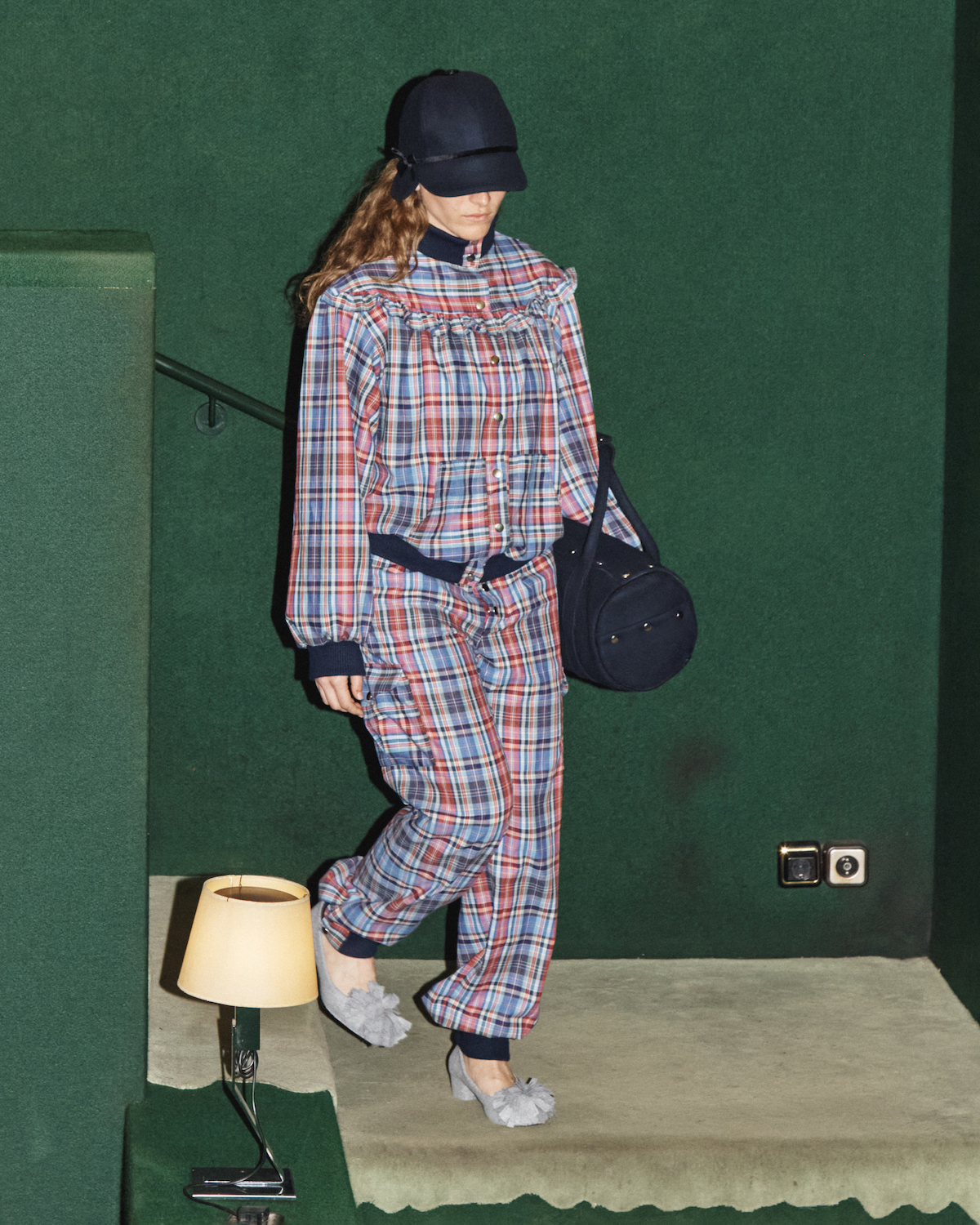
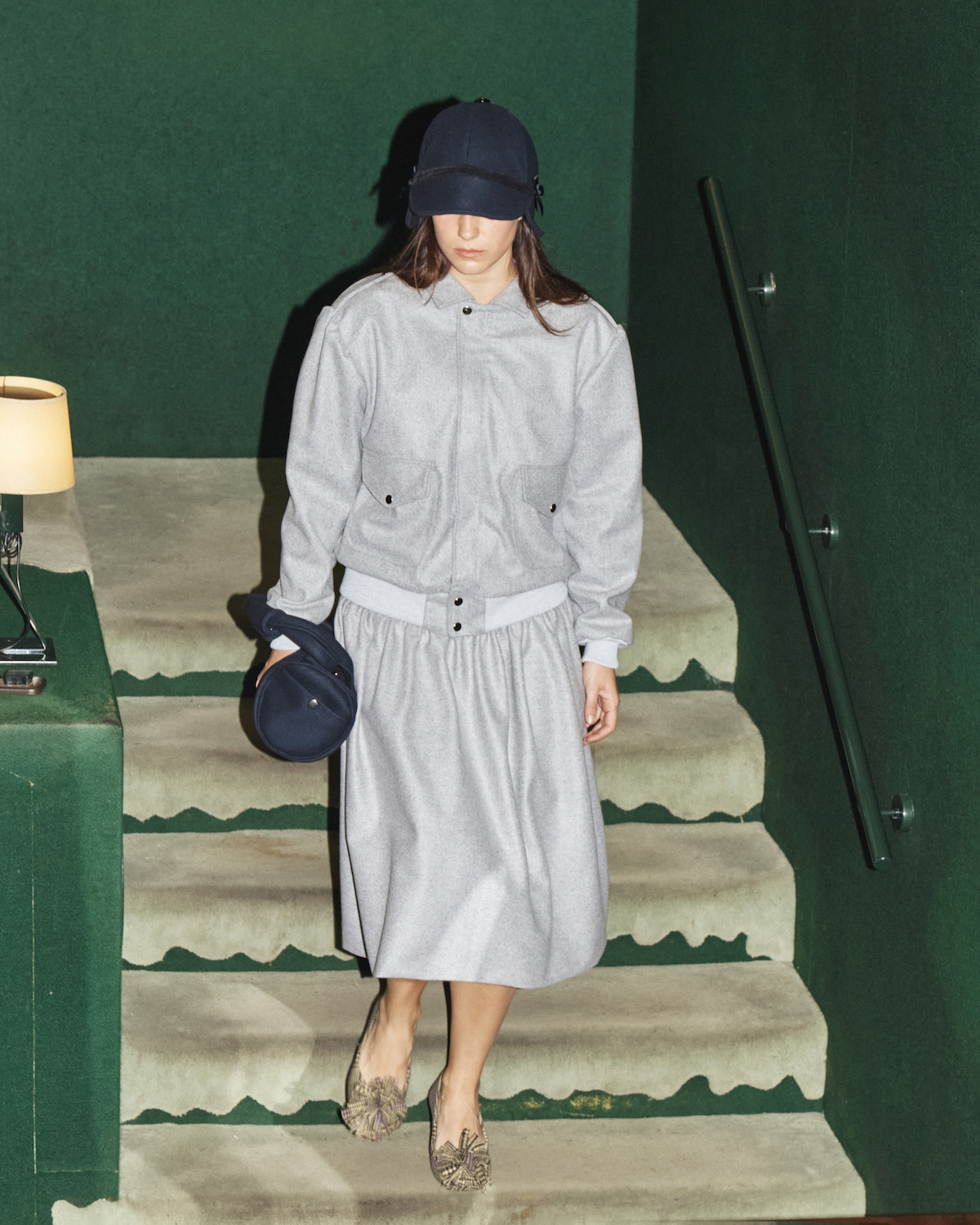
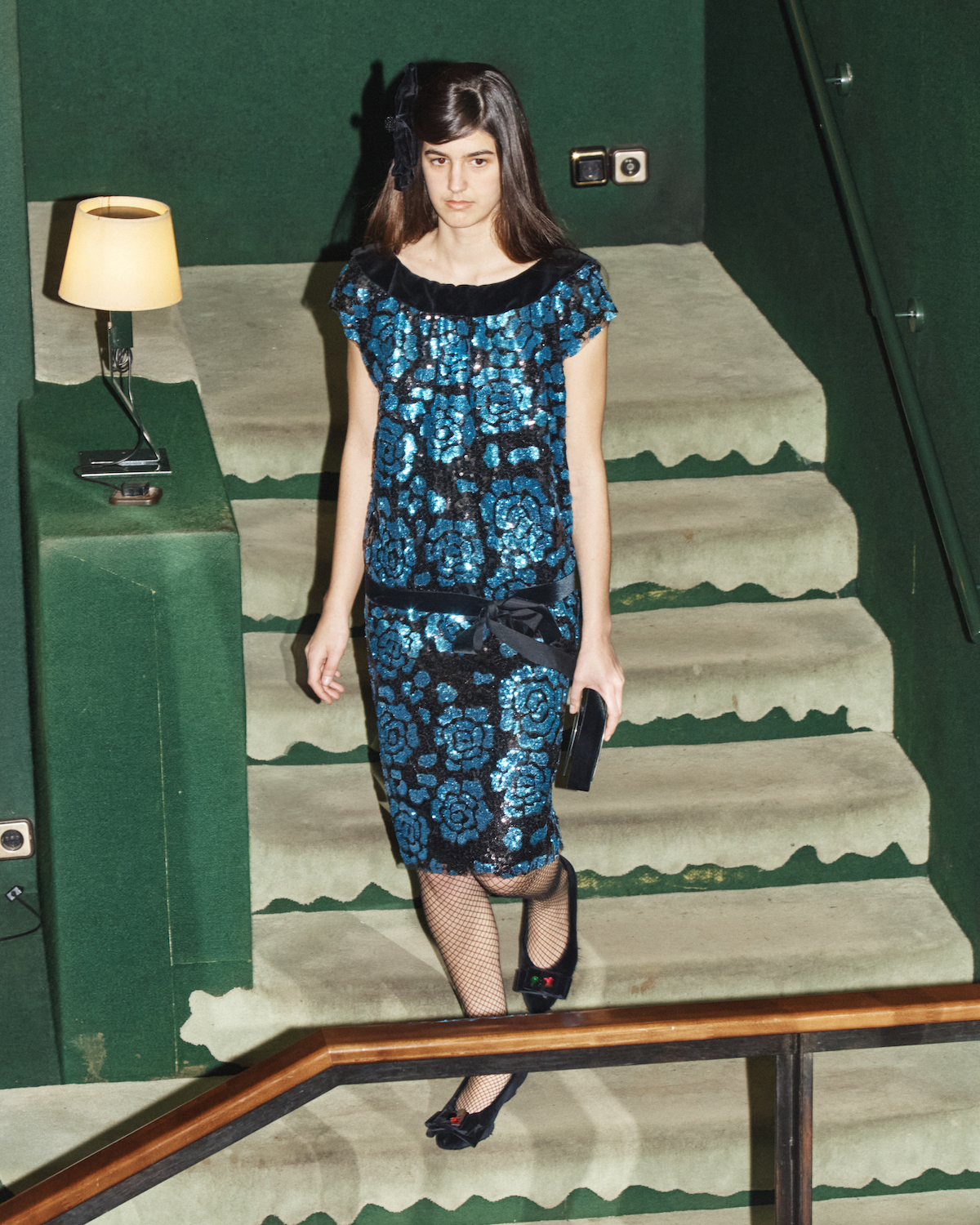
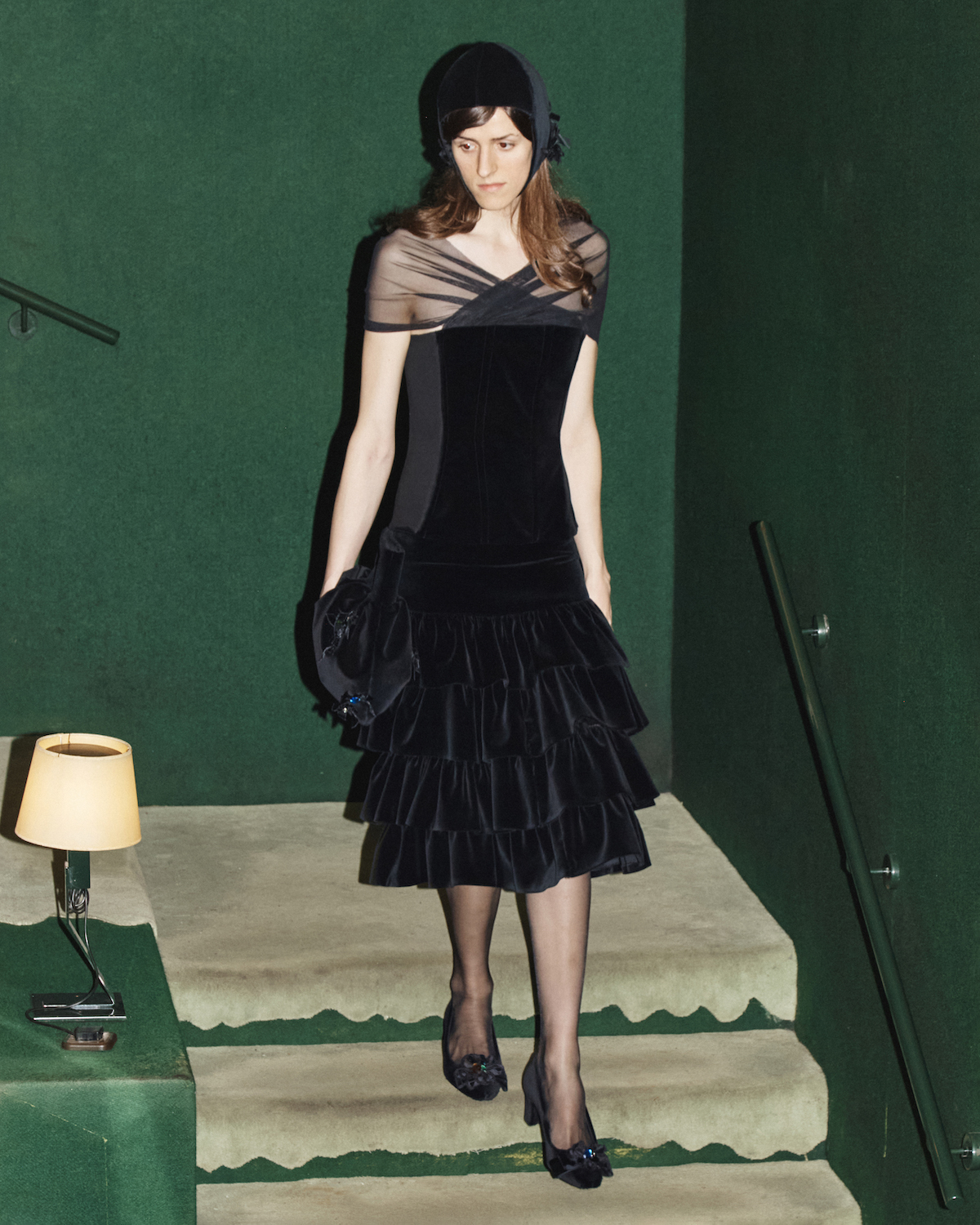
The light falls softly on the green walls of Il Giardinetto, filtered as if time within the space were not passing at the same pace as outside. The guests, seated, sip a glass of cava in a setting that recreates a 1920s-inspired indoor garden. The murmur of conversation mingles with the sound of the grand piano. For a few seconds, it is unclear whether the show has already begun or is yet to start. As if the audience were witnessing something that was already happening before they arrived. Then, without warning, a figure appears at the top of the stairs. And with that scene, Aurembiaix’s final show for the AW26 collection begins.
This atmospheric construction, which blurs the line between fashion show and experience, defines the brand’s ethos, founded by Chloe and Flor. Chloe, a graduate of the London College of Fashion, has developed her practice in stage costume design, where clothing is not merely image, but structure and function. Her time in the costume department at the Gran Teatre del Liceu and her work in film and theatre are evident in the way the garments are designed to inhabit the body. Flor, who trained in Fine Arts at Wimbledon College of Arts and has links to performance and styling, brings a more conceptual perspective, paying closer attention to the image as a construction.
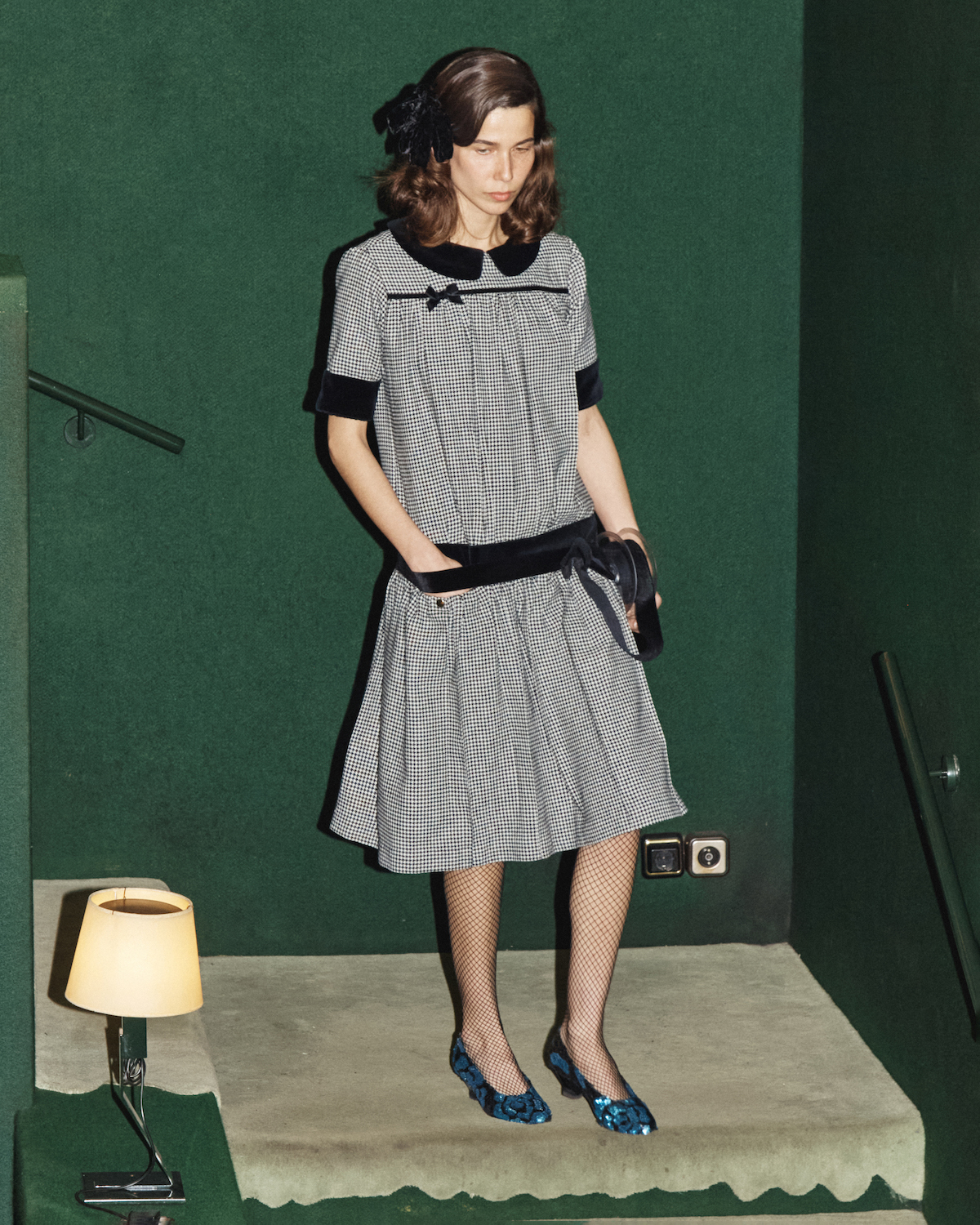
Aurembiaix, a name that evokes Aurembiaix de Urgell and, with it, a medieval imagery deeply rooted in Catalan history, does not draw on the past as a visual reference, but rather as a framework for thought. The collection does not replicate the aesthetics of the Middle Ages, but it does operate according to its logic—that of the dress understood as an assemblage. From there, the proposal opens up to other time periods: the Belle Époque, Jeanne Lanvin’s 1920s, the utilitarian sobriety of the 1940s, thus generating an overlap of references that precludes any linear interpretation.
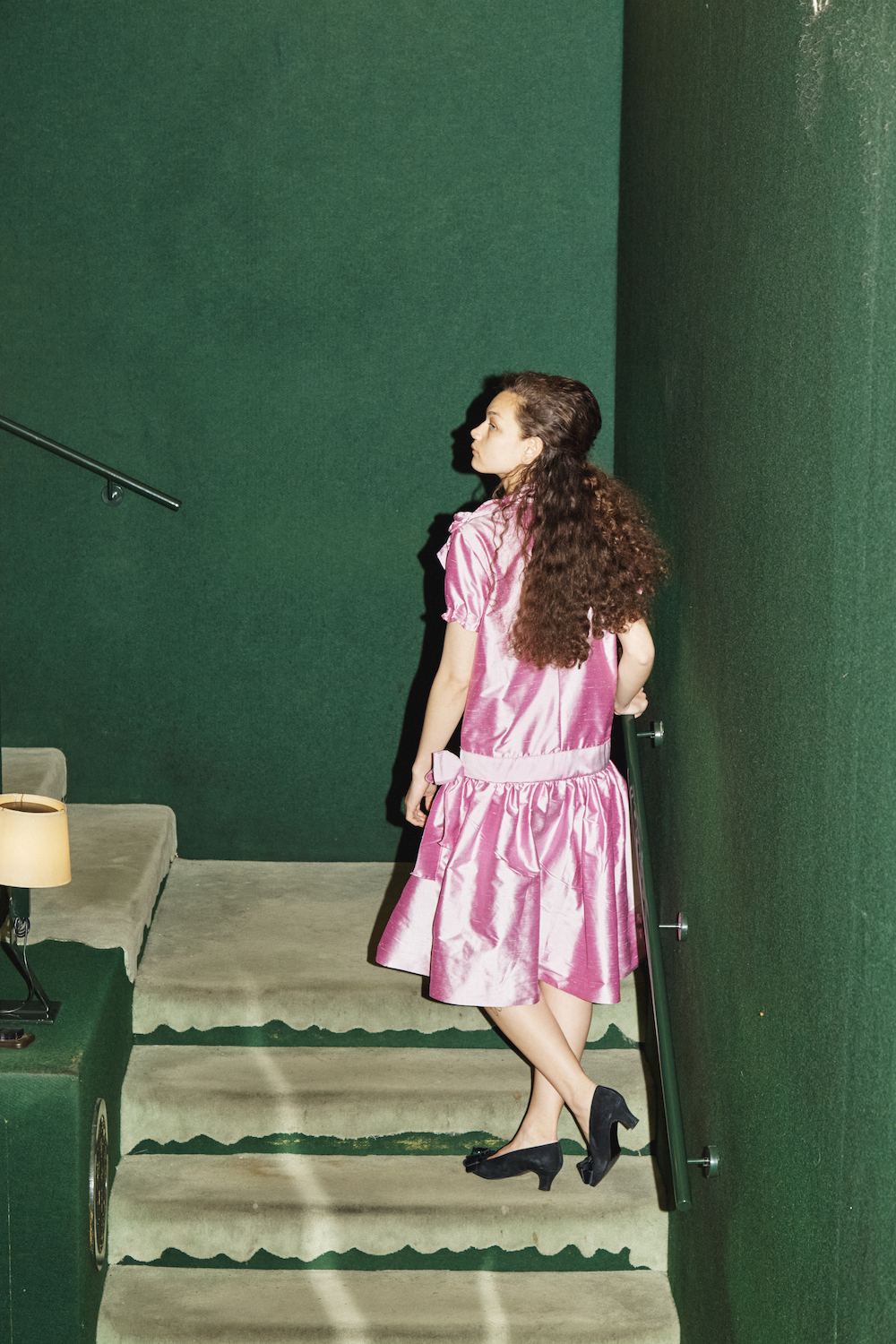
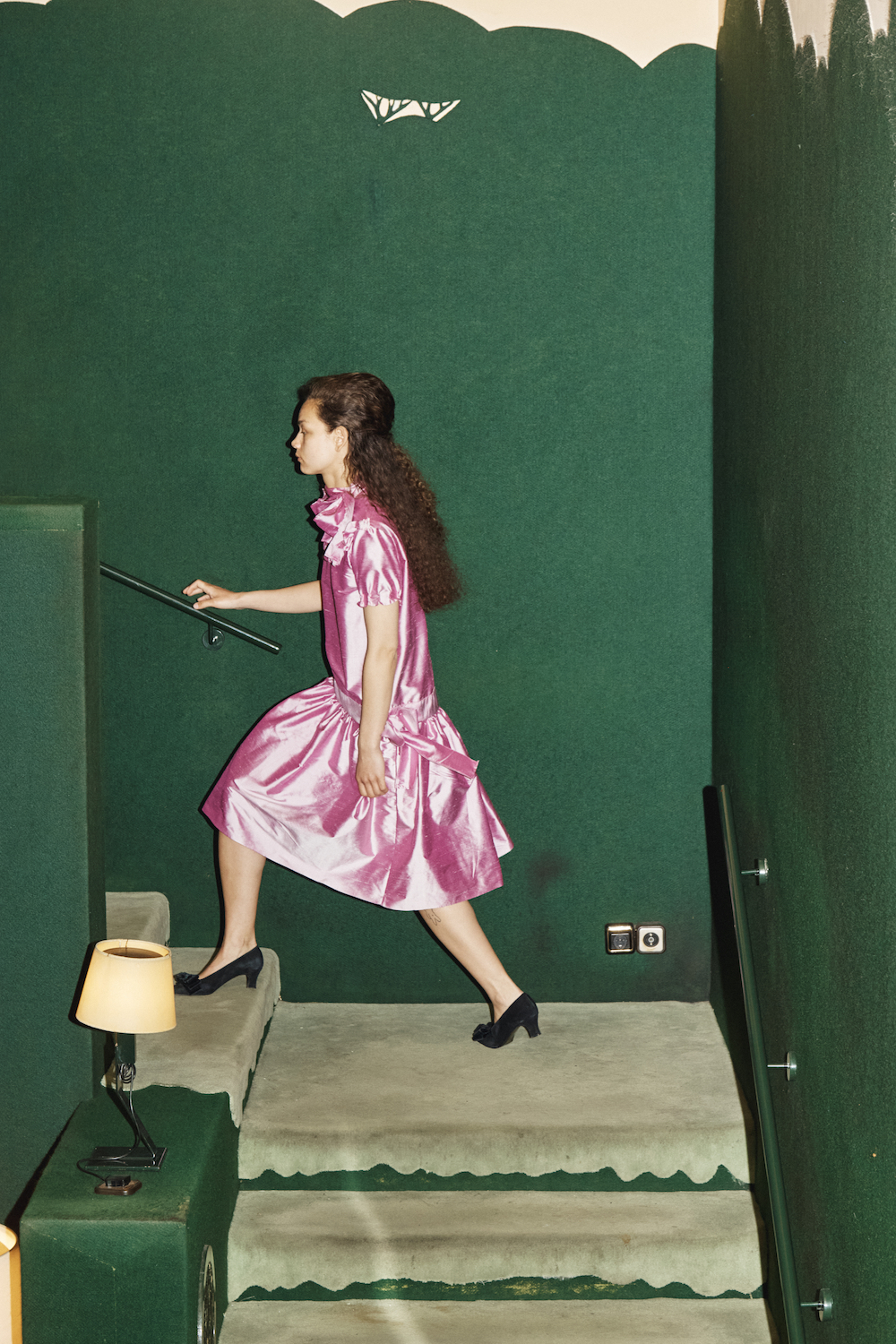
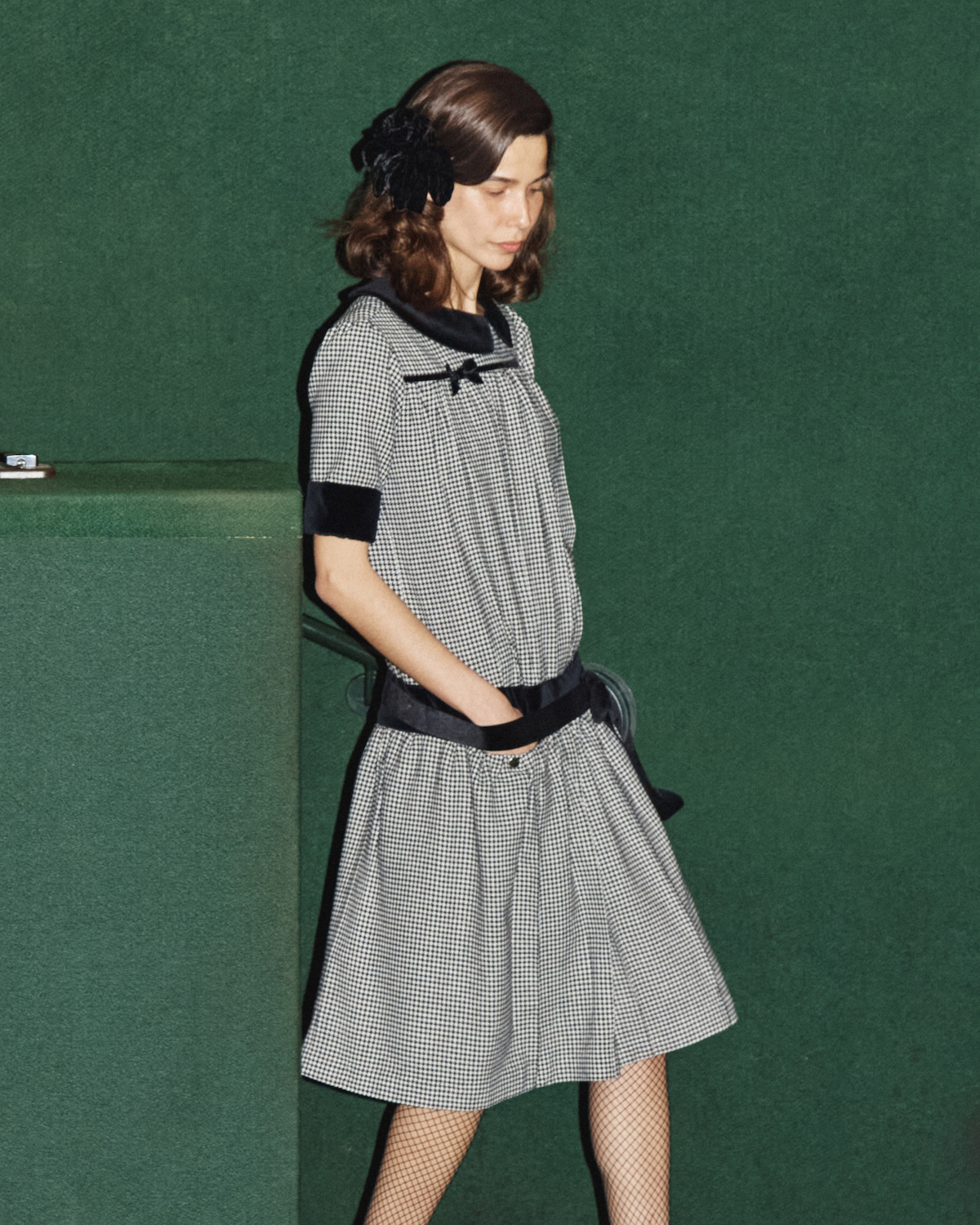
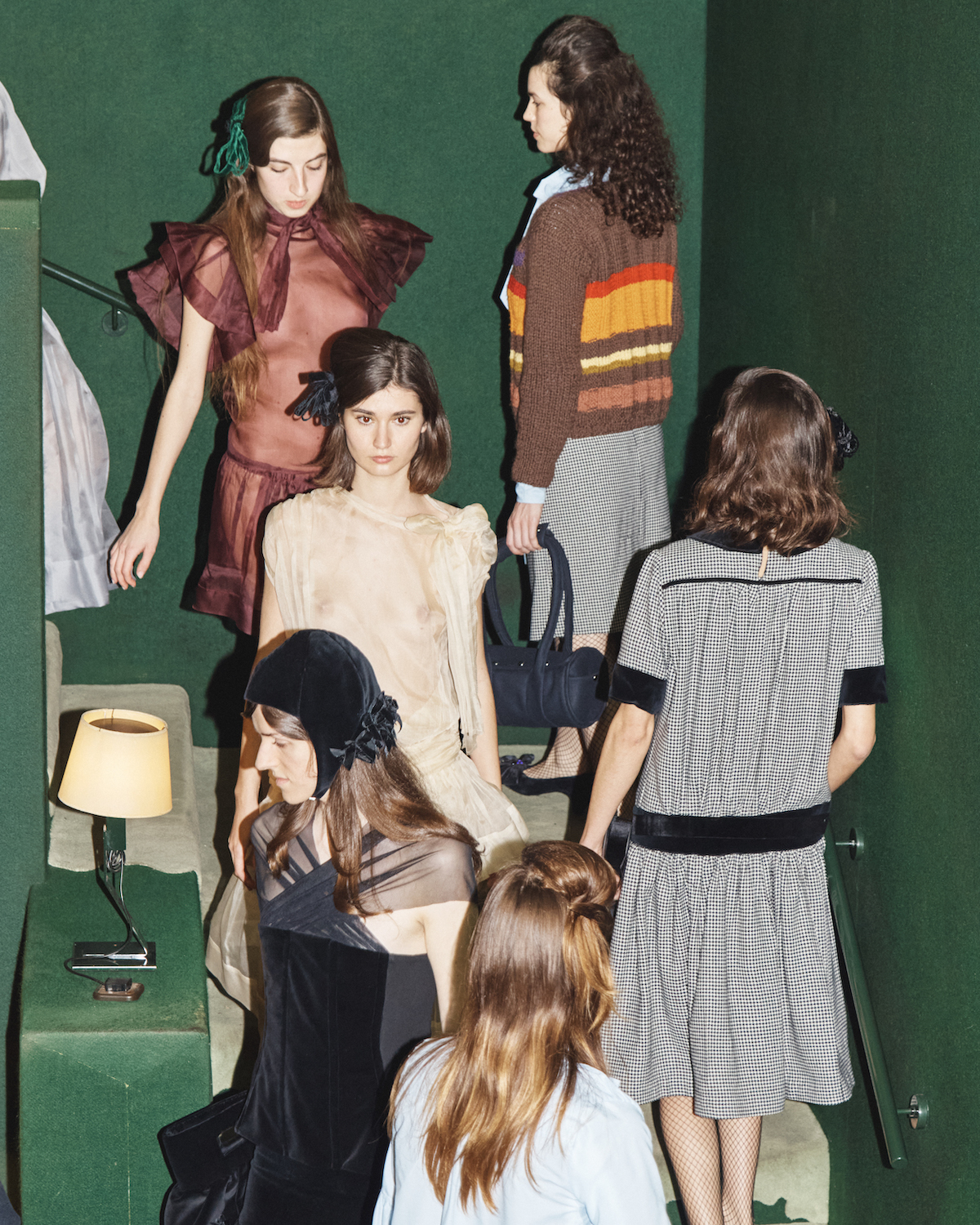
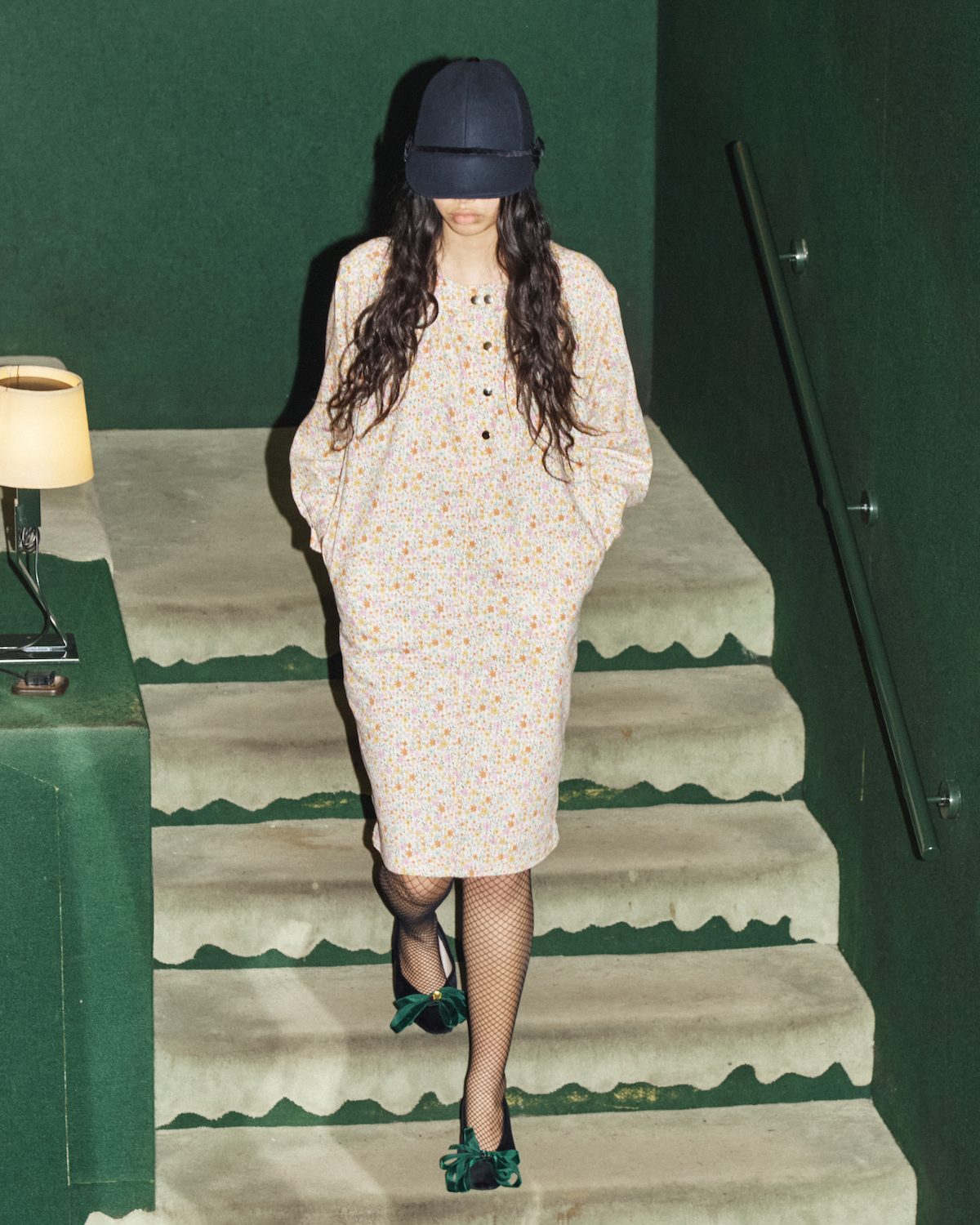
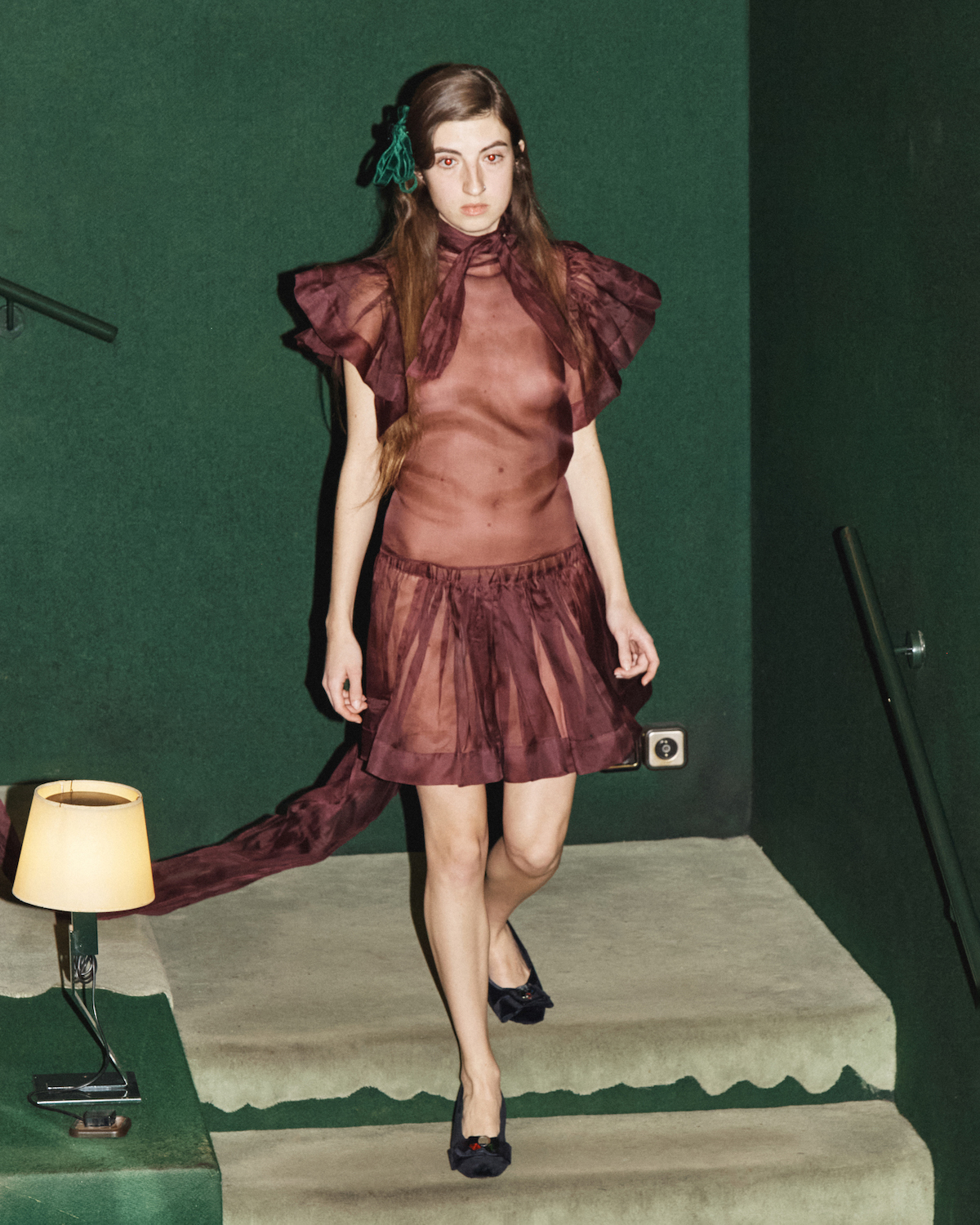
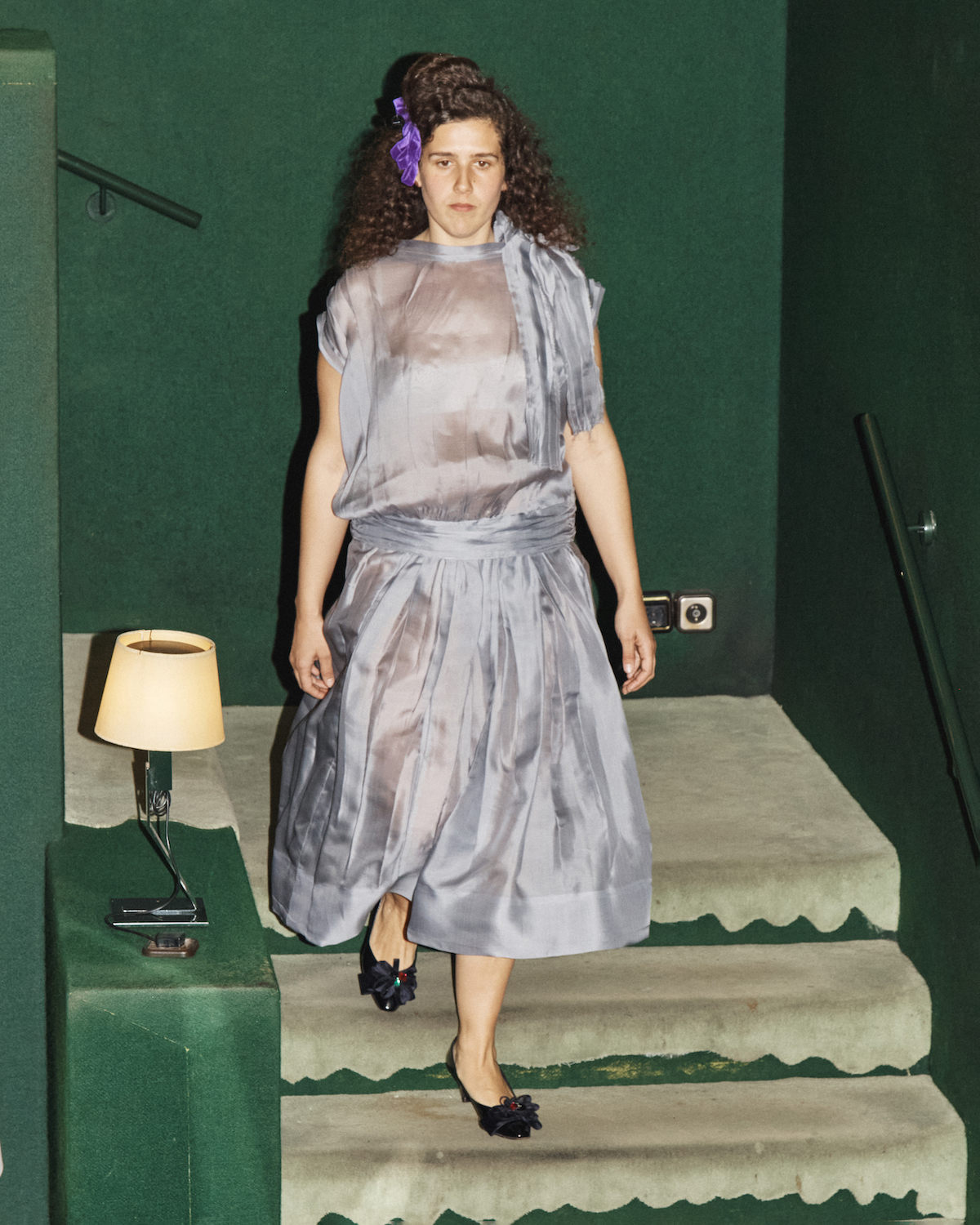
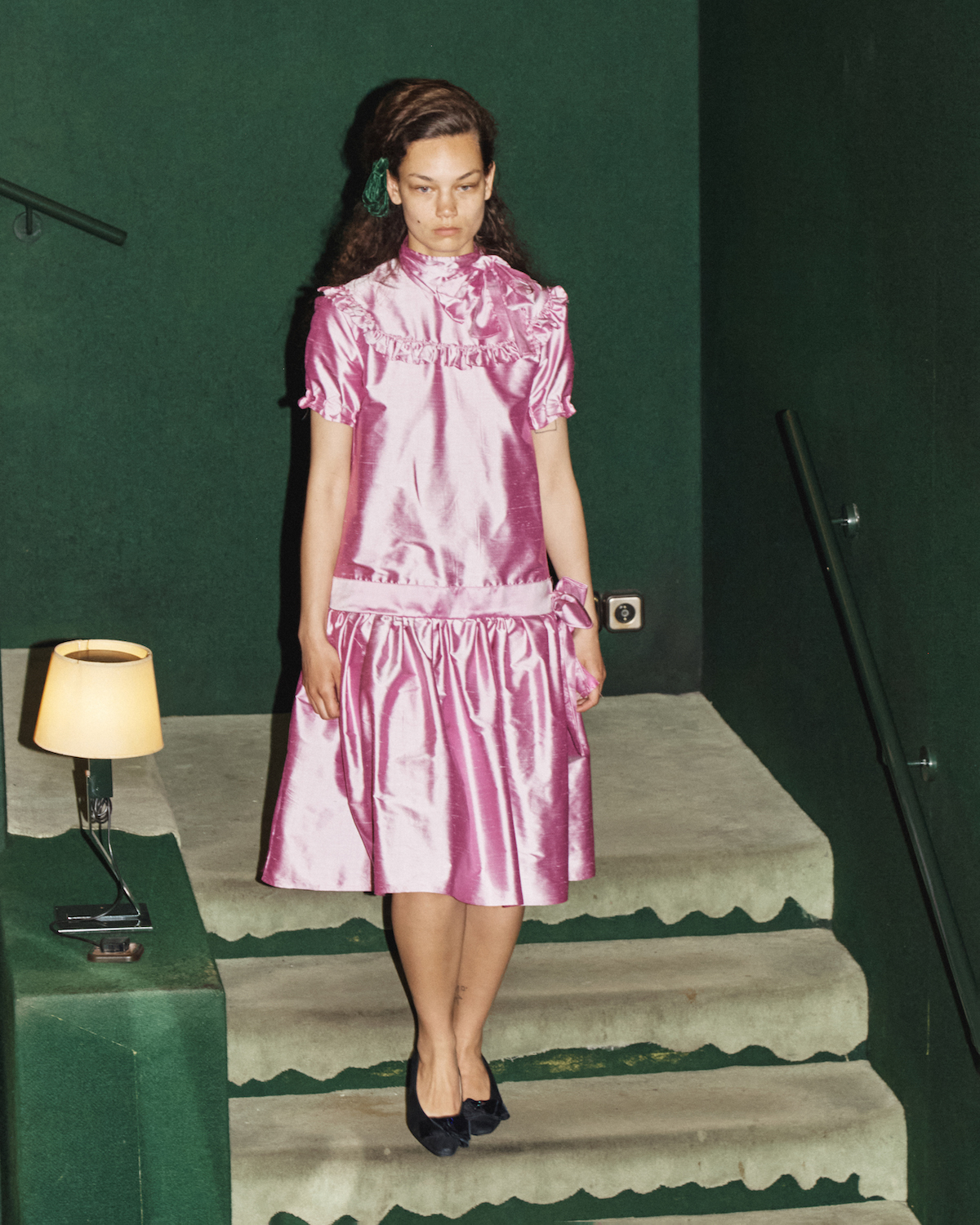
In this sense, the new collection unfolds as an exploration of form and time. The pink taffeta dresses encapsulate this ambivalence. On the surface, they evoke a delicate, almost childlike femininity, but the construction introduces a tension that prevents such a complacent reading. The fabric is stiff, the volume is restrained, and the body is slightly separated from the garment. The ornamental becomes structure, in an operation reminiscent of Lanvin, though here permeated by a sense of unease that shifts it towards the present.
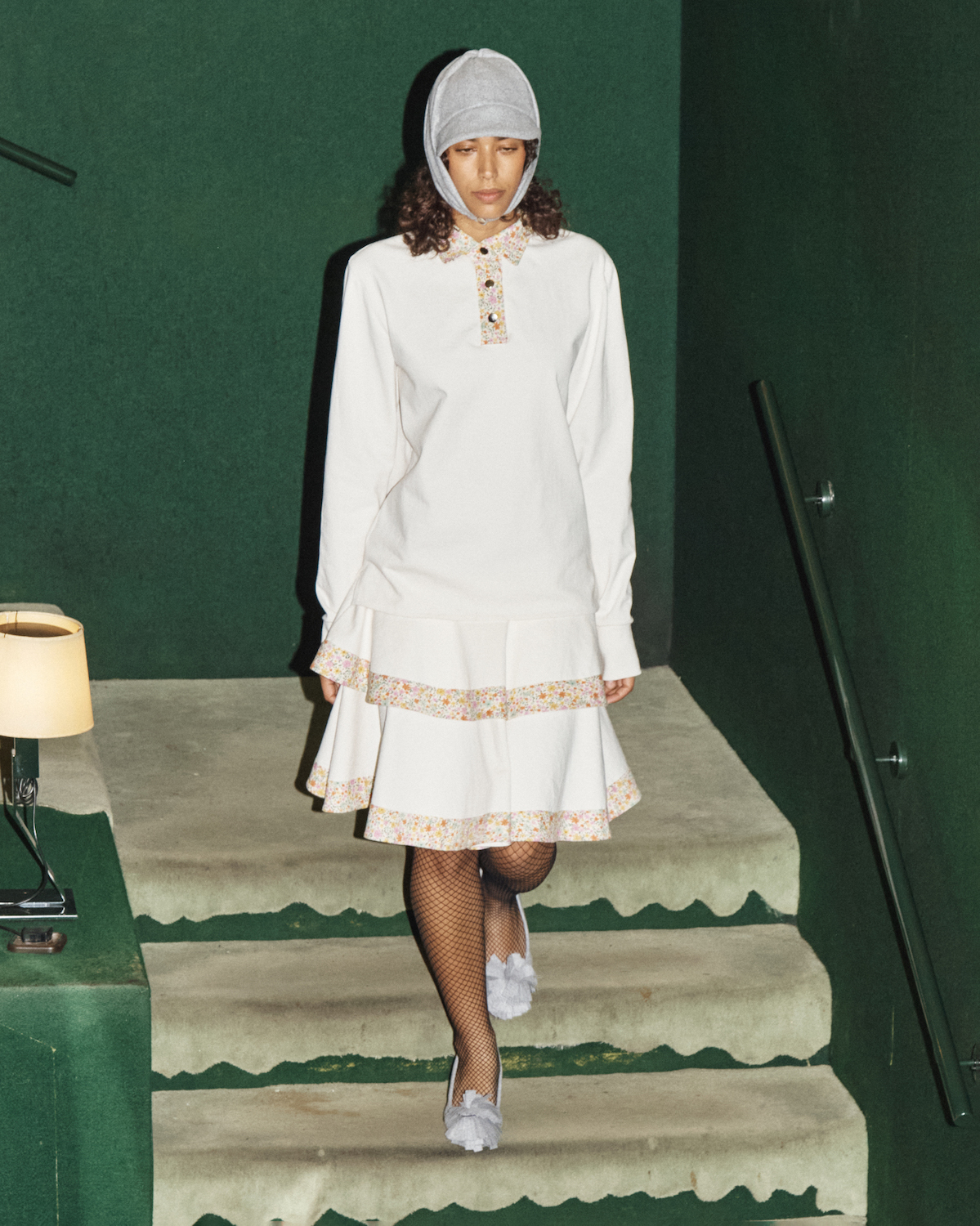
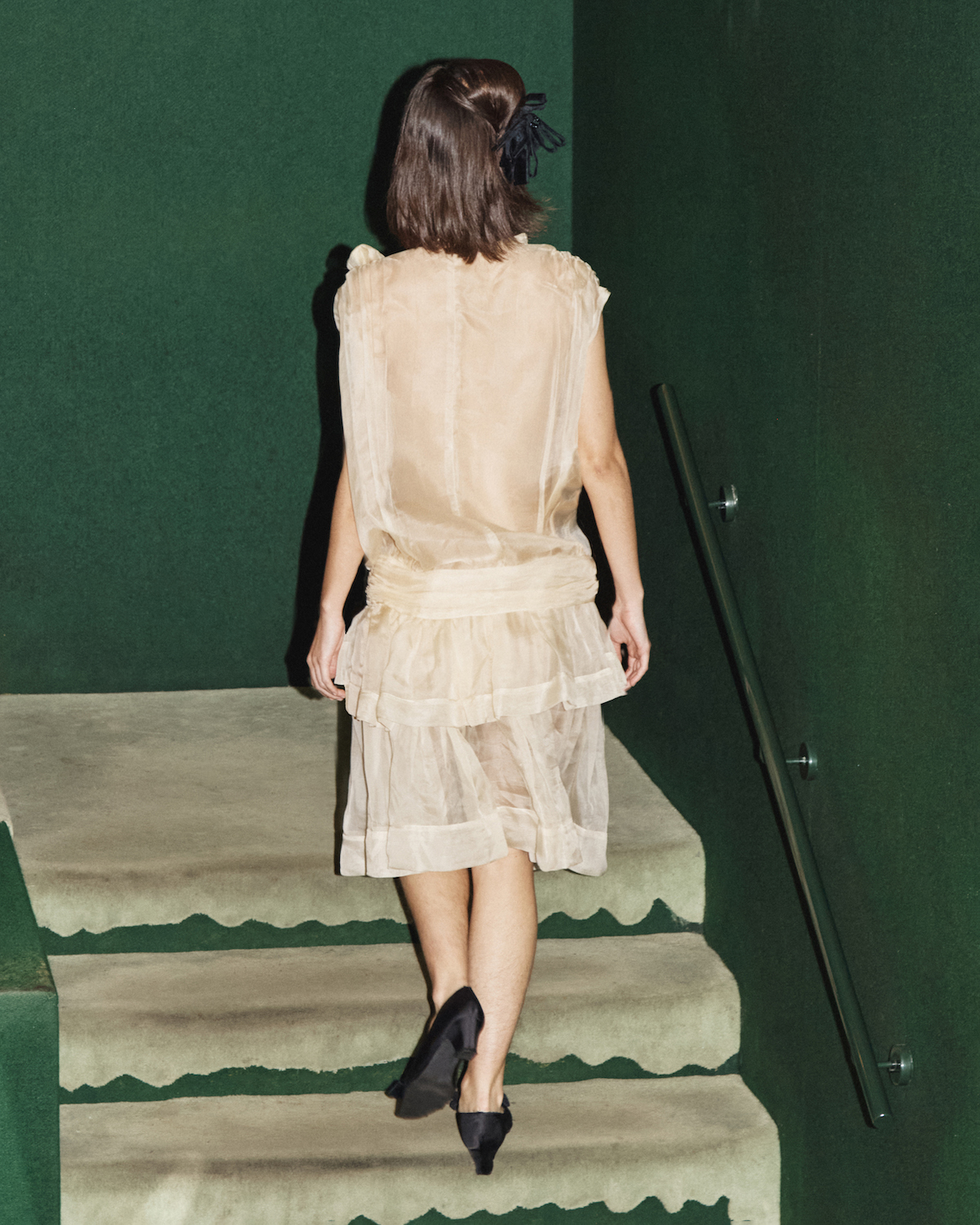
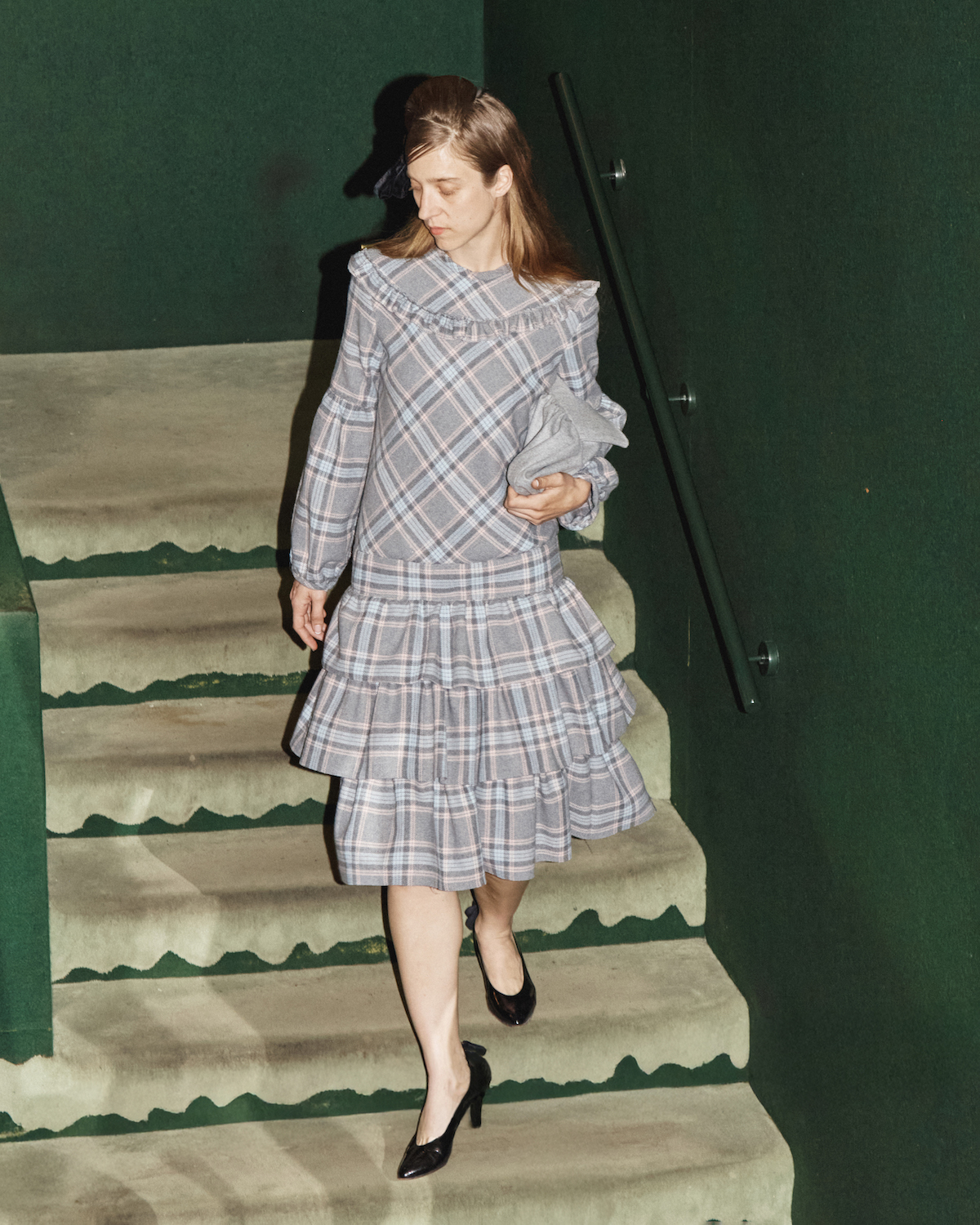
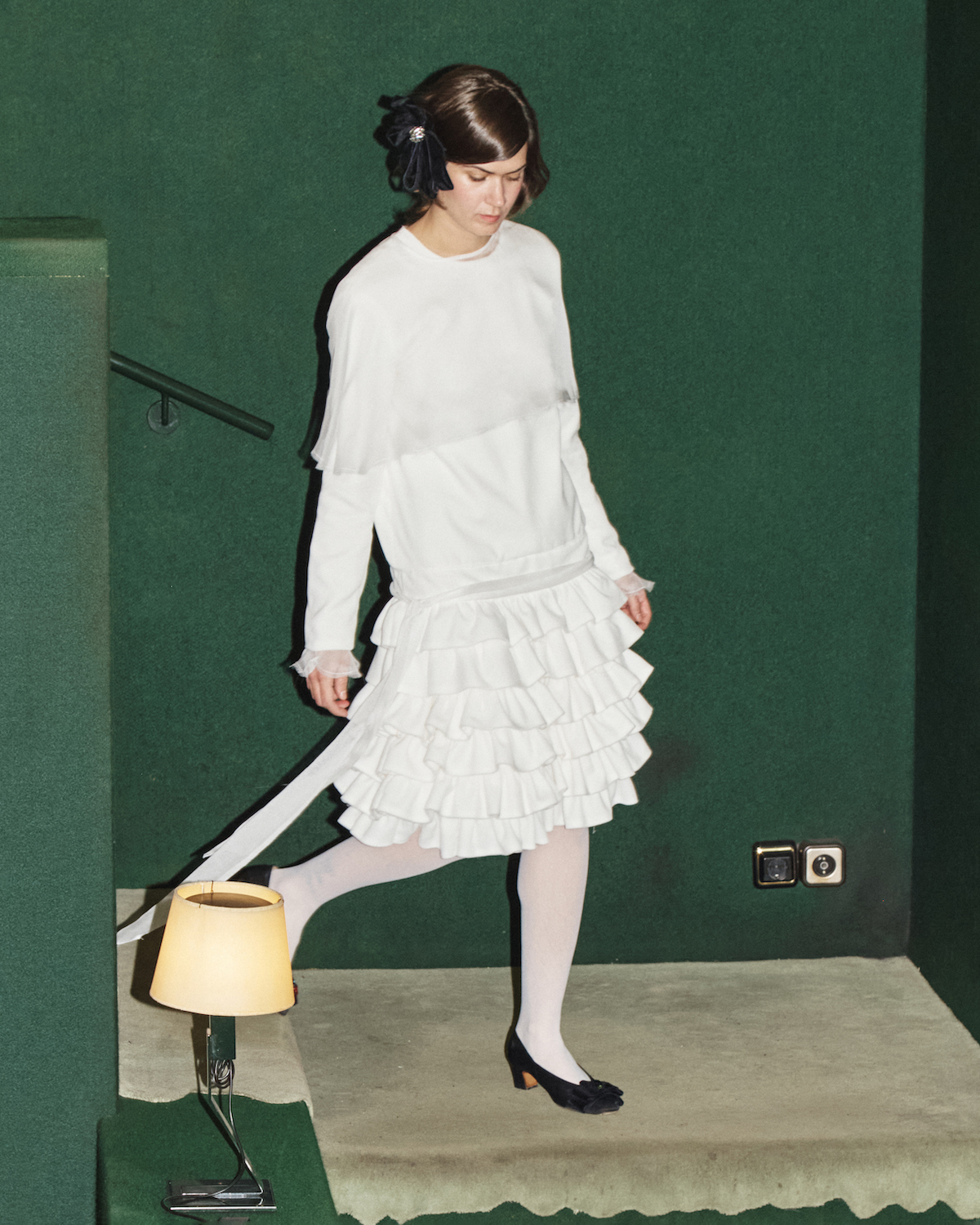
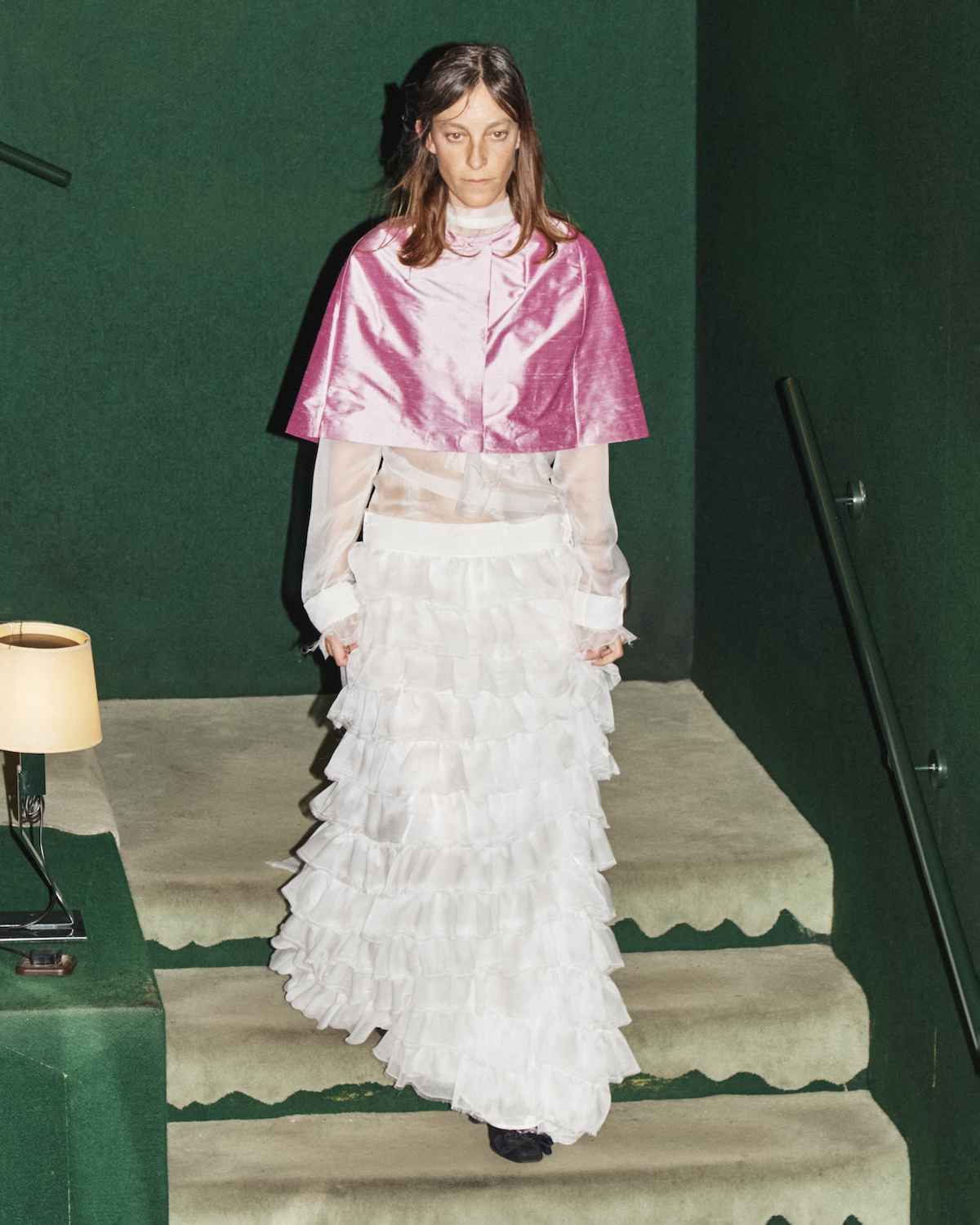
The ruffle, a central element in the collection, reinforces this concept. On the white organza skirts, the layers build up in an insistent repetition that creates volume, but also a sense of time. Each layer adds density and a sense of process, creating a silhouette that does not impose itself immediately, but rather seems to have been crafted over time. At this point, the collection engages in a dialogue with Cristóbal Balenciaga’s conception of volume, albeit stripped of its monumentality and steered towards a more restrained fragility.
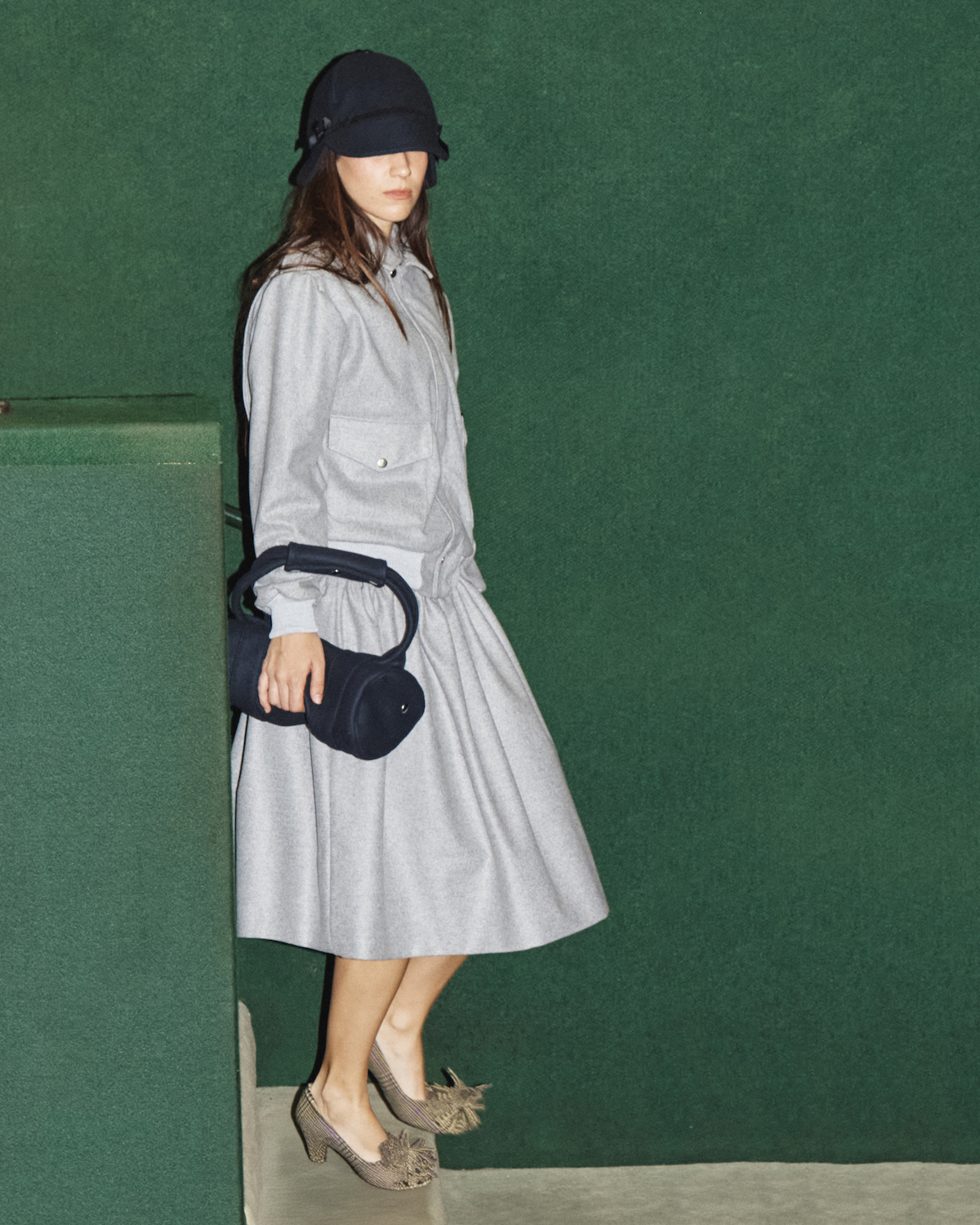
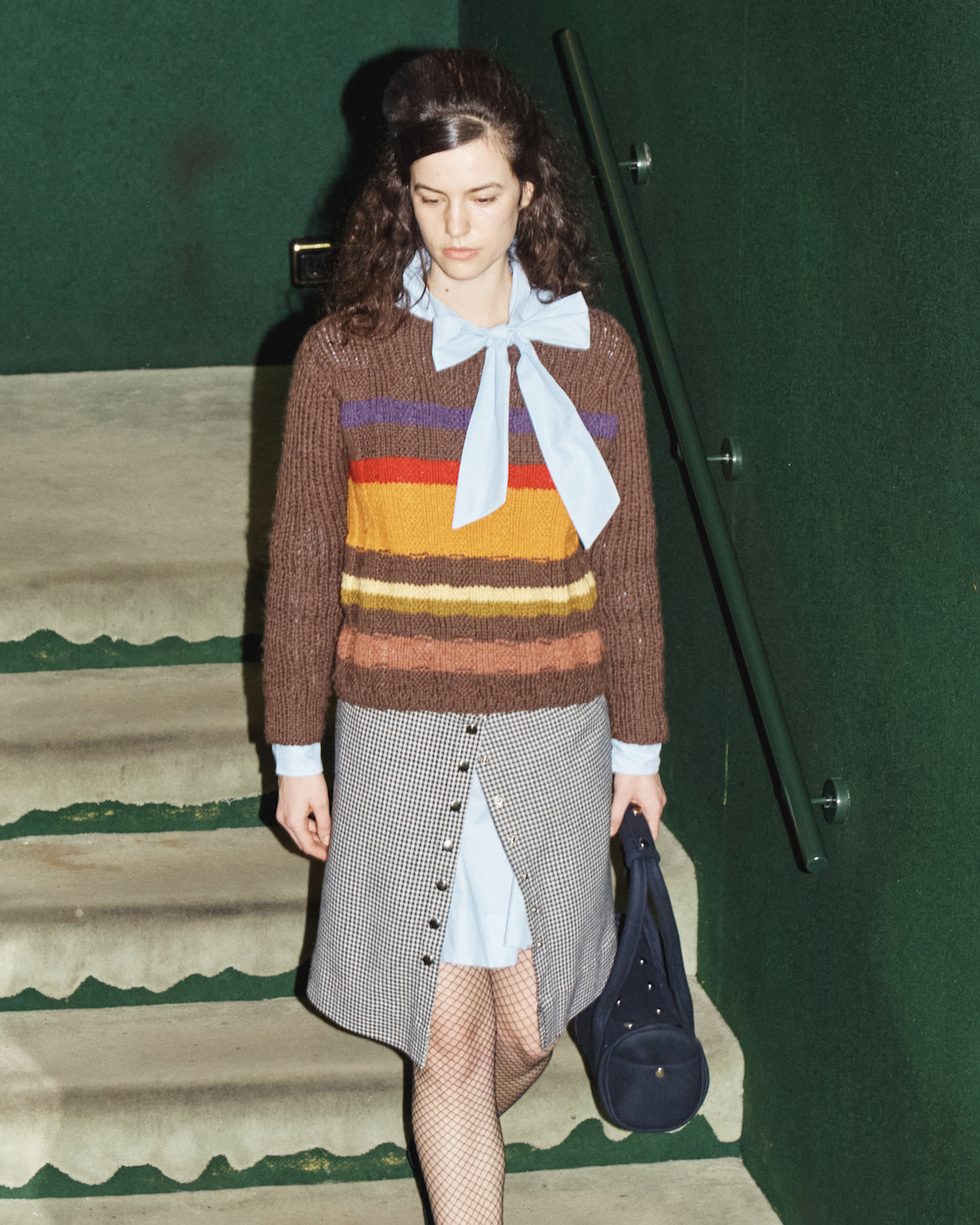
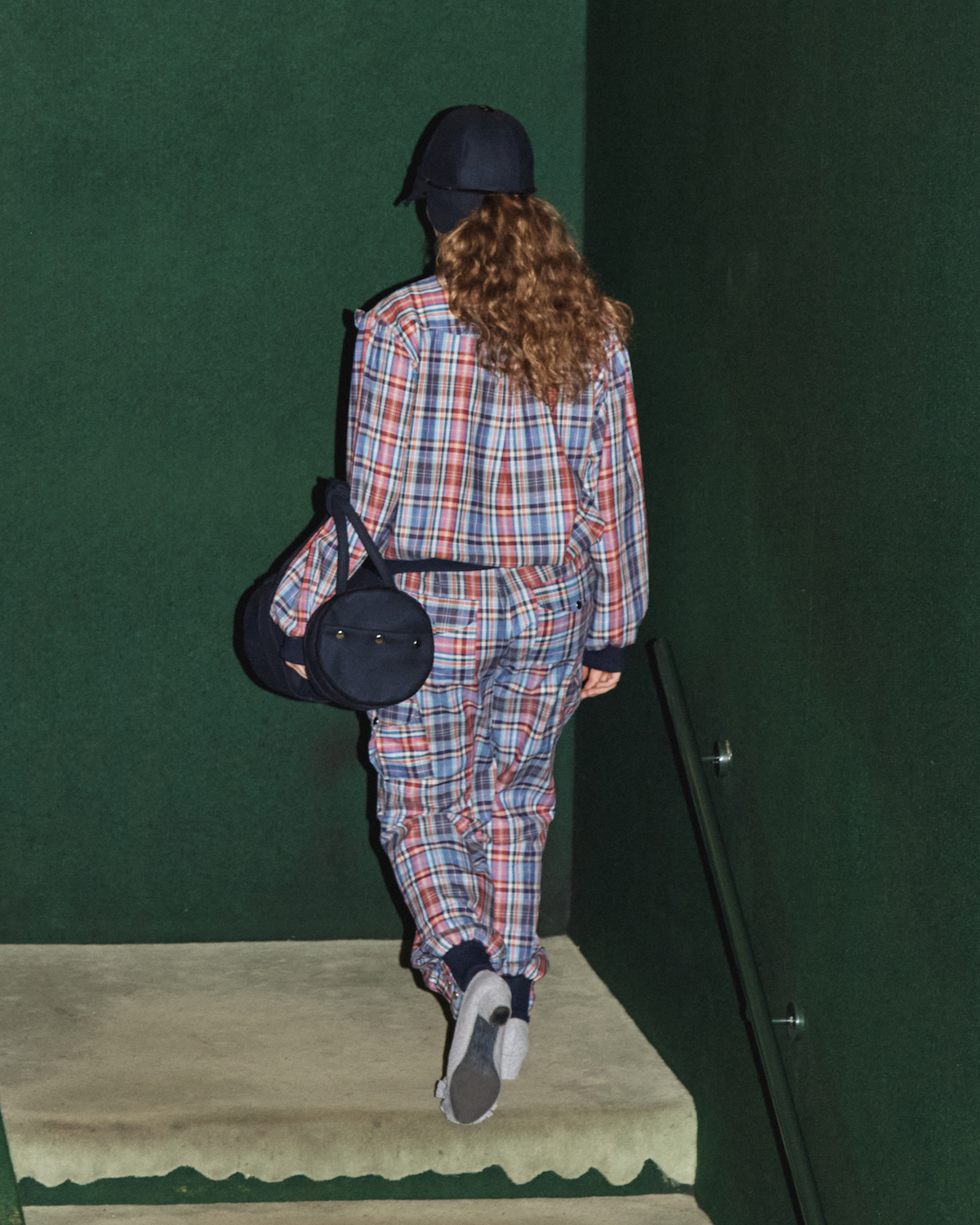
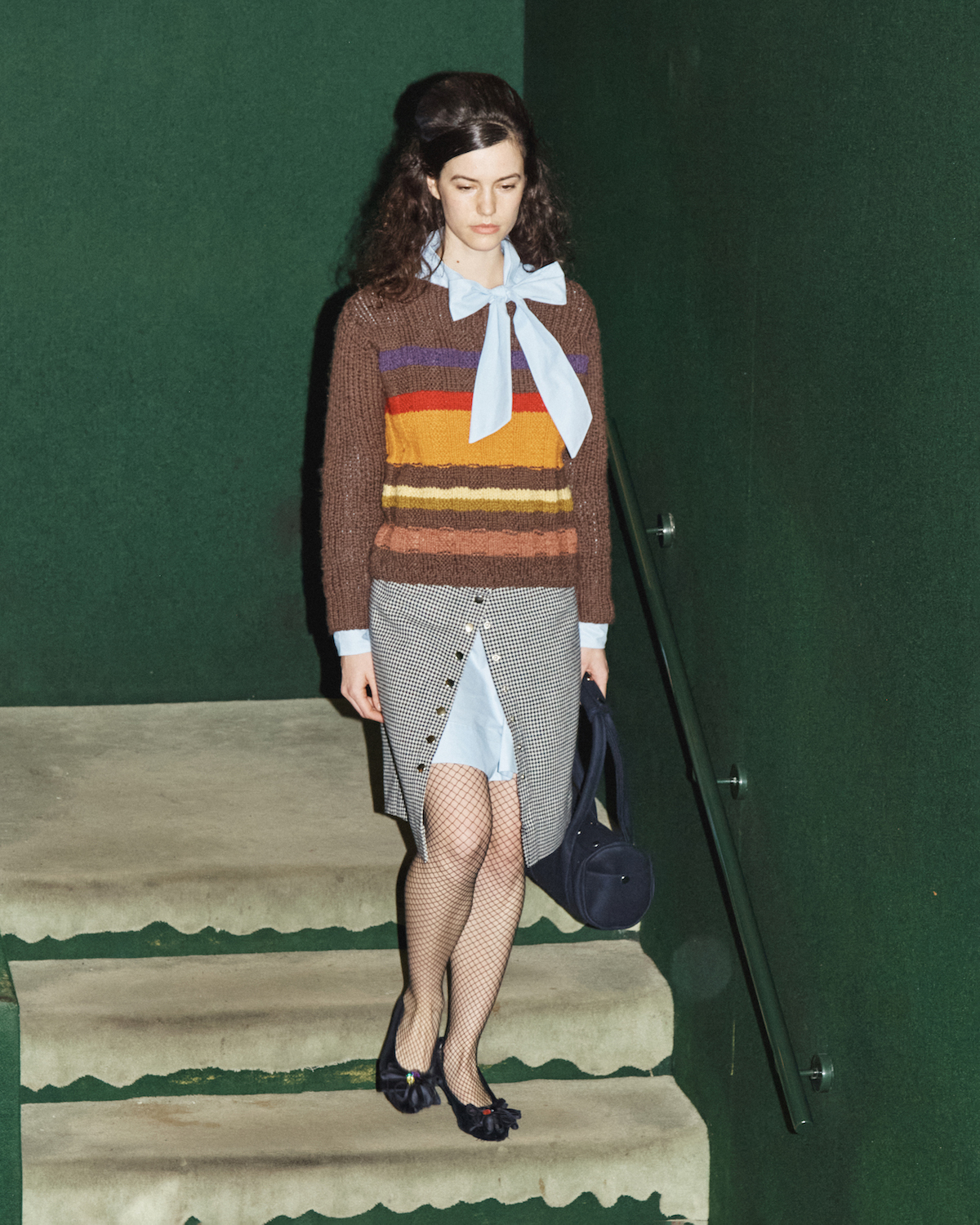
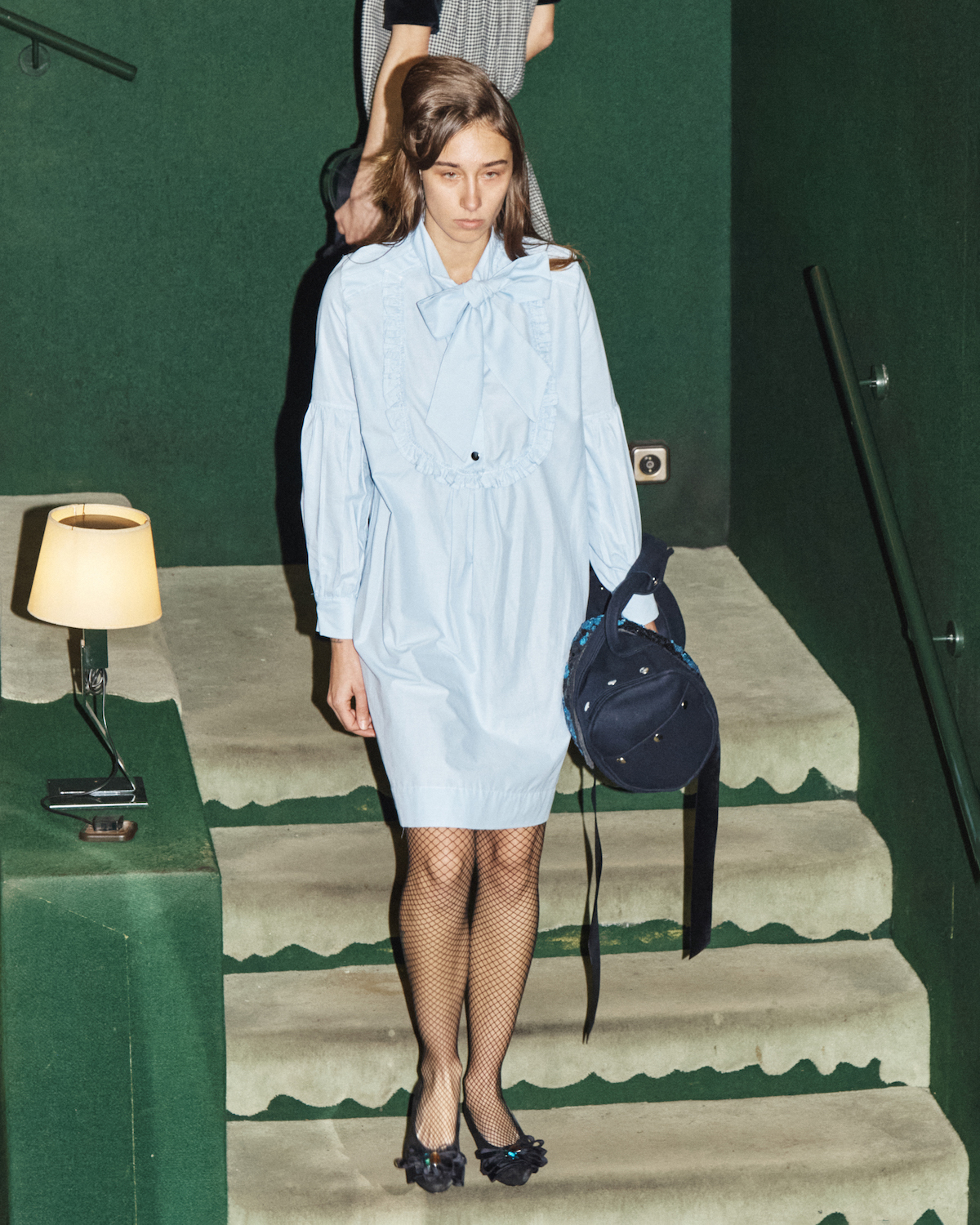
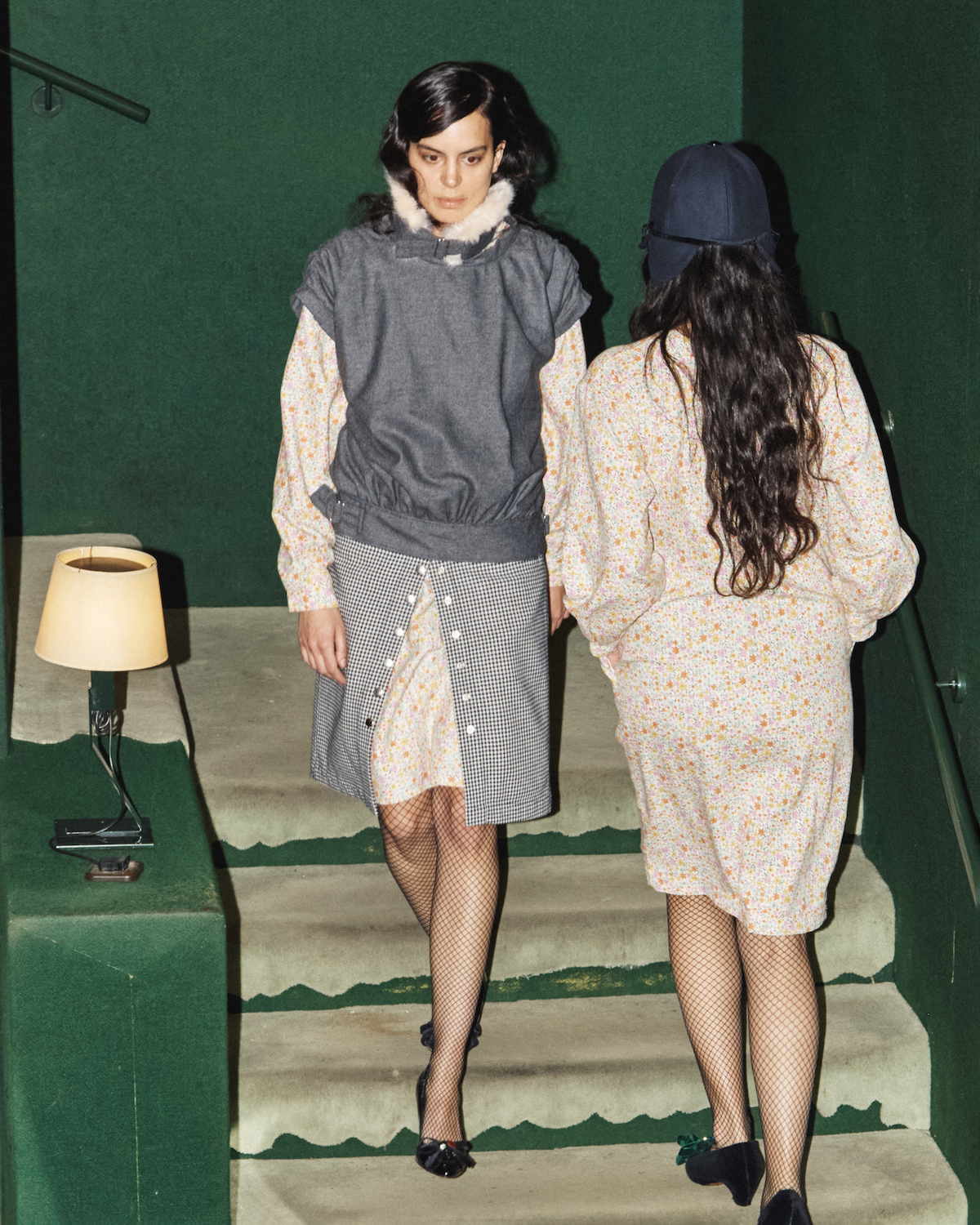
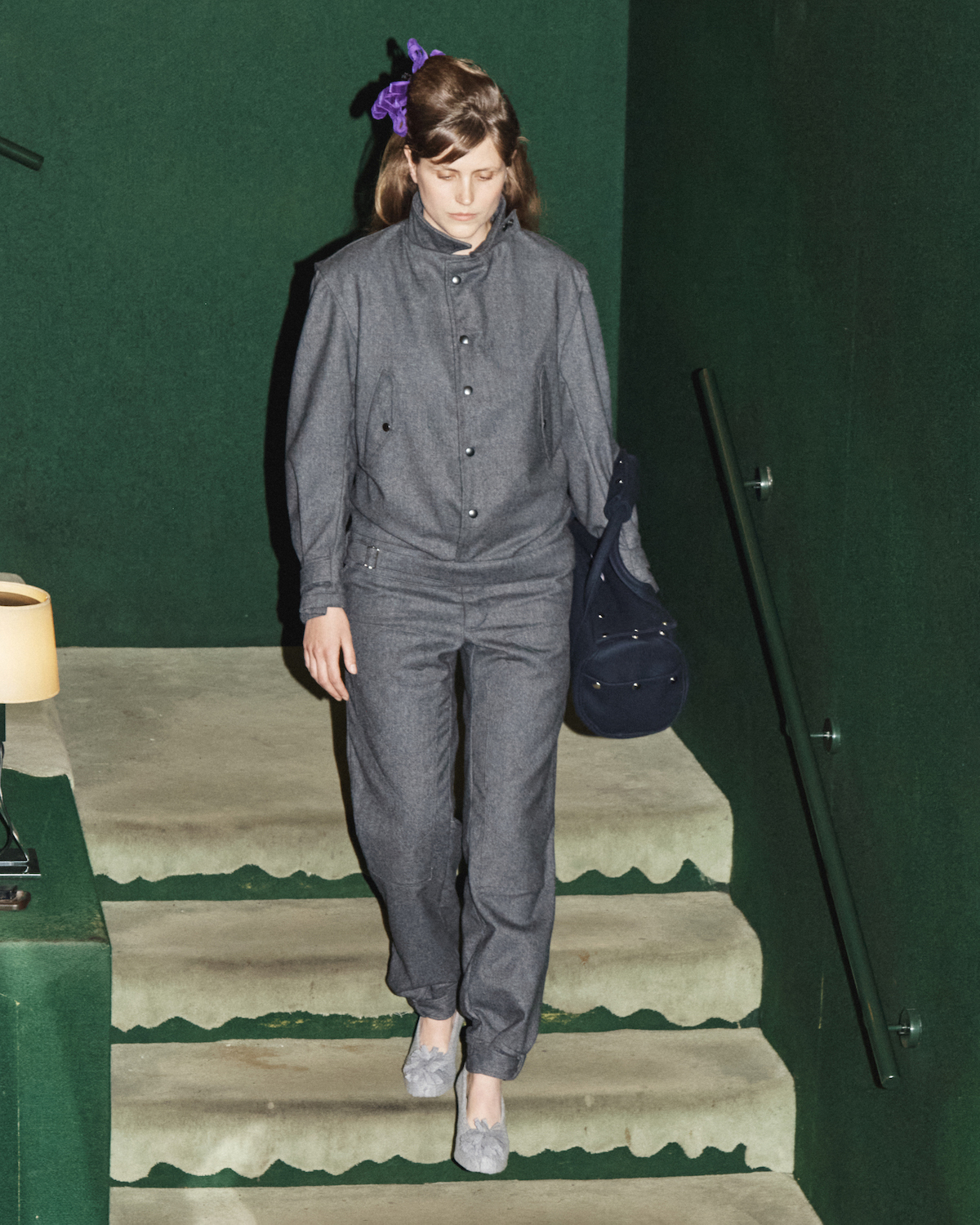
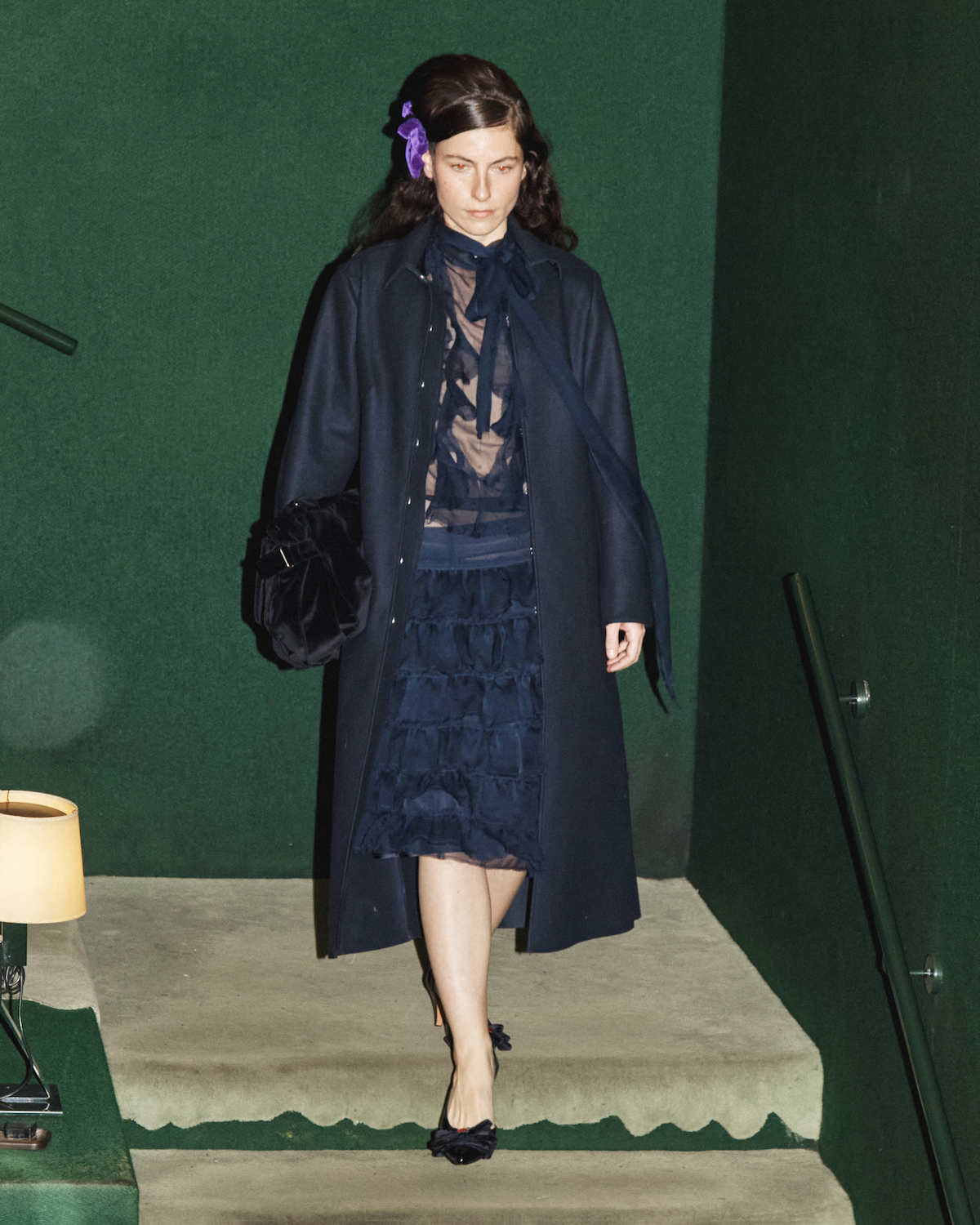
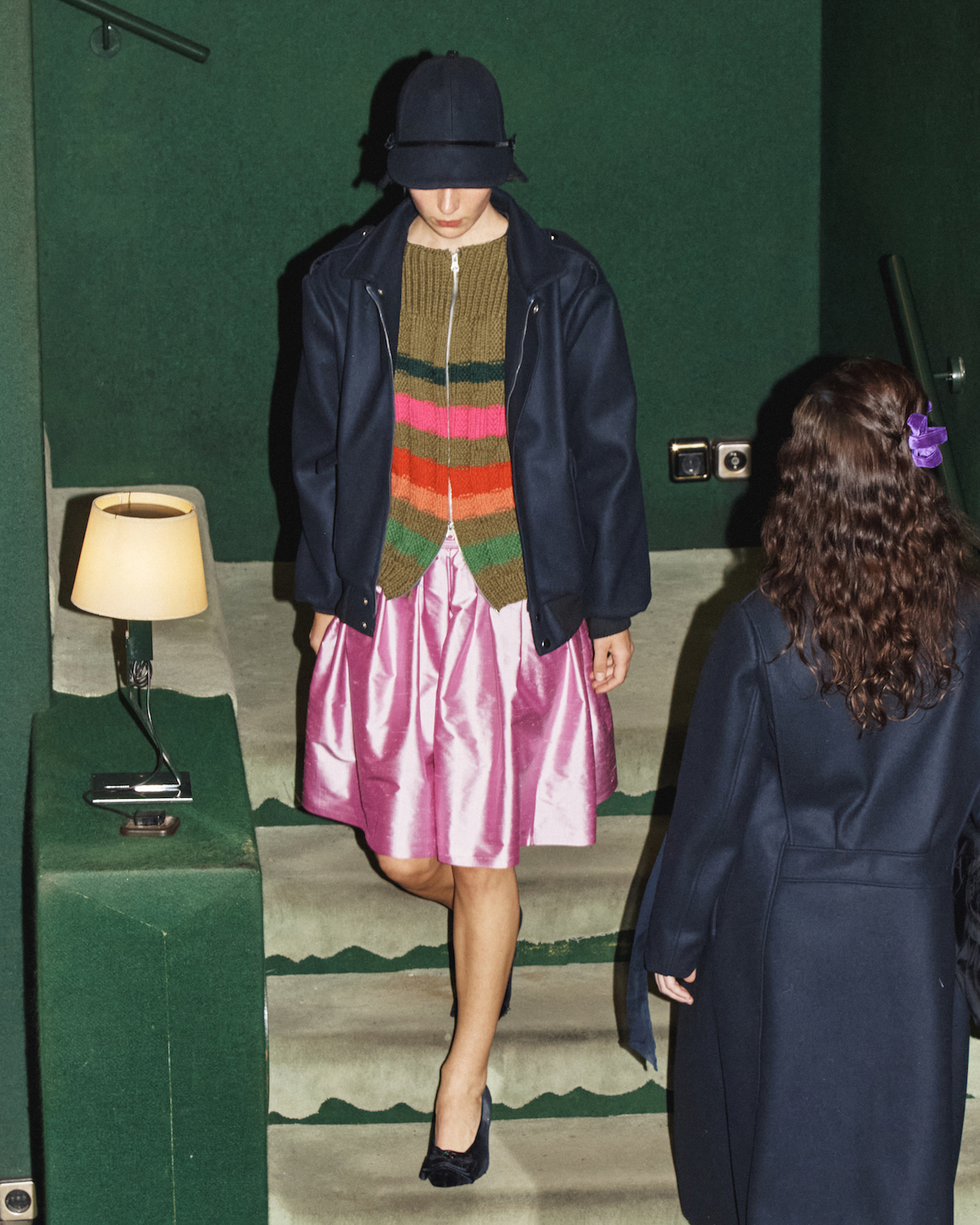
The emergence of utilitarian pieces introduces a friction that complicates the interpretation. Coats with clean lines, wool ensembles in neutral tones and functional garments shatter any temptation to idealise. In the knitwear looks, the collection shifts towards a more intimate register. The bands of colour, discreet yet persistent, evoke a domestic memory, the time of manual labour, the repetition of the gesture. Sheer fabrics, for their part, establish an ambiguous relationship with the body. This constant tension between the visible and the hidden runs through the entire collection.
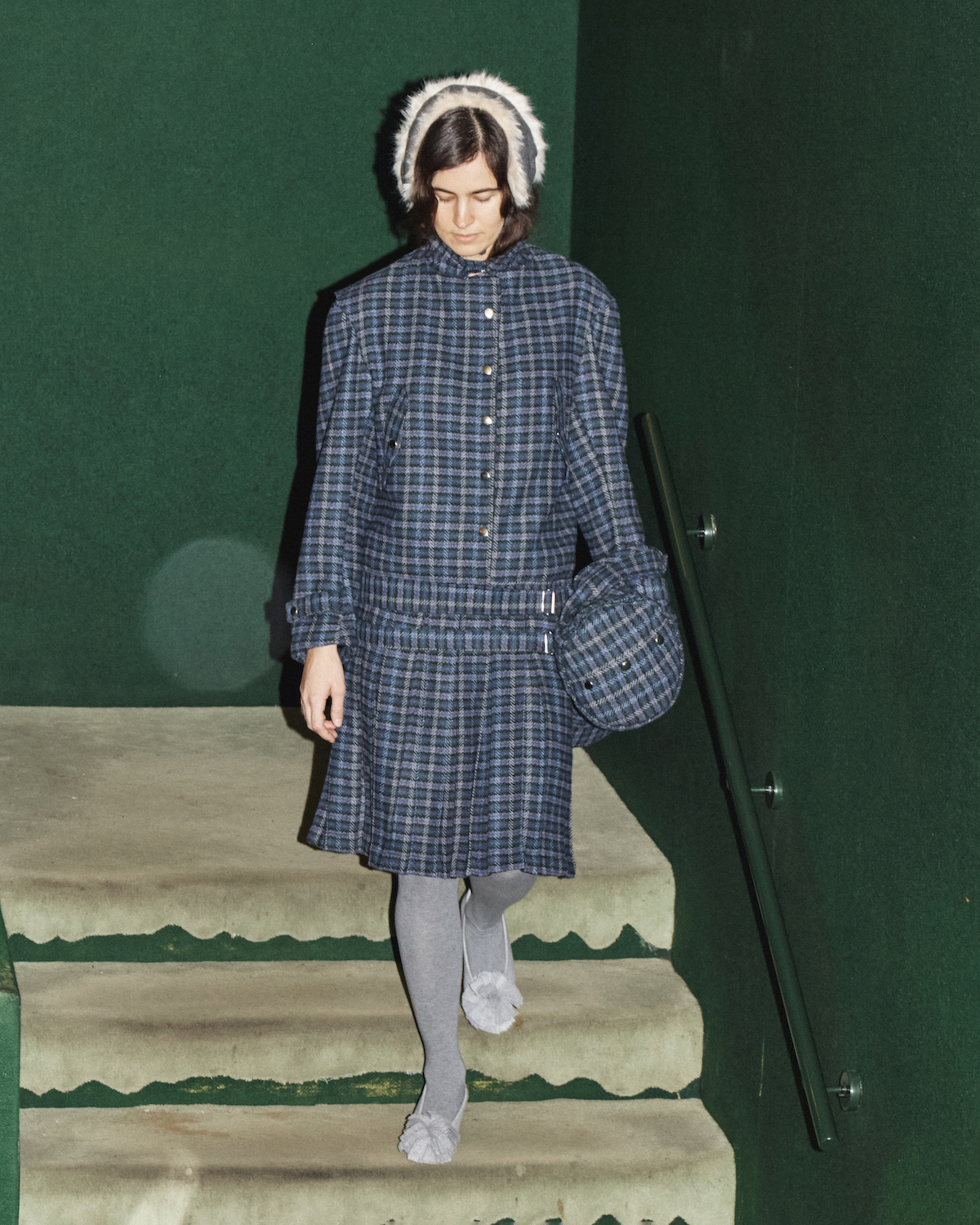
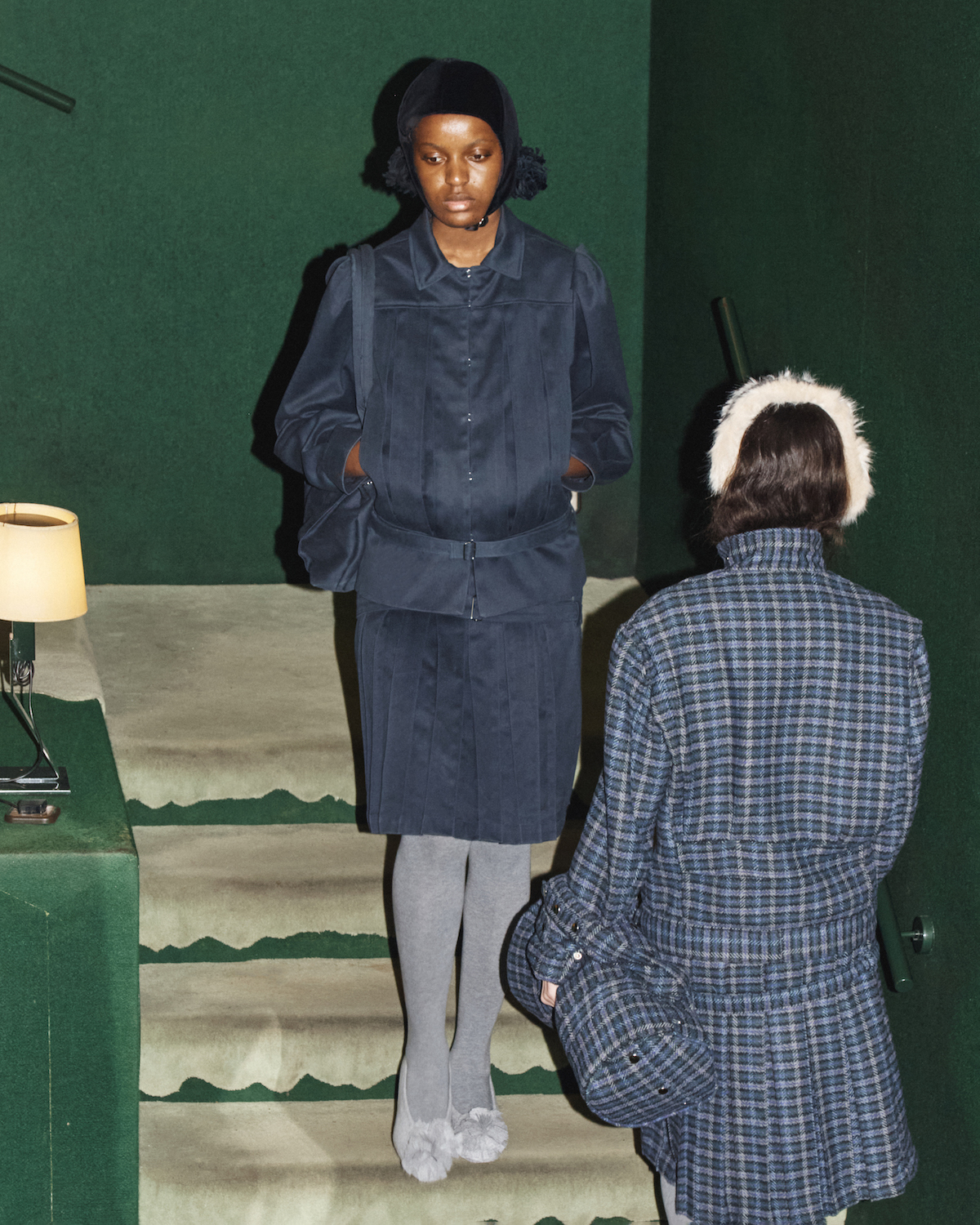
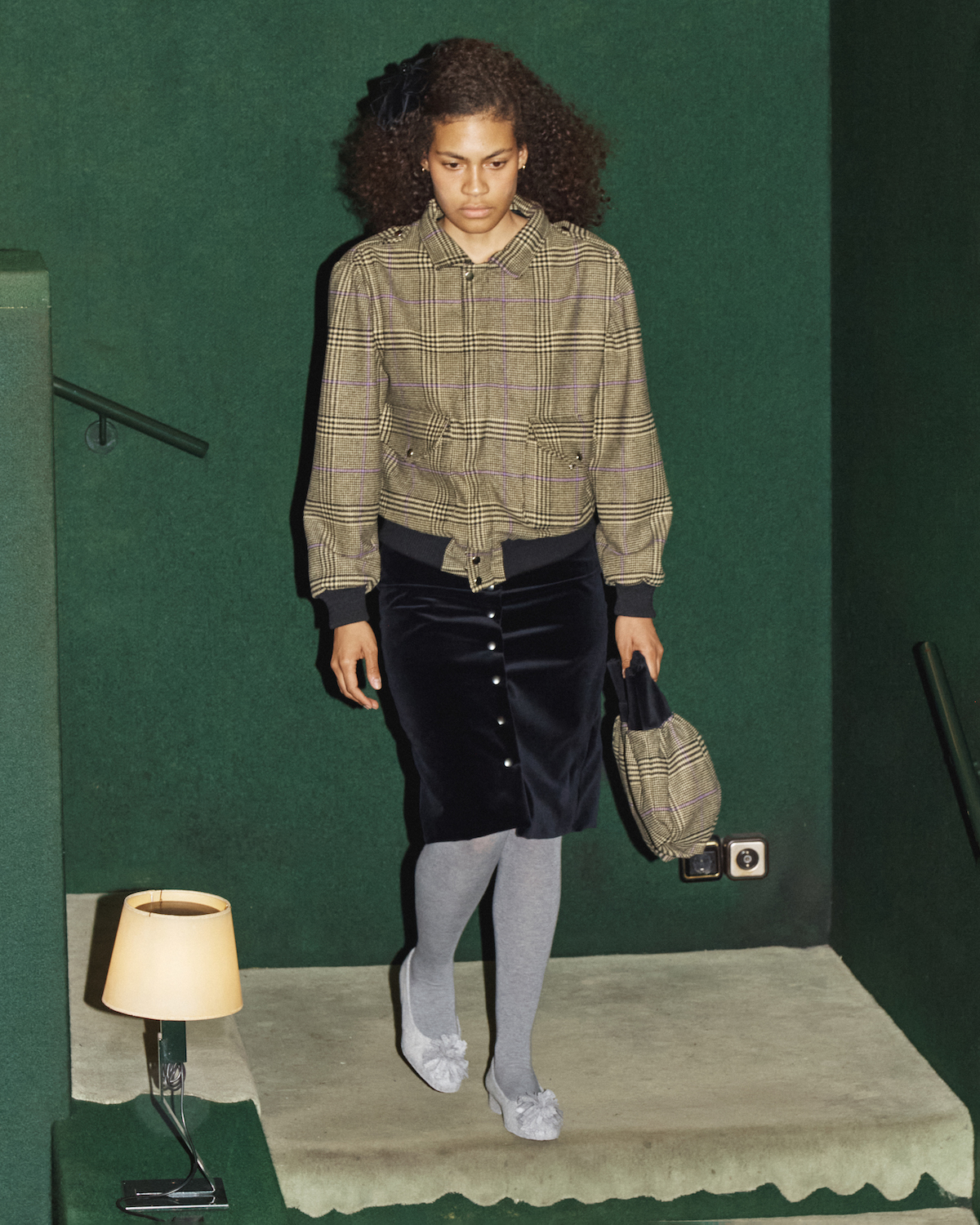
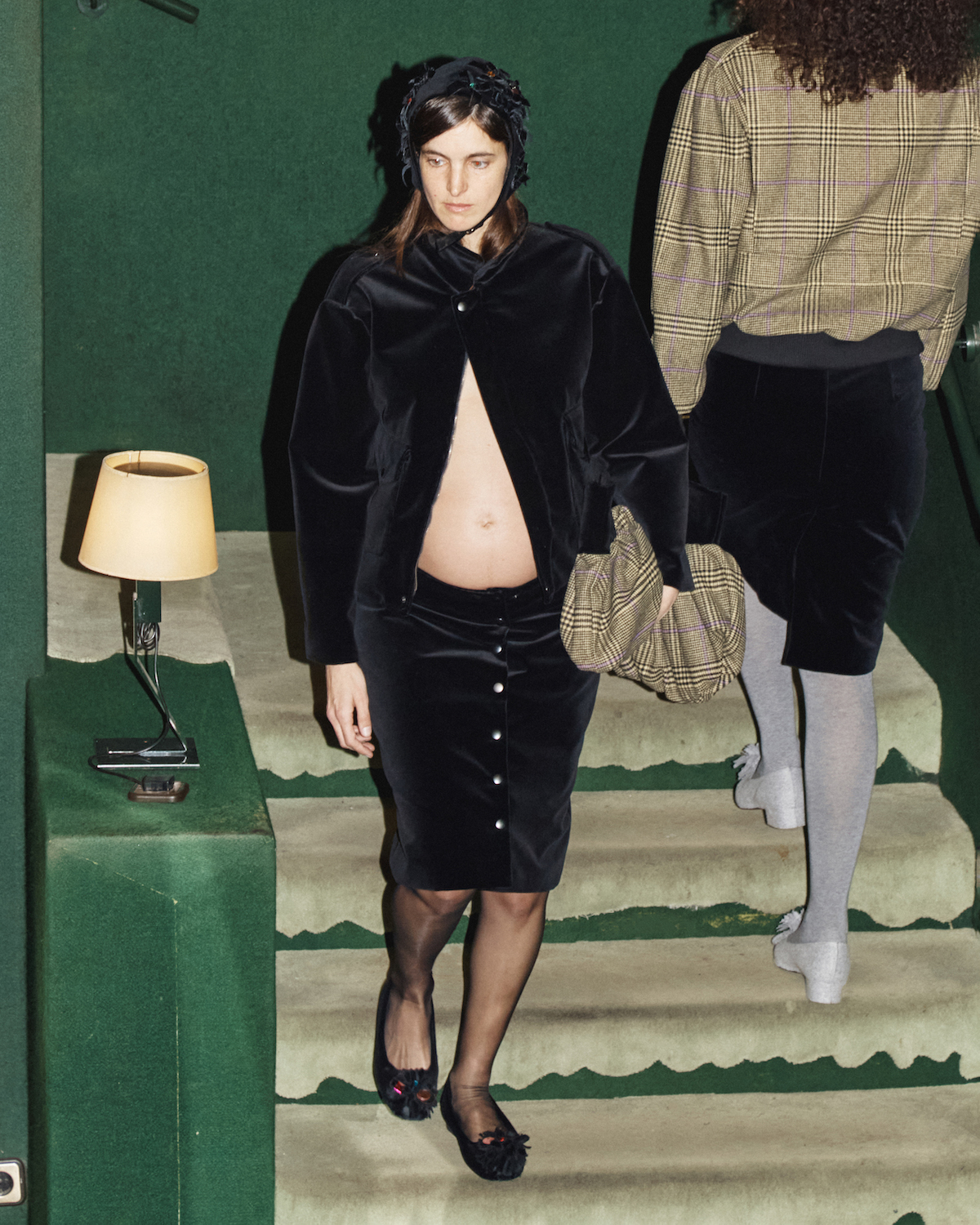
The text, written by Mariona Valdes, reinforced this idea. “Quick… make a wish! Something that feels right before you can explain it, something that makes sense later, maybe not now. The one you’re not sure you should ask for, the one that would be too much, the one you wouldn’t know how to explain if it happened. Like a voice you haven’t heard in a long time, but could recognise instantly. Or to have back that jumper your grandmother knitted, the one you lost. The smallest thing, or the one that changes everything, the weirdest, the one you keep to yourself, the one that doesn’t fully make sense. The impossible, the ridiculous, the long gone. Something… that finds you anyway. Just don’t say it out loud”.
CREDITS
Photography @alvaroariso
Styling @florvioletasobrequespalma @chloe___campbell
Hair @micaelapimentelmua @carmench.artistt
Location @ilgiardinetto
Production @luciapalazziandreu Alejandra Muñoz
Music @palazziandreusimon
Sigue toda la información de HIGHXTAR desde Facebook, Twitter o Instagram
You may also like...