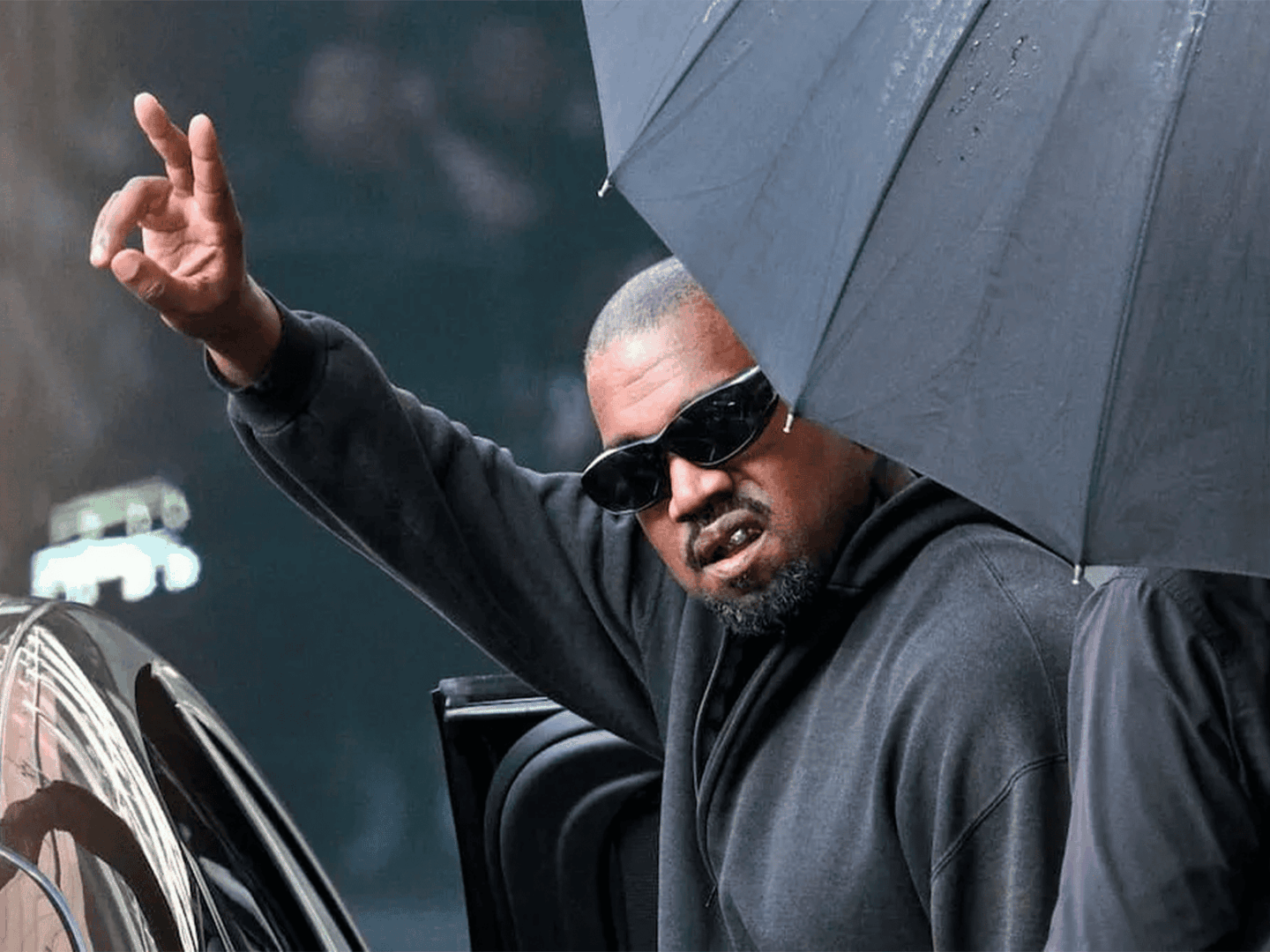
“I am not a Nazi or an antisemite.”
The American artist Kanye West, now known as Ye, published a letter of apology in The Wall Street Journal on 26 January 2026 in which he acknowledged having caused harm with his antisemitic statements and attributed part of his behaviour to neurological damage suffered in a car accident in 2002. The letter is one of the clearest attempts by the artist to explain his behaviour in recent years.
In the text, titled To Those I Hurt, Ye explained that the accident fractured his jaw and caused an injury to the right frontal lobe of his brain. According to his account, doctors focused on the visible injuries and did not thoroughly assess the possible brain damage, which, in his view, marked the beginning of a series of medical oversights with long-term consequences.
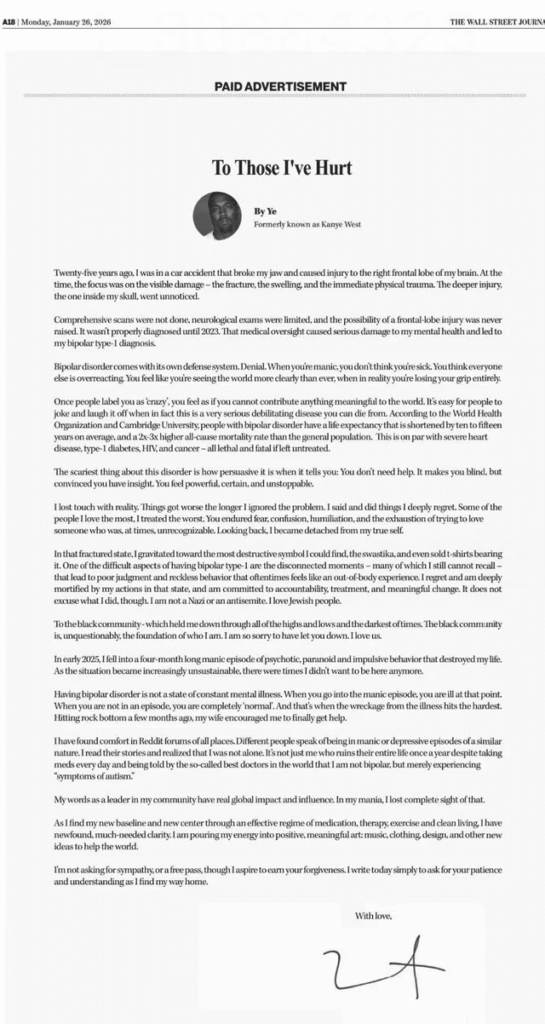
The artist himself stated that the most serious injury was the brain damage, as it went undiagnosed for more than two decades. He said he did not receive comprehensive neurological tests and that the damage was only properly identified in 2023. According to Complex, Ye linked this lack of diagnosis to the deterioration of his mental health and to his later diagnosis of bipolar disorder type 1. For him, it was a condition that was ignored and that influenced different aspects of his life.
Bipolar disorder, denial and loss of control
In the letter, West explained how bipolar disorder changed his perception of reality. According to Vanity Fair, he described manic episodes as periods in which he felt extremely euphoric, confident and convinced he had clarity, although over time he realised that he was actually losing control. This reflection suggests that the artist has begun to question a narrative he used for years to justify many of his public decisions.
According to Complex, Ye admitted that during those periods he said and did things he is now ashamed of, especially towards people close to him and towards communities he belongs to. The letter presents bipolar disorder not only as an explanation, but as a mental state that led him to accept harmful behaviour while believing he was acting correctly, raising questions about how much the illness influenced his actions and how much remained within his personal control.
Antisemitism and symbols as extreme provocation
One of the most sensitive aspects of the text is his antisemitic behaviour between 2022 and 2024. During that period, he publicly praised Adolf Hitler, sold T-shirts featuring swastikas and released a song titled Heil Hitler, actions that represented the lowest point of his public image and isolated him from both the industry and much of his audience.
In the letter, Ye stated that at his worst moment he clung to the most destructive symbol he could find, referring directly to the swastika. He also said that he does not consider himself a Nazi or an antisemite and that he feels affection for the Jewish people. Rather than presenting his actions as conscious decisions, the artist attempts to frame them as the result of a mind disconnected from reality, a position that seeks to explain his behaviour without completely distancing himself from responsibility.
Additionally, according to Complex, in November 2025 he met with Rabbi Yoshiayao Yosef Pinto to offer a personal apology, a gesture that can be interpreted as part of a broader effort to rebuild his public image.
Apology to the Black community
Ye also apologised to the African American community. According to Vanity Fair, he acknowledged that his behaviour damaged the image of a group he considers essential to his identity, adding a more personal dimension to the conflict, as he not only distanced himself from other communities but also from his own roots.
The artist himself stated that at the beginning of 2025 he went through a four-month manic episode with symptoms of paranoia, impulsivity and suicidal thoughts, a period that, according to him, destroyed his life. This confession shows that his crisis was not only media-driven, but also deeply personal.
Currently, he said he is following a treatment based on medication, therapy, exercise and lifestyle changes. According to Complex, he claims to have reached greater emotional stability and to be focused on positive creative projects. His final message does not seek immediate forgiveness, but time, suggesting an attempt to rebuild a public image that he himself helped to dismantle.
Sigue toda la información de HIGHXTAR desde Facebook, Twitter o Instagram
You may also like...