Lately, I keep coming across videos that all start the same way: “Outfit for a techno concert,” “What to wear to see Métrika,” “Looks for Primavera Sound,” “How to dress for a rave,” “What to wear to a trap concert”…
As you can probably imagine, the videos are less than a minute long and highlight a list of clothing items, a couple of musical references, and a selection of must-have accessories to make you look like you belong to the scene. To look like.
And every time I see them, they make me wonder the same thing: At what point did we start needing a uniform to have experiences? At what point did putting together a certain outfit make you part of something, when the outfit was just a consequence of the group you belonged to?
Because the process seemed to work in reverse. First, you discovered a scene, a sound, a community, or a way of understanding the world. Then the aesthetic emerged. Today, it seems that, in many cases, the aesthetic comes first. And perhaps this reversal explains one of the most interesting cultural transformations of our era: we’ve gone from urban tribes to human mood boards. We no longer consume cultures; we consume their surfaces.
Years ago, urban subcultures operated differently. Being a skater, punk, goth, or rapper meant a way of life, not just a way of dressing. There were codes, physical spaces, shared icons, and a certain sense of belonging. Clothing was a consequence of the culture. Today, culture is a consequence of clothing.
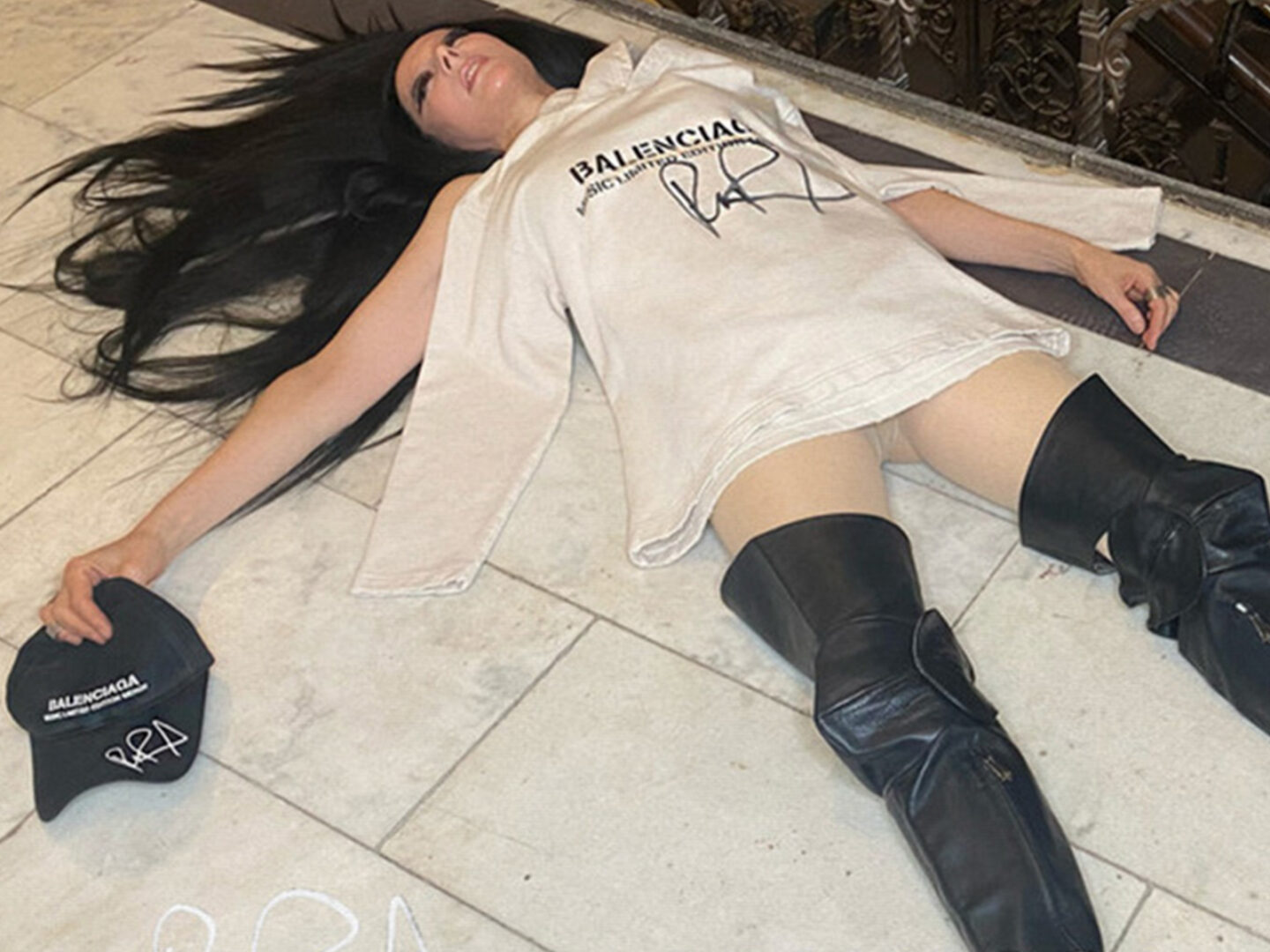
Something curious has happened with Métrika, for example. As her project continues to grow, so does an iconography associated with it that circulates independently. The makeup, the poses, the video editing, the defiant attitude, the dark hyperfemininity. Elements that began as part of a specific artistic identity and now appear replicated thousands of times on TikTok by people who might not even be able to name her entire discography.
This isn’t a criticism of Métrika. In fact, it’s proof of the power of her imagery.
What’s interesting is that the aesthetic is traveling faster than the work itself.
It happens with techno, for example. A culture that for decades was tied to cities, clubs, DJs, record labels, and very specific ways of understanding nightlife. However, if you consume enough content on social media, you might come to think that techno consists mainly of dressing in black, wearing Oakley sunglasses, getting a piercing, and filming yourself in slow motion walking into a rave.
The image has ended up overshadowing the context. Experience has been replaced by its representation. And this isn’t limited to music. The same thing happens with phenomena seemingly far removed from it.
Take running, for example. A few years ago, running was just running. Now it’s also a visual identity. Hokas, Strava, energy gels, specialty coffee after a workout, marathon training videos, and time splits are all part of the same, instantly recognizable aesthetic universe. The same goes for matcha; the same goes for Pilates; the same goes for minimalist coffee shops; the same goes for practically any trend that sticks around on TikTok for more than three weeks.
Everything ends up becoming an aesthetic. Even our cultural tastes. Perhaps that’s why it’s so difficult to distinguish between a real scene and a viral aesthetic. Everything ends up occupying the same space. The algorithm flattens differences until entire movements are reduced to a set of easily identifiable images.
In the past, a subculture could stay with you for years. Now, identities last about as long as an algorithmic trend. Brat Summer, Office Siren, Mob Wife, Clean Girl, Blokecore… We consume them, replicate them, and discard them before they have time to become something deeper.
And perhaps that is the great contradiction of our time: We’ve never had access to so many cultural references; we’ve never been able to discover so much music, so much cinema, so much fashion, and so much information from different places. But at the same time, it’s never been easier to reduce all of that to a single image.
Because the internet doesn’t necessarily reward context. It rewards what can be understood in two seconds. And an aesthetic is always understood faster than an entire culture.
That’s why I see more and more people functioning as human mood boards. People constructed from perfectly curated references, recognizable images, and visual codes that once belonged to specific scenes and now float freely across the internet waiting to be repurposed.
I don’t know if urban tribes have disappeared. They probably still exist. But I do have the feeling that we’re living in an era where appearing to be part of something has become much more important than actually being part of something. And there’s a huge difference between the two.
Sigue toda la información de HIGHXTAR desde Facebook, Twitter o Instagram
You may also like...