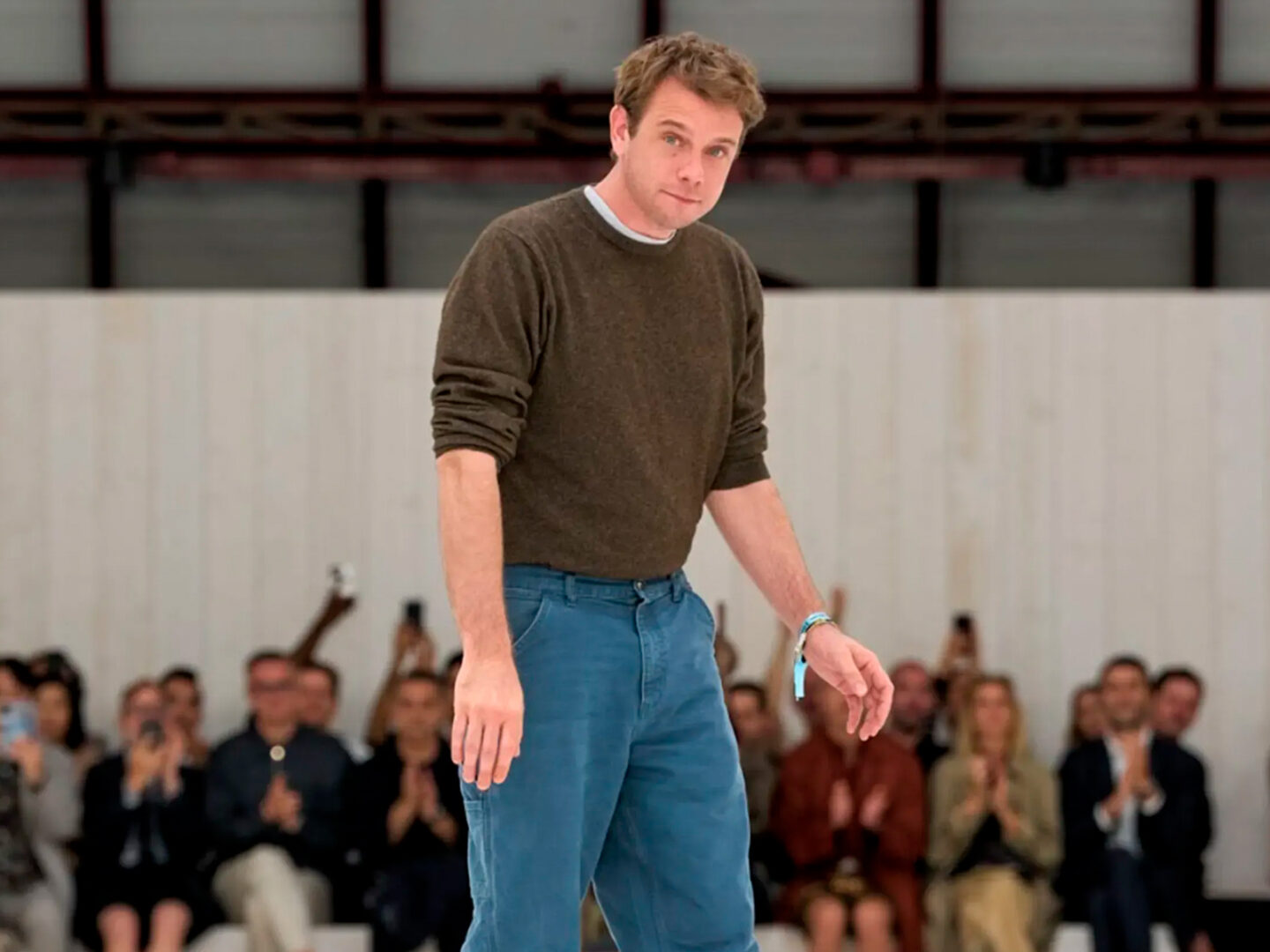
In recent years, following the creative organizational chart of fashion has become almost impossible. Not because there is a lack of information, but because it is no longer particularly relevant. Creative directors who are here today and gone tomorrow, historic fashion houses that change direction without the change being particularly noticeable, and a persistent feeling that everything is moving… so that nothing really moves.
Changing creative directors is no longer like changing houses
For a long time, the appointment of a creative director meant a profound transformation. Today, however, the changeover functions more as a tool for revitalization than as a fundamental creative decision. Directors are changed in order to: reactivate conversation, reposition the brand in the media cycle, and generate expectation even before a collection exists.
The announcement matters more than the project; speculation matters more than the result. That’s why it’s no longer surprising that the same profile can circulate between houses with historically opposing identities, because it goes with the designer, not the house.
From creators to channelers of the zeitgeist
Increasingly, the big houses seem to prioritize creative directors who are able to read the moment, translate it into product, and sustain the industrial pace, rather than authors bent on building their own universe in the long term.
The designer becomes a cultural manager, an interpreter of trends, an adaptable figure. They are not asked to rewrite the identity of the house, but to make it work better in the current context. Historical coherence gives way to market coherence.
The game of musical chairs is also played beyond
The dance is not limited to design studios. It is becoming increasingly clear that creative directors do not arrive at their new homes alone. They arrive with their own symbolic capital: ambassadors, muses, faces that no longer represent a brand so much as a sensibility.
Cases such as Dakota Johnson leaving Alessandro Michelle’s Gucci for Valentino, or Greta Lee and Taylor Russell, who have accompanied the same aesthetic vision in their transition from Loewe to Dior, reveal a profound change: loyalty is no longer built with the house, but with the vision that articulates it.
Ambassadors are no longer the heritage of a brand, but rather mobile extensions of a creative narrative.
Increasingly porous identities
When directors change easily and faces move with them, the consequence is clear: the identity of the houses becomes diluted. It does not disappear, but it becomes flexible, adaptable, ambiguous enough to absorb different languages without breaking.
Brands no longer establish long-term imaginaries; they accompany them while they function. The “game of musical chairs” turns houses into platforms and creatives into nodes of cultural connection. Everything circulates. Everything is exchanged. Everything is temporary.
This system is not a response to a creative crisis, but rather to a very specific industrial logic: in a fashion industry that cannot afford to stop, changing creative directors produces novelty without assuming structural risk. It generates narrative without slowing down the machine. It maintains a sense of dynamism even though the substance remains intact.
But what remains of a house when everything—people, faces, codes—is interchangeable?
Sigue toda la información de HIGHXTAR desde Facebook, Twitter o Instagram