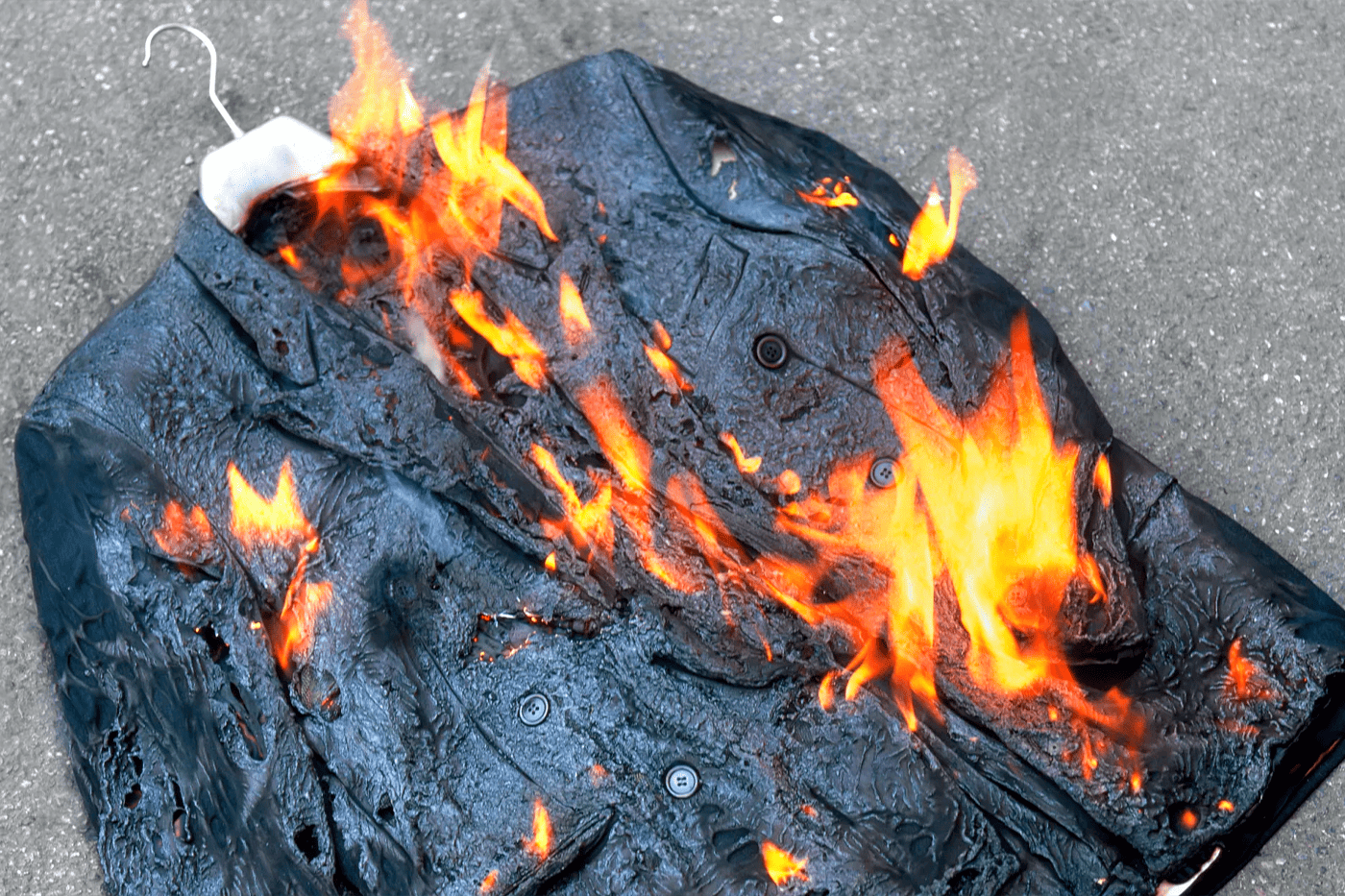
In the fashion industry, there are secrets that have remained hidden from view for years. One of them is the mountains of brand new clothing and footwear that never make it to the high street. Perfect garments, ready to be worn, that end up being destroyed. But that chapter is coming to a close in Europe.
The European Commission has approved new measures within the framework of the Ecodesign Regulation for Sustainable Products (ESPR) that will prohibit large companies from destroying unsold textiles and shoes from 19 July 2026. This move is more than symbolic; it responds to figures that leave no one indifferent.
The problem we didn’t see
Between 4% and 9% of textiles produced in Europe are never used and are destroyed before they even have a chance. This is according to data handled by the European Commission and released by EFEverde. The impact is not insignificant, as this practice generates around 5.6 million tonnes of CO₂ per year, a figure comparable to Sweden’s total net emissions in 2021.
It is not just a question of surplus or stock management, it is a climate issue. The Commissioner for Environment, Water Resilience and Competitive Circular Economy, Jessika Roswall, said in a statement that although the textile sector is leading the transition to sustainability, the waste figures show that there are still significant challenges.
Who does it affect and when?
The ban will begin with large companies on 19 July 2026. From that date, they will not be allowed to destroy unsold clothing, accessories or footwear, except in the exceptional cases provided for in the regulation. Medium-sized companies will have more leeway to reorganise their processes and will have to comply with the ban from July 2030.
In addition, large companies are already required to report on the products they discard. This transparency obligation will also apply to medium-sized companies in 2030, and from February 2027 they will have to submit the information in a harmonised format so that the data is comparable.
If it is not destroyed, what is done with it?
The logic changes completely. Instead of producing and discarding, the focus shifts to extending the product’s useful life. The European Commission proposes specific ways to manage the surplus: reuse and donation, resale in other channels or markets, remanufacturing to give the garments a new commercial outlet and, as a last resort, recycling of the materials.
Destruction will be limited to very specific and justified cases: health or safety risks, irreparable damage or intellectual property infringements. It will not be a discretionary decision. The national authorities of each Member State will have to monitor its application to prevent these exceptions from becoming a back door that allows the practice to continue.
A truly circular economy
All of this is part of a broader strategy to promote the circular economy in the European Union. The idea is simple, albeit ambitious: to abandon the linear model of production and disposal in favour of a system in which products have several lives.
For fashion, this means rethinking inventories, production and surplus management. For consumers, it could mean more second-hand initiatives, more outlets, more recycling programmes and greater transparency about what goes on behind each collection.
And perhaps, for the first time in a long time, sustainability is not just storytelling. Starting this summer, in Europe, unsold clothing will have to find another destination other than the fire.
Sigue toda la información de HIGHXTAR desde Facebook, Twitter o Instagram
You may also like...