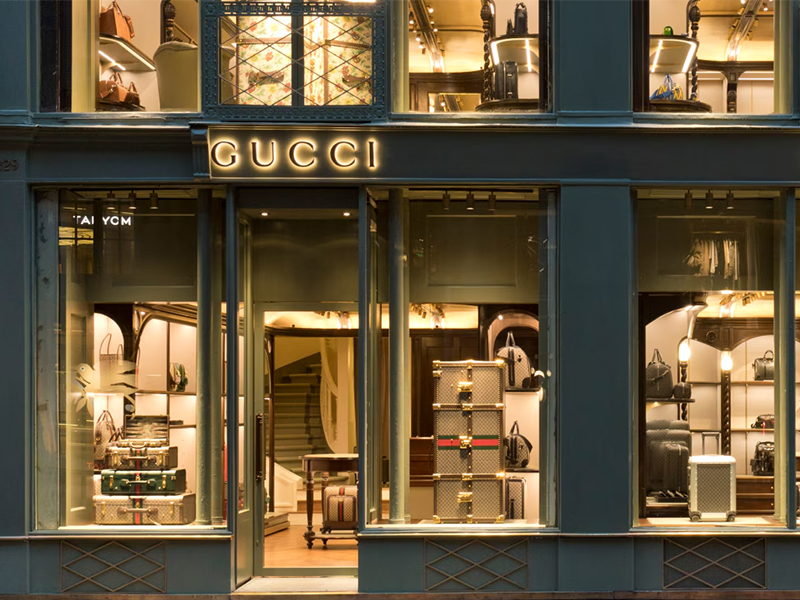
Against all odds —and defying years of discourse around the death of retail— luxury brands are staging a comeback to physical spaces that is as visible as it is strategic. Europe has become the playing field where major houses compete not only to sell, but to claim territory. Far from being mere stores, new openings act as declarations of power. The more central, the more iconic; the larger, the more influential. The numbers speak for themselves: 96 new stores in 2025, marking a 13% increase. And yes, this is no longer just about selling handbags.
The battle is literal. Every premium corner matters. Rising rents and the lack of available space have turned the most coveted streets into true battlegrounds where luxury giants compete aggressively. Groups such as LVMH, Kering and Richemont are leading the charge, but they are not alone. Younger brands are also claiming their space, aware that visibility today is almost as valuable as the product itself. The result is increasingly spectacular stores, designed not only to be entered… but to linger in memory (and on the feed).
From the pavement to the skyline
Queues outside boutiques are no longer just a sign of consumption, but of cultural phenomenon. People are willing to wait for hours not necessarily to buy, but to experience. Luxury has understood something crucial: attracting attention also creates value. Instagram and TikTok have turned shop windows into stages, and products —especially accessories— into objects of collective desire. Even if not everyone buys, everyone takes part. And for brands, that still counts.
When space becomes scarce, creativity takes over. Faced with saturated streets, brands are looking upwards (vertical expansion), sideways (taking over entire buildings) and towards nearby neighbourhoods (less exclusive, but more accessible). This partial decentralisation is not only about cost, but strategy: reaching new audiences without losing aura. Because in luxury, proximity can also be a well-managed form of exclusivity.
Accessories as the driving force
If there is one category fuelling this boom, it is accessories. Bags and shoes dominate both the market and the digital imagination. In 2025, they accounted for half of all openings, confirming that ‘accessible’ luxury within luxury remains the entry point for many consumers. These are aspirational, visible and highly shareable products. It is no coincidence that they take centre stage both in stores and across social media.
Ultimately, everything leads to the same idea: the store is no longer just a point of sale, but a narrative. Each flagship becomes its own universe where the brand tells its story. Architecture, experience, flow… everything is designed to build identity. In an increasingly saturated market, survival depends not only on what you sell, but on how you make people feel —even those who simply walk past. Because today, in luxury, space itself is the product.
Sigue toda la información de HIGHXTAR desde Facebook, Twitter o Instagram
You may also like...