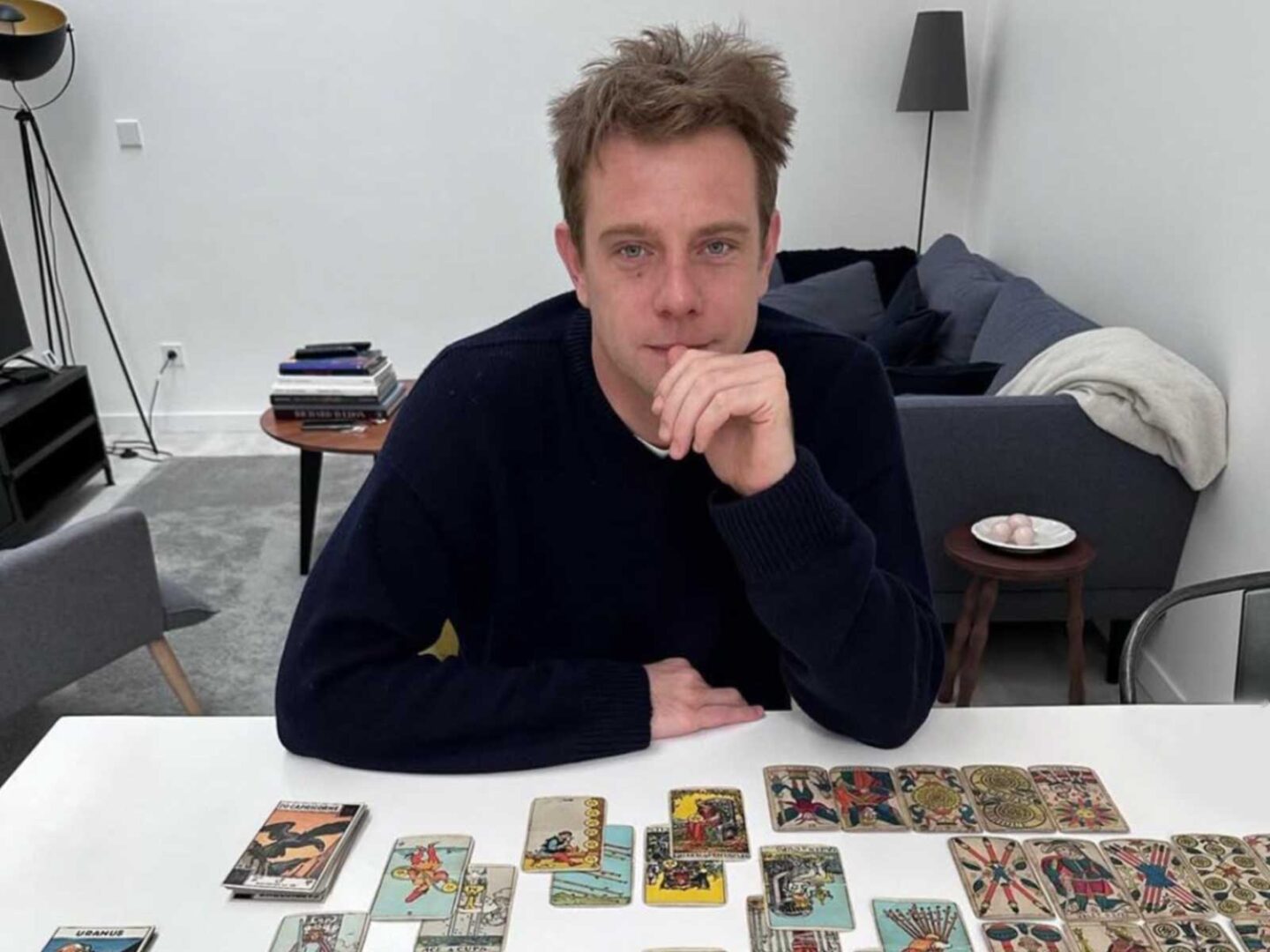
There is something significant about the fact that, in an age dominated by predictive algorithms, artificial intelligence and the mass accumulation of data, an entire generation has rediscovered an interest in a symbolic system based on illustrated cards. Far from re-emerging as a relic of the past, the tarot has re-established itself in the present as a tool capable of providing answers – albeit indirectly. Its resurgence reflects a shift in the way meaning is constructed in a society saturated with information, yet increasingly devoid of certainties.
For decades, modernity was underpinned by the promise that everything could be explained and quantified. However, that promise has begun to crumble. As Byung-Chul Han points out, the demand for absolute transparency has not led to a greater understanding of the world, but rather to a new form of opacity stemming from excess. In parallel, Mark Fisher describes a present in which the future is perceived as manageable, but hardly transformable. In this context, the tarot emerges as an alternative in the face of the difficulty of processing contemporary complexity.
The current interest in the tarot lies not so much in its supposed ability to predict the future as in its interpretative structure. The cards are capable of organising emotional and cognitive experiences that are often difficult to articulate through conventional language. Each arcane allows for the projection of multiple meanings, adapting to individual contexts without imposing fixed conclusions. In this sense, the tarot proposes a return to the image as a primary form of understanding, shifting the focus from explanation towards interpretation.
El tarot está muy presente en el mundo de la moda. Diseñadores como Jonathan Anderson han desarrollado universos creativos en los que la ropa se concibe como un sistema de signos. El tarot ofrece un repertorio iconográfico de gran potencia, capaz de generar significado. De forma similar, Alessandro Michele incorporó durante su etapa en Gucci un imaginario en el que lo esotérico, lo histórico y lo pop coexistían como capas simultáneas de interpretación, consolidando una estética donde el símbolo prevalece sobre la literalidad.
La normalización del tarot dentro del imaginario mainstream se ha visto reforzada por su adopción en entornos de alta visibilidad a través de figuras como Dua Lipa o Emma Roberts. En paralelo, perfiles como Trevor Ballin -tarotista canadiense vinculado al circuito creativo- han integrado la práctica en el ecosistema de la moda, realizando lecturas para personalidades del ámbito cultural y participando en eventos. Su presencia evidencia una transformación más amplia, el tarot ha dejado de ser una práctica periférica para convertirse en un código cultural legitimado.
Nor can the rise of tarot be understood without considering its adaptation to the digital environment. During the pandemic, increased screen time and the need for tools for self-reflection converged at a turning point. Social media platforms transformed a traditionally intimate practice into a collective phenomenon, in which readings are aimed at wide audiences but are perceived as personal experiences. This shift has allowed tarot to become a shared language.
This resurgence also fits into the logic of contemporary capitalism, where even spirituality takes on forms of circulation and consumption. Decks designed as luxury items, digital readings and monetised content form an ecosystem in which meaning itself becomes a product. However, reducing the phenomenon to its commercial dimension would be insufficient. In a culture obsessed with immediate answers, the tarot recovers the value of the question, not as a deficiency, but as a necessary condition for constructing meaning.
Sigue toda la información de HIGHXTAR desde Facebook, Twitter o Instagram