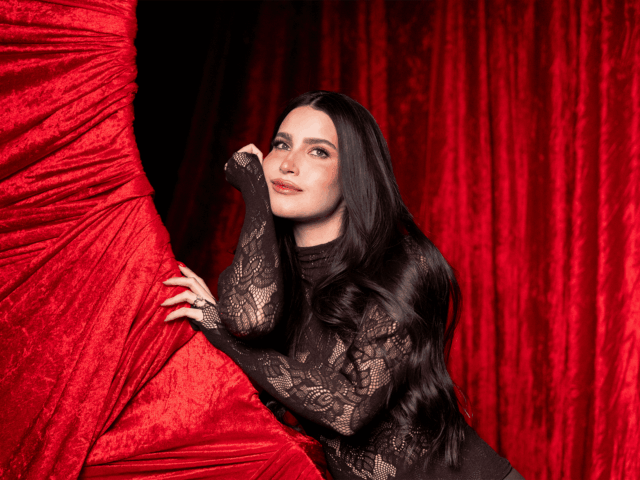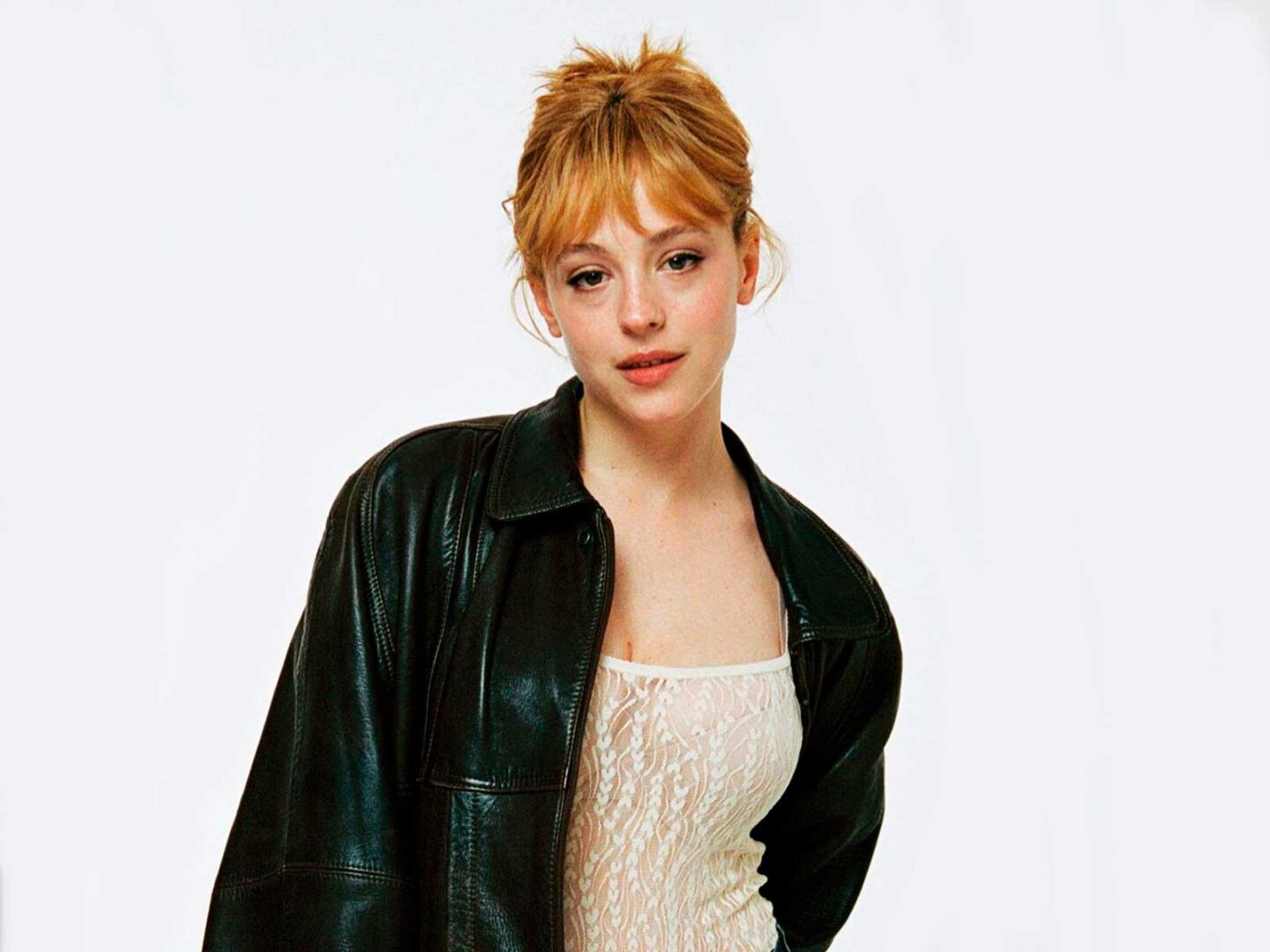
Catalina Sopelana (Madrid, 1992) has spent over a year dominating platform covers. In 2025, she starred in The Gardener alongside Álvaro Rico and Cecilia Suárez, and in November, she premiered The Crystal Cuckoo, Netflix’s adaptation of Javier Castillo’s bestseller. Success was immediate: they hit number one in Spain within the first 24 hours. But she sees herself in a state of continuous learning, in a long-distance race. This June, she will premiere El Inmortal on Movistar+, co-starring Alejandro García and Teresa Riott.
We spoke with her in Madrid about all that and ended up in other places: artificial intelligence, how the discourse of self-care has become an alibi for narcissism, the misogynistic Picasso, and why, with two Netflix leads on the table, what she really wants now is a romantic comedy. She is a trained psychologist and studied at Juan Carlos Corazza’s studio. Sopelana speaks as she thinks: slowly, politely, thoughtfully without forced headlines, and with her mind set on her ambitions.
HIGHXTAR (H) – In less than a year, you’ve chained together projects like Violeta in The Gardener, Clara in The Crystal Cuckoo, and In the Killer’s Circle. How do you manage the jump from one character to another without going crazy?
CATALINA SOPELANA (C) – Those three came together, but almost a year passed between The Gardener and The Cuckoo. I experience it with excitement. Each project is something new and I like to prepare them with time. They are three incredible jobs that I wanted to dedicate a lot to. I love being busy; I don’t experience it as suffering. I like to dive headfirst into the work; I’m lucky enough to do what I love and these are opportunities to pour everything in, detach myself, and fully immerse myself in new worlds.
(H) – It’s been mentioned that you make playlists for each character. How do you work with music?
(C) – I make playlists for each character and now even for auditions. I had one the other day and I made a list for that too. I’m a huge music geek and it helps me get into character from a place that’s fun for me. With The Gardener, for example, I made several. My co-star Álvaro and I talked about music a lot and suggested songs. Miguel, the producer, even told me: “I follow you on Spotify, send me some tracks.” In fact, one of the songs we suggested, Cigarettes & Sex, ended up making the cut.
(H) – ¿What are you listening to now? Any album you’re looking forward to?
(C) – I’m patiently waiting for Gracie Abrams’ album; I’m obsessed with the single. I’m also really looking forward to Olivia Rodrigo’s new one. I tend to get hooked on albums and artists and play them to death.
(H) – In previous interviews, you talked about that feeling of a “long-distance race.” Do you still feel like you’re just starting out or do you feel more established?
(C) – I still feel like I’m on a little path. I’ve achieved many things and I’m very happy with the projects I’ve been in, but I feel I still have a lot to achieve. I see cases of people whose careers skyrocket from zero to a hundred. In mine, I’ve always had the feeling of receiving opportunities little by little. I really want to do film and I’m putting all my excitement there. I’d love to play a character in a movie like the ones I did in The Gardener or The Cuckoo. Getting there is a daily job.
(H) – In The Crystal Cuckoo you play Clara, an orphaned medical resident in a story where the transplanted heart works almost as a metaphor. What attracted you most?
(C) – It’s always interesting to do a book adaptation. I was very drawn to the idea that so many people have read a novel, imagined a character, their face, their way of dressing… No matter how much you read the same thing, everyone has their own imagination. Being the person who embodies that projection seemed crazy and very fun to me. Then there was the story, which mixed many things. Clara is a resilient doctor, a type of character I hadn’t played. Doctors are very particular people: more rational, with a different mental structure. I liked that a lot. And it wasn’t just a thriller: there was a powerful background, a lot of character development. I was interested in that balance between genre and depth.
(H) – When a script reaches you, what’s the first thing you look for to say “okay, let’s do it”?
(C) – The first thing is feeling that there’s something real to tell. You can really tell when a script is born from a story that wants to be told and when it seems more like an excuse to “showcase” a trendy topic. Sometimes that works, but I notice when there’s a real narrative behind it. Then, the character: the opportunity to do something different. I’ve come from three thrillers that are very different from each other but within the same genre, and now I want to change. I’d love to do a romantic comedy; I’ve always loved them. And, of course, the team: your colleagues, the directors—they change your life.
(H) – How does your life change when a lead role like the one in The Gardener arrives?
(C) – You do notice it. For a few weeks, there was a kind of weird energy in the air: people recognize you more. On a work level, it also positions you. I really wanted to do a lead, not because supporting roles aren’t good—sometimes they’re the best—but for the exercise of sustaining an arc from the beginning, having the plots revolve around you. I was coming from more support characters, supporting stories, and I wanted to experience that. Of course it positions you and allows you to say: “Hey, I can do this too.” But in daily life, it doesn’t change that much.
(H) – You’ve said you’d love to do a romantic comedy. What kind of character do you imagine?
(C) – A very fun character. I watch a lot of rom-coms. The other day I rewatched Music and Lyrics, with Hugh Grant and Drew Barrymore; it’s a hilarious, silly movie with music. Also 13 Going on 30, with Jennifer Garner, or How to Lose a Guy in 10 Days. I like those slightly lighter but very romantic characters. I defend romantic comedies: if there’s anything universal, it’s love. I’d love to have a plot that’s lighter on the surface but with that emotional depth.
(H) – You’ve spoken on occasion about the need to show other masculinities on screen. How would you like those new representations to be?
(C) – I did my final degree project on the myths of romantic love and how they affect teenagers. It was very intense to see examples from movies like Twilight, which have educated us in ideas like “if a guy gets jealous, it’s because he likes you” or “if he gets violent, it’s because he’s crazy about you.” It’s extremely dangerous. There’s a movie I cited in my thesis, Don Jon, about a guy addicted to porn. It talks about how myths of romantic love and pornography influence teenagers. He’s the gym-bro cliché and falls for a character played by Scarlett Johansson, very much like Mujeres y hombres y viceversa, and in the end, he ends up in love with an older woman, Julianne Moore’s character, who is broken inside. I always use it as an example because it breaks that masculinity cliché. Things are changing, but there’s a lot left to do. In rom-coms, the guy clichés are breaking. We see men expressing what they feel, talking more about what’s happening to them. Fortunately, I see it in my friends. They are less and less into that absurd thing of not showing vulnerability.
(H) – On social media, there’s also a very reactionary discourse towards feminism, especially among teenagers. Do you think film and series can help educate those kids?
(C) – Of course. Art awakens consciences and serves as a mirror of what to do and what not to do. The problem is whether those kids actually get to see the movies that could help them. I’m not quite sure where the responsibility lies there. There are films that do work on other forms of masculinity and friendship. I love it when I see characters who are friends, guys and girls, whose relationship doesn’t have to involve love or sex all the time, but simply sharing life. A director I worked with said there’s a lack of stories about friendship, without the need for everything to lead to romance.
(H) – You are a trained psychologist. How do you see the mental health boom after the pandemic?
(C) – I started going to a psychologist at 18 and I remember feeling a lot of shame saying it. Some people even told me: “Don’t say it.” I went for anxiety, for things that happen to almost all of us. Now the perception has changed and mental health gets a lot of hype, but I miss real care. There’s a trend of saying you’re taking care of your mental health, but I wonder if we’re really taking care of people suffering from anxiety or depression. We need to support more, accompany more. And at the same time, I notice an opposite phenomenon: people who hide behind their therapy and self-care to be absolute jerks. “I’m not going to do this because I have to set boundaries, I have to take care of myself.” It’s good to set boundaries, it’s a huge learning process, but we live in a society; we have family, friends. It’s not just about self-care, but also about caring for others. As a psychologist—in quotes—sometimes I hear things and think: what selfishness and narcissism are being legitimized under the umbrella of self-care.
(H) – I wrote a feature on how setting boundaries can make us more individualistic. I read a quote saying that the most punk thing now is to take care of your own.
(C) – Totally. A very dangerous tool is being given to very selfish, very narcissistic people who don’t want to take responsibility for anything. And added to that is the dissemination on social media: people without training dropping tips on TikTok about boundaries, trauma, anxiety… and kids receiving that information which gives them the power not to be responsible for anything. It’s very dangerous.
(H) – In an interview, you mentioned that as a child they called you “red” at school and that you embraced that role. Do you think it’s important to take a stand in the art world?
(C) – I hope you don’t use that headline again [laughs]. In that interview, moreover, it was in the context of a movie about hazing; we were talking about bullying situations and suddenly it was reduced to being “the red one.” I went to a school where the majority was very right-wing, so at the slightest thing you were “the red one.” I didn’t care. About taking a stand: we are in a moment where things are happening that are serious enough that, if you have a platform and feel even slightly capable, you should use it. I like seeing people like Javier Bardem do it. It makes me very proud. I read some statements of his the other day saying he speaks from privilege, and I find that honest. I also believe we don’t have the responsibility to know about everything. There are geopolitical issues that I don’t feel qualified to give a solid opinion on. I think it’s honorable to say: “I don’t know about this, I’d rather not speak.” On red carpets, sometimes they ask me things and, if I’m not informed, I tell the truth. I’ve had many conversations with colleagues about what to say, what not to say, what to post on social media… We are learning. The interesting thing is being able to talk about it.
(H) – In Minotauro you play Picasso’s teenage lover. With all the current debate on how to look at his figure, where do you stand?
(C) – That movie hasn’t come out yet, I haven’t seen it and I don’t know where it stands. When the script reached me, I asked myself many questions. What I remember is that it focused on Picasso’s relationship with his women and portrayed him as what he was: a misogynist who behaved terribly, a tormented and abusive guy. The movie, at least in the script I worked on, showed him that way. Beyond that, there’s the usual topic: the justification of the artist, as if his work justified everything. We have to look at artists with today’s eyes and be able to be critical of what they did. Then comes the eternal debate of whether to separate the art from the artist. It’s a very recurring conversation with friends. My character was a very young girl, she had a daughter with him and, in the script, she lived completely submissively. It ended terribly; it was a very tragic fate.
(H) – Do you feel the pain when you play a character like that?
(C) – Yes… You empathize a lot and you suffer while playing it.
(H) – How is it to live with a movie filmed in 2022 that still hasn’t been released?
(C) – With patience and letting go of control. This industry is so complex, so many things happen that don’t depend on you, that if you cling to that, you’re lost. For me, working with Julio Medem was a dream come true. Pablo Derqui does an incredible Picasso. We filmed in the Dominican Republic; it was a very crazy experience. If the movie comes out, it will be wonderful; and if not, that’s also part of what this career is. It makes me sad, but there’s absolutely nothing I can do.
(H) – What does acting give you that psychology didn’t?
(C) – Everything. I love filming, I love film sets, the teamwork… It’s the most intense teamwork I’ve ever seen. I’ve been a film buff since I was little and I’ve always wanted to be part of the people who make movies. I liked psychology, but now I see it almost as a preparation for what came after. Something very powerful happens to me with this job: when I’m filming I forget everything, and that doesn’t happen to me with anything else. And not just when I’m in character: also having a coffee with the crew before filming. It’s an absorbing and unique experience; they are projects that start and end, and that makes me feel very alive.
(H) – You trained with Juan Carlos Corazza, where Javier Bardem, Penélope Cruz have passed through… What do you take away from that stage?
(C) – It was a turning point. I came from studying Psychology, from a school where everything artistic was very far away. Arriving at a school where you work with the body, the voice, the creative… it was a total change. I met my two best friends there. I learned so much. I’m still training at the school, I still take courses, and also in other places, because I love to keep training. It was a rebirth: moving from a very academic path to a creative one, surrounding myself with people who were in the same boat.
(H) – In another interview you said that artificial intelligence terrified you a bit because of that appearance of perfection. Do you think it can end up affecting actors’ work?
(C) – It’s a topic that terrifies me. I change my mind a lot: sometimes I think it’s impossible for it to replace an actor’s work, and other times, seeing how everything is advancing, I get scared. I read someone saying that in an actor’s work there’s always something imperfect because we are human and we fail. You can have technically perfect performances, but there’s always a crack of inimitable humanity. An AI can do perfect things, but not emotional ones. I don’t think an AI-generated performance will ever truly move me. But then you see that there are already scripts written with AI help, digital actors… A director friend painted a pretty dark scenario for me: scripts will be written with AI, performers will be generated, synthetic actresses already exist. It’s unsettling. At the same time, I trust in that human component of error, of vulnerability. If that’s ever lost, I don’t know if I’d want to live in a world like that.
(H) – If you could write yourself a role and commission it to someone, what kind of woman would you like to play?
(C) – A tougher character, less connected with emotion and more with ambition. Now I’m playing a journalist in a series and I’m loving it precisely for that reason; she’s more badass. Until now, many of my roles were more linked to my sweet side, to a sensitivity that I think I transmit at first glance. I wanted to explore something different. I’d also like to do a character like Frances Ha, by Greta Gerwig, or the one in The Worst Person in the World, which is one of my favorite movies. In fact, I have the poster at home. I’m attracted to those women who are a bit lost, with an existential mess in their thirties, without having anything clear. Actually, I feel a bit like that now: not knowing very well where I’m going. It would be fun to play a character that embraces that confusion, mixing comedy, lightness, clumsiness. That’s what I want most.
Sigue toda la información de HIGHXTAR desde Facebook, Twitter o Instagram
You may also like...