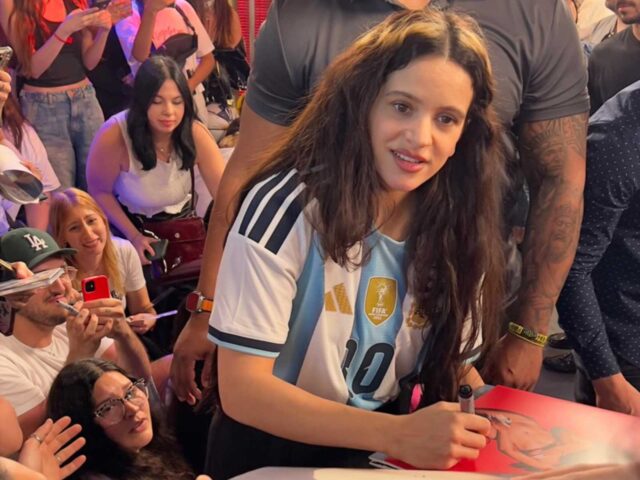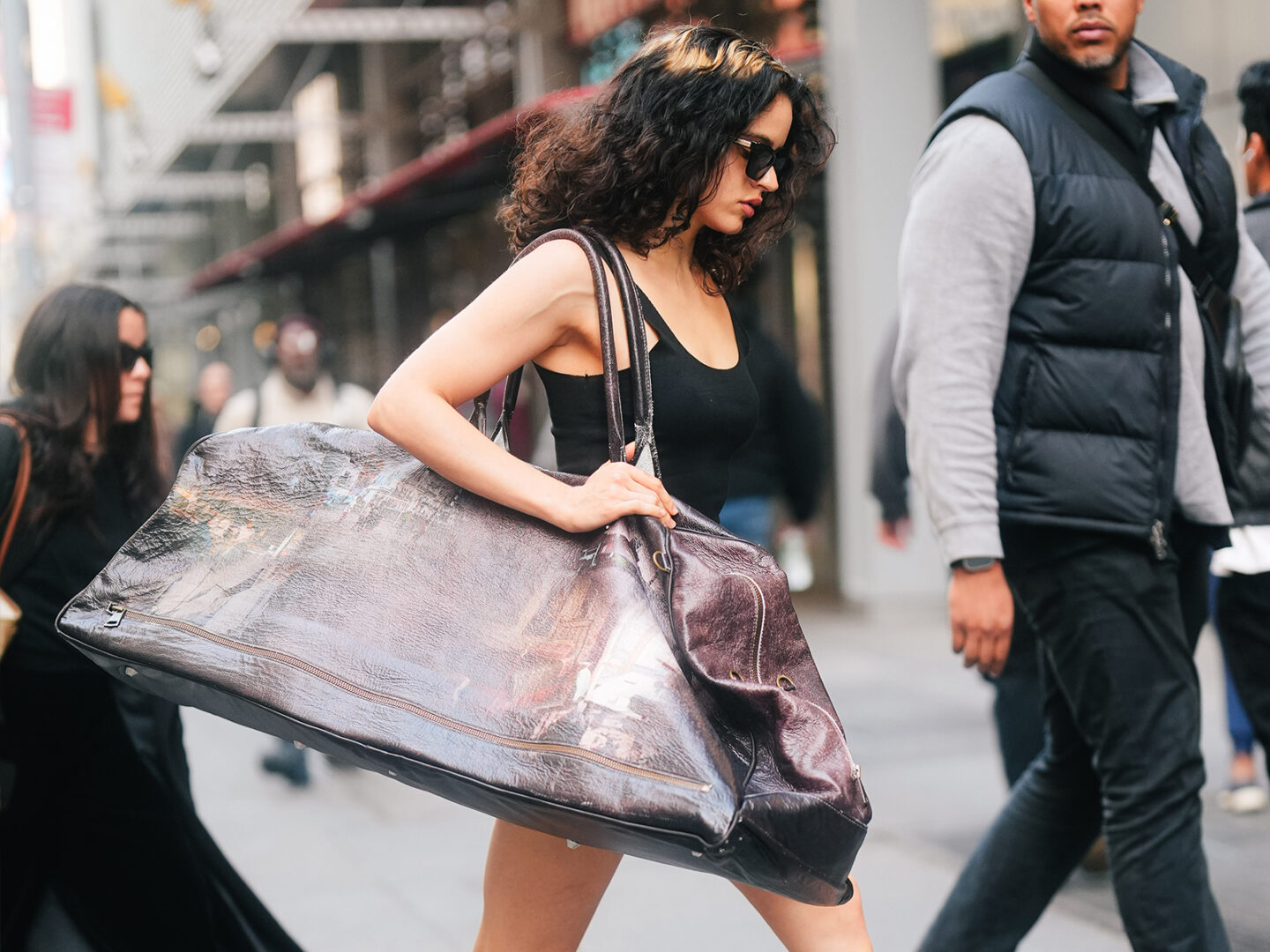
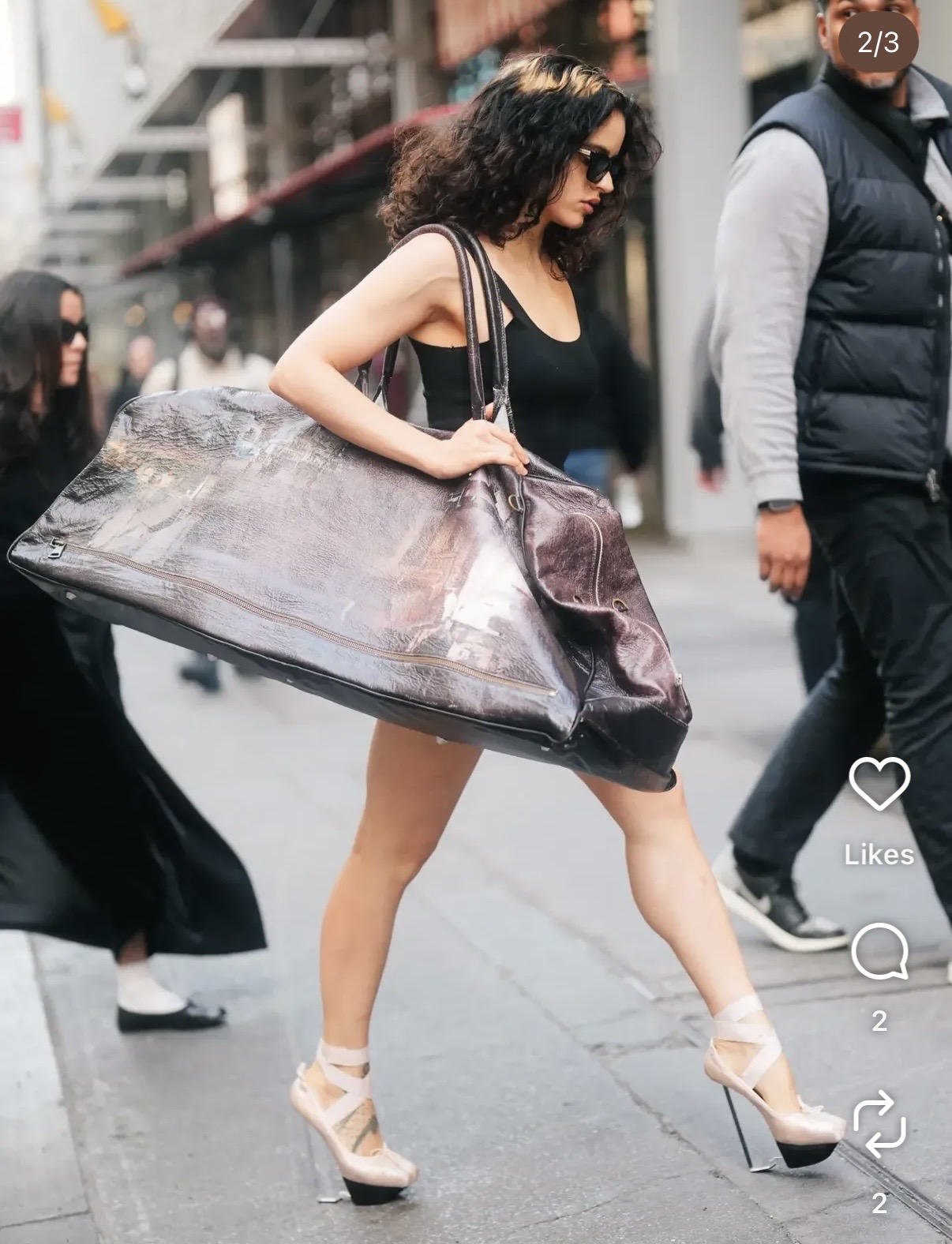
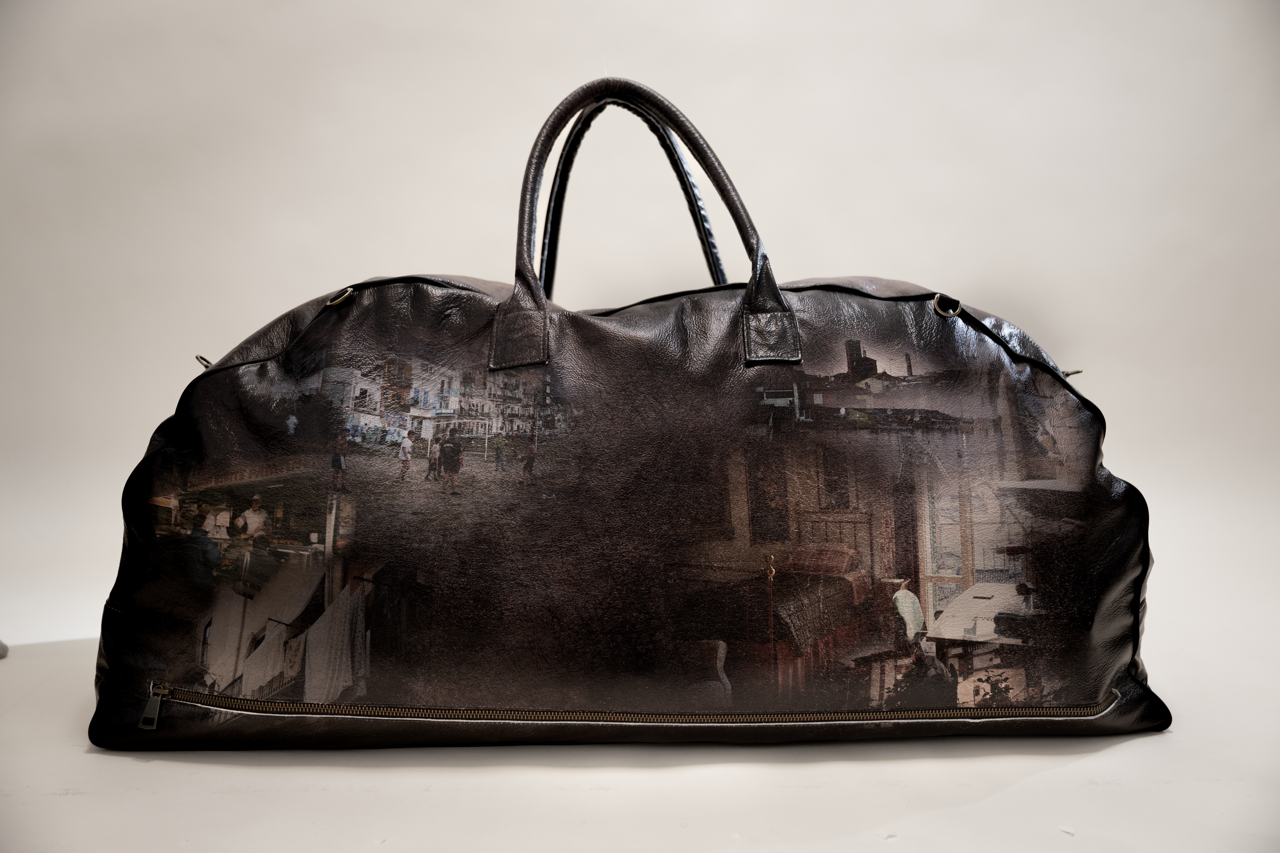
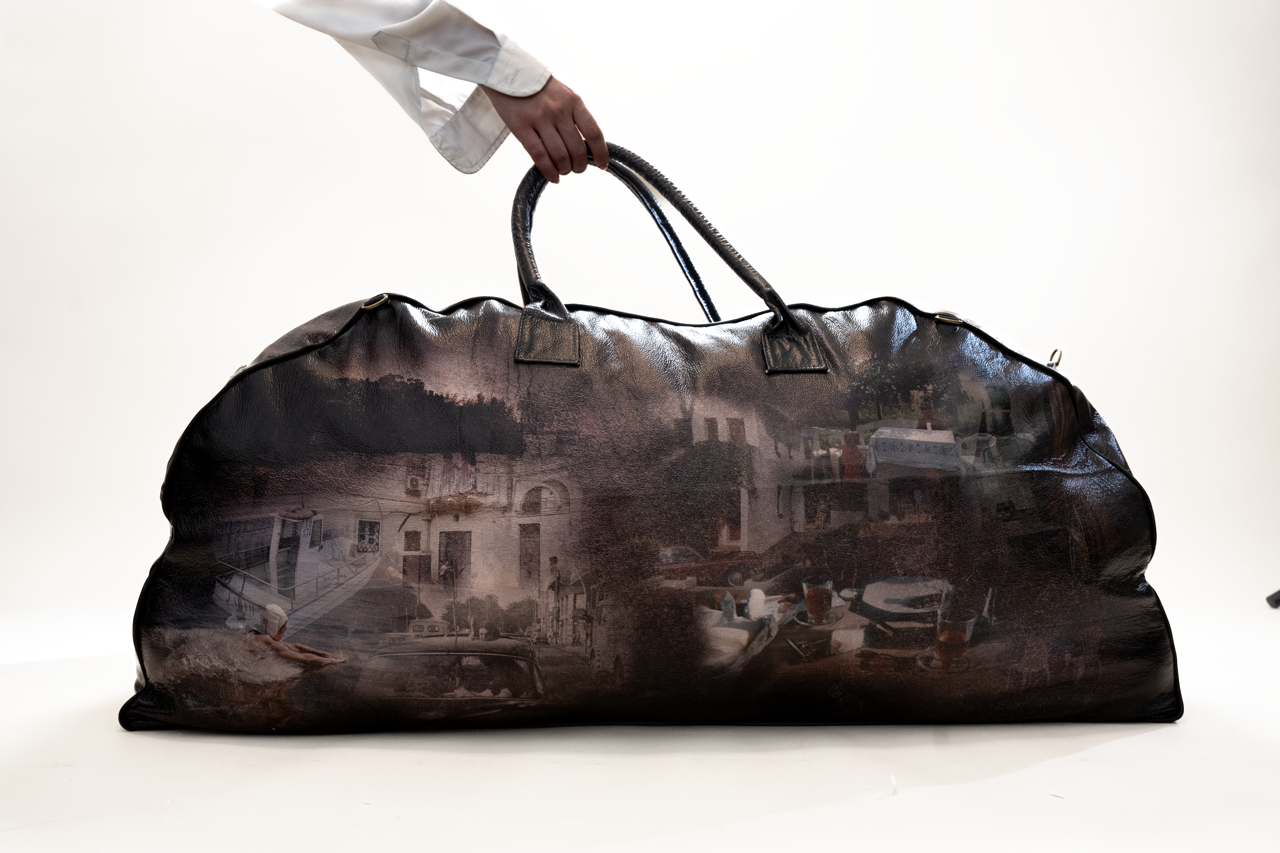
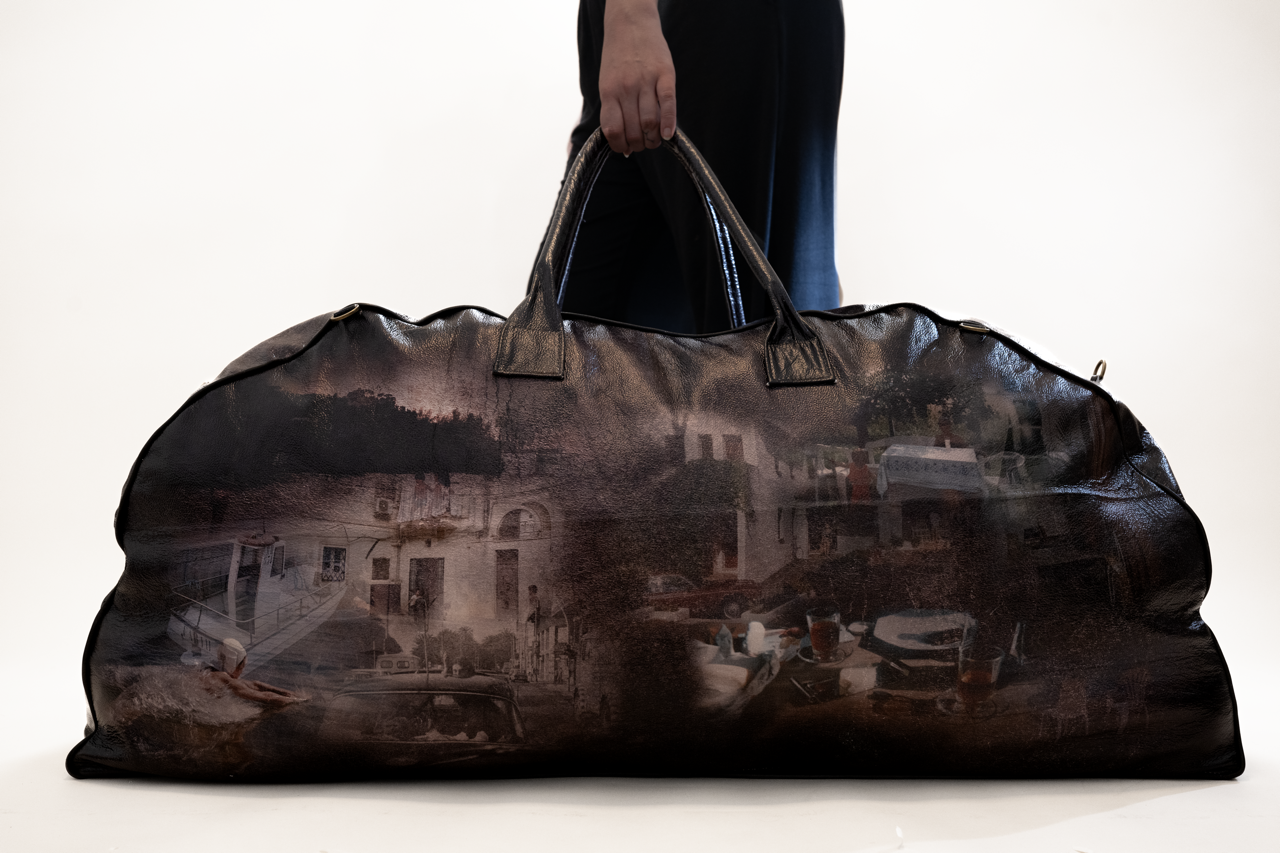
There’s something paradoxical about the fact that one of the most talked-about accessories of recent days wasn’t even meant to be sold. When Rosalía appeared on the streets of New York with an oversized bag covered in images that looked like they’d been taken from a scrapbook, the internet did what it does best: turn an unexpected image into a viral phenomenon. Behind that piece was Dana Toder, an independent designer whose creative universe spans memory, textile experimentation, and the psychological dimension of clothing.
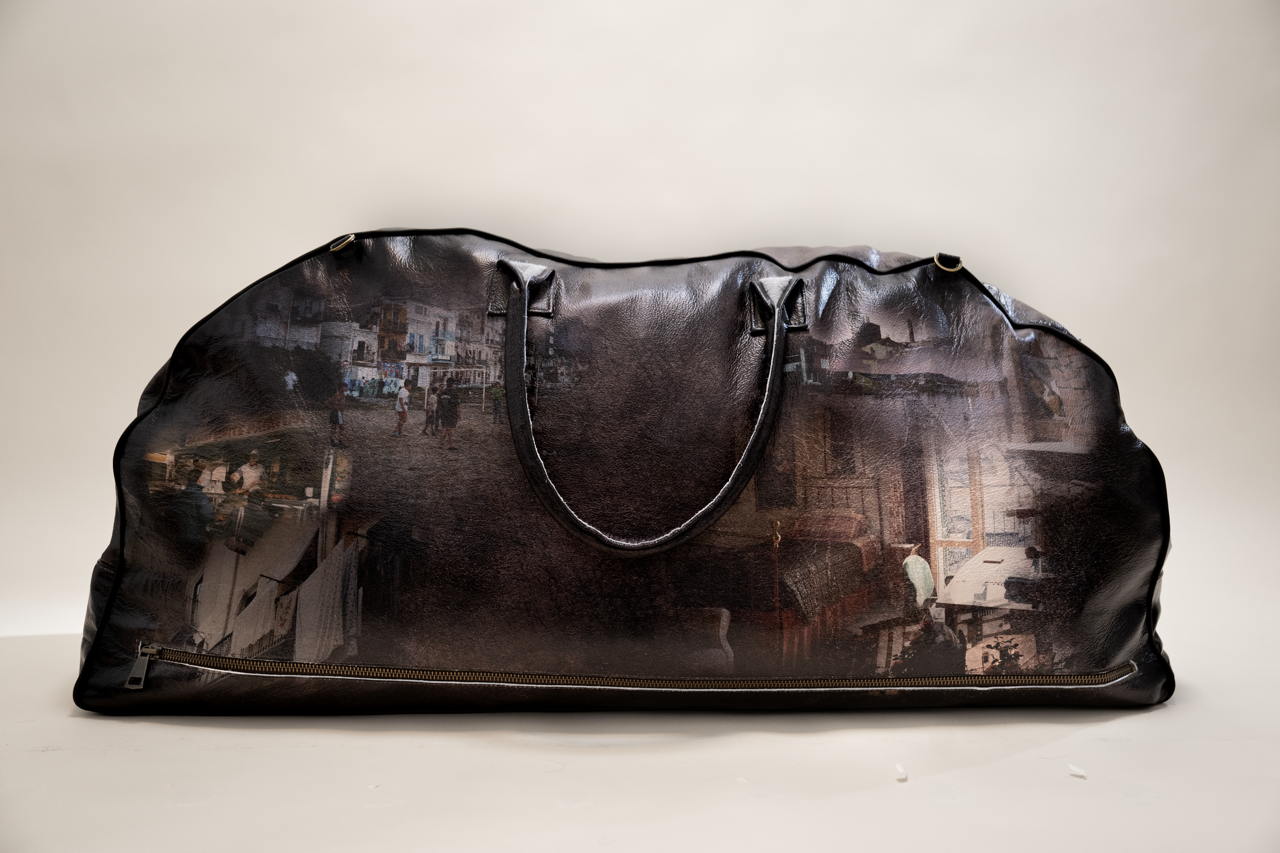
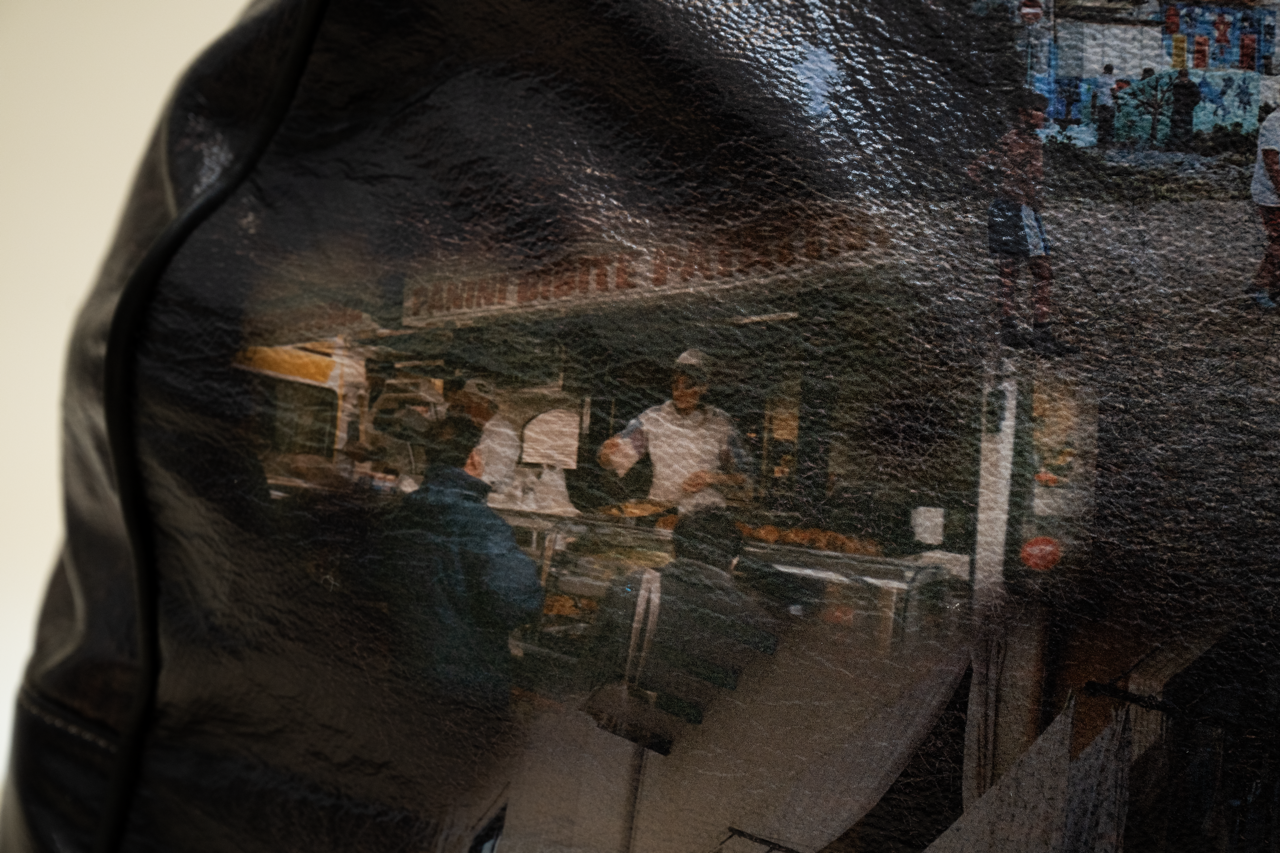
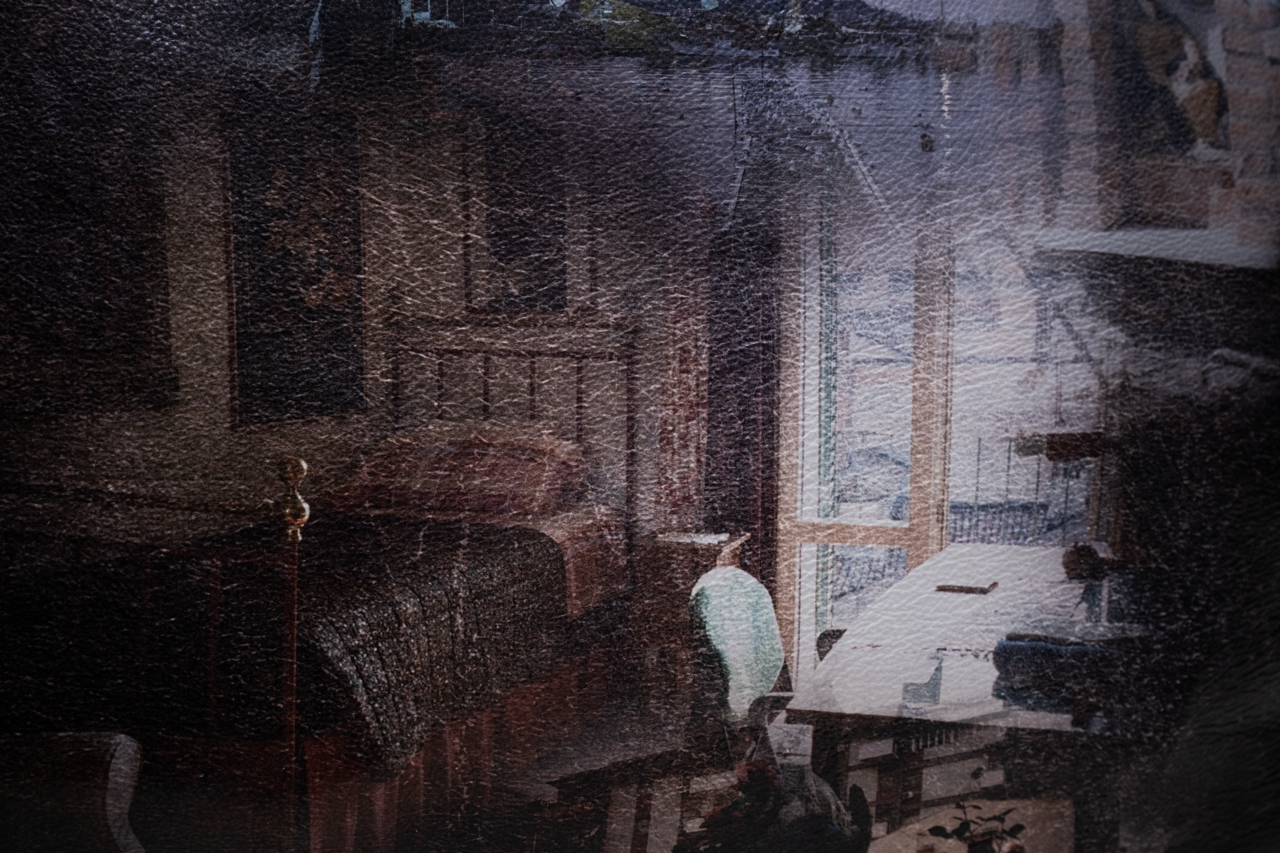
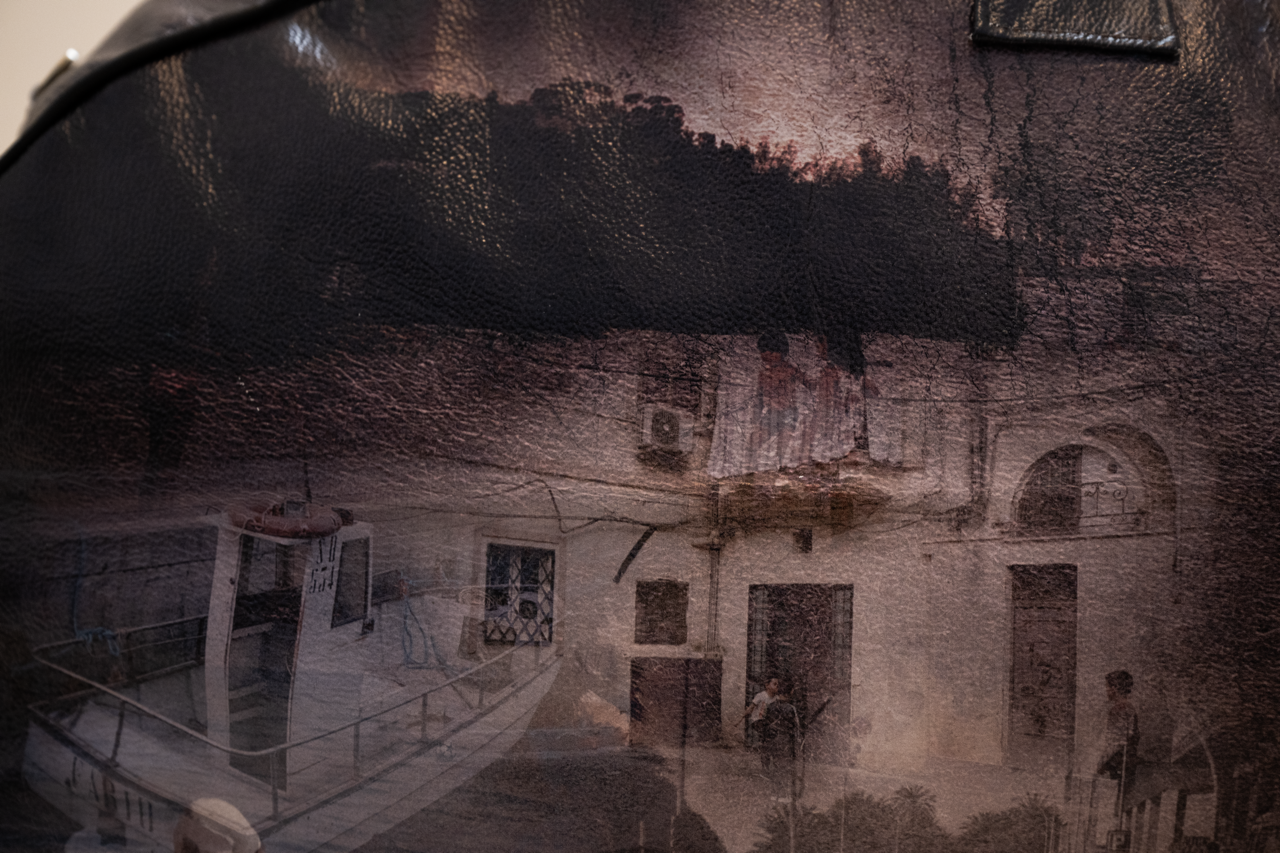
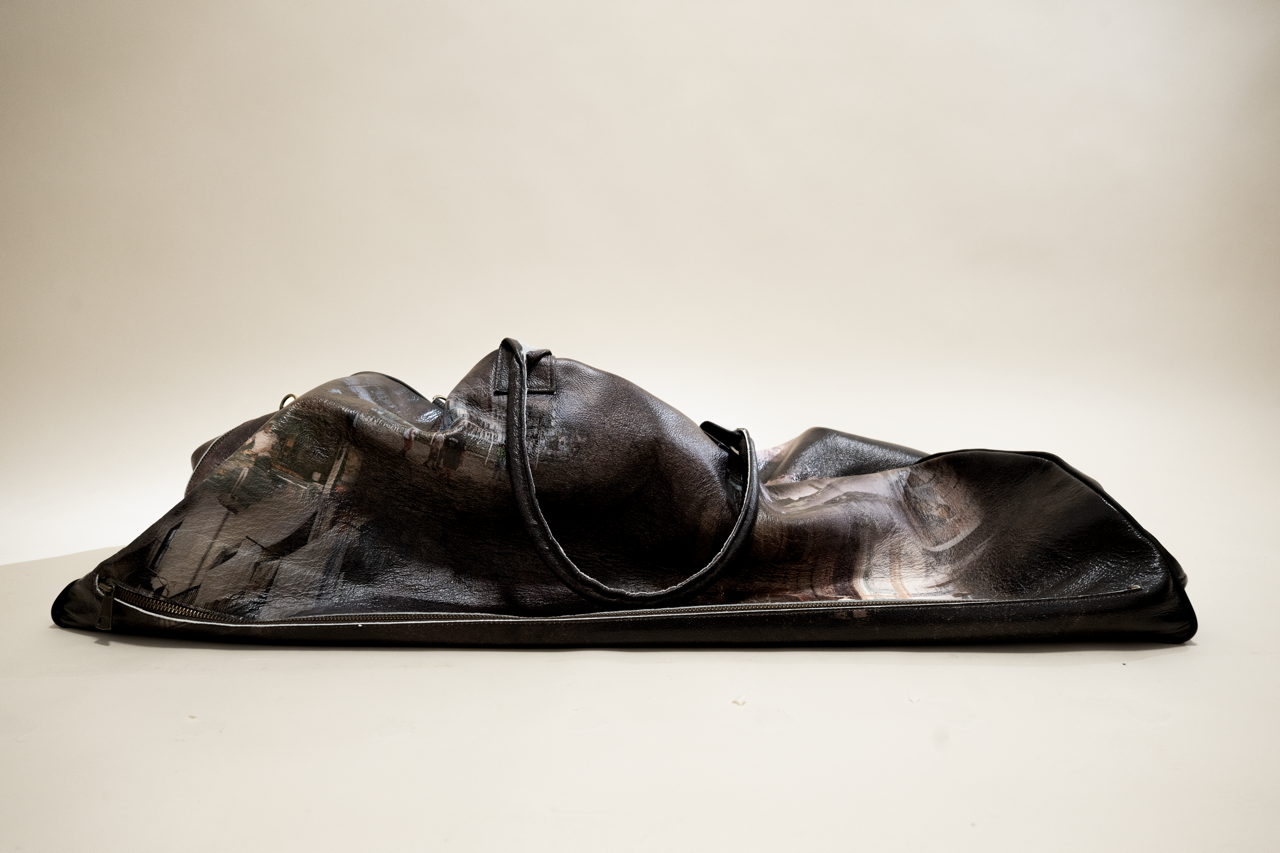
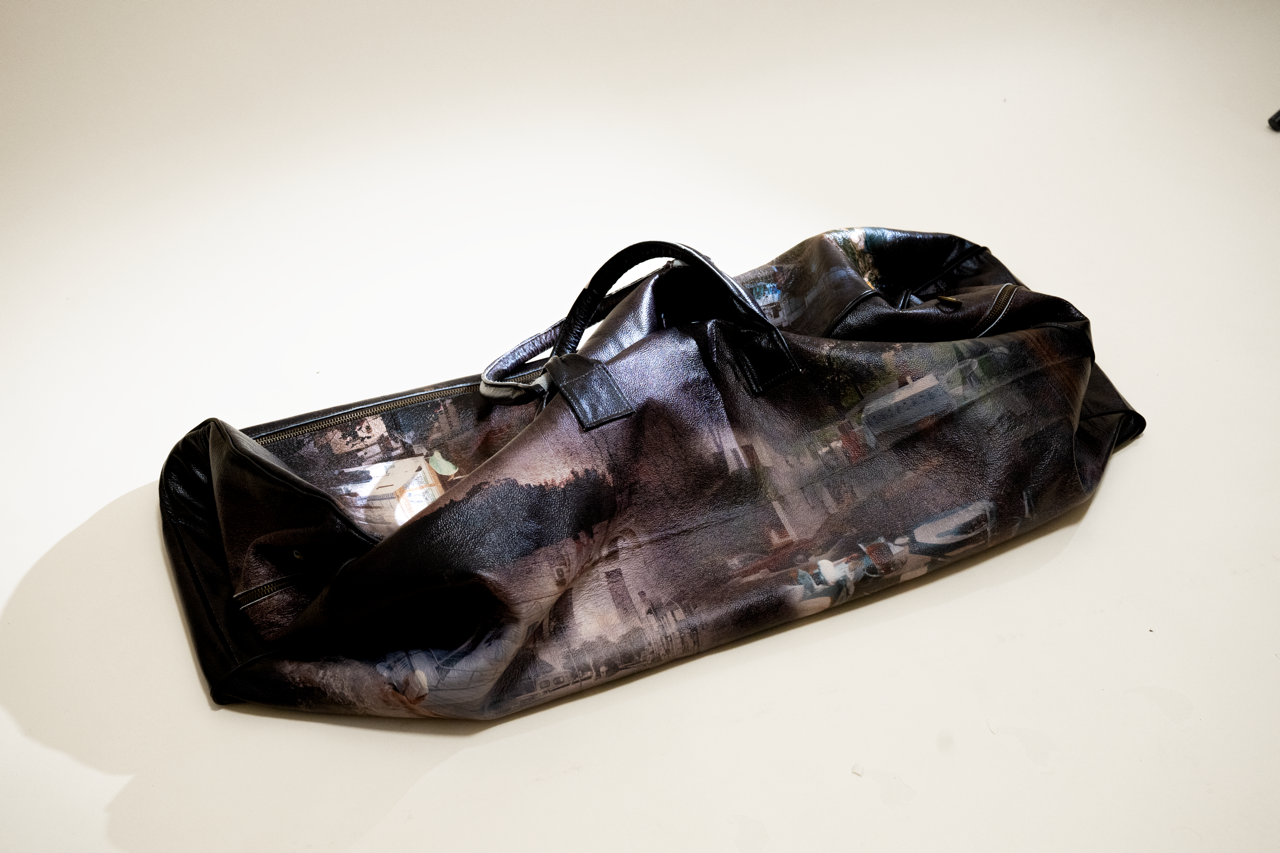
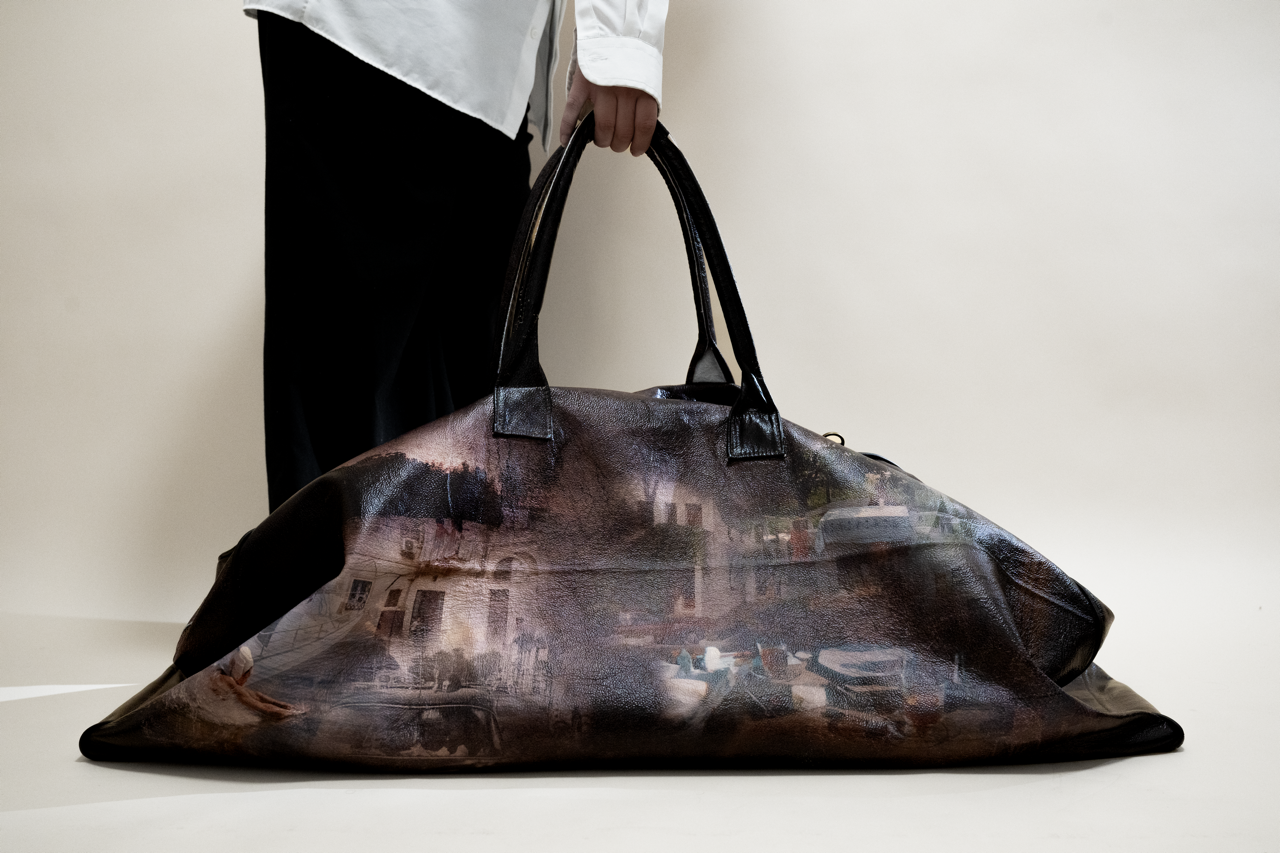
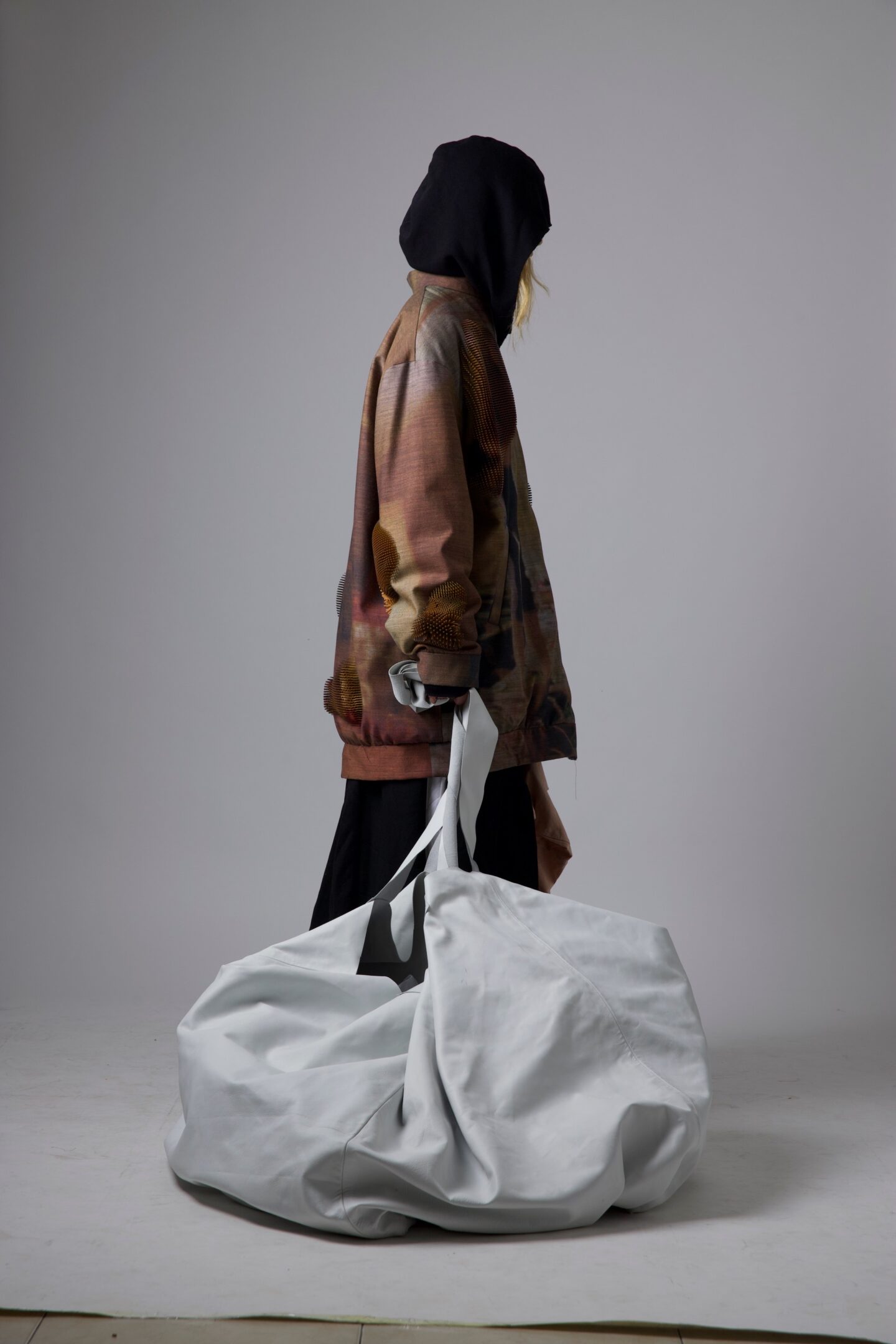
But the bag had a history that predated Rosalía. It had been created for Krähe, a film by Lili Conzen that explores the presence of older women in fashion. Its print features photographs from the personal archives of the designer, the filmmaker, and Sabine—one of the film’s protagonists—which have been altered to take on the appearance of distant memories. Its size, far from being merely an aesthetic statement, serves as a metaphor for the physical and emotional weight of everything we carry.
The irony is clear: an object created to explore memory, identity, and personal experiences ends up circulating as just another image in an industry that consumes new content at the speed of a scroll. And yet, its creator does not seem particularly interested in responding to that urgency. Although the original piece is not for sale and will be part of the exhibitions linked to the film project, Toder is preparing a limited edition very similar to the bag Rosalía carried, as well as a ready-to-wear version for 2027—smaller in size and designed for everyday use.
In an era when going viral can transform an unknown designer into the name of the moment—at least for a few weeks—the question is no longer just how to get attention, but what to do with it once it arrives. Because visibility doesn’t guarantee longevity, originality comes with the risk of being copied, and the algorithm seems to demand that everything be extraordinary even before we understand its meaning.
We spoke w// Dana Toder about these contradictions, about the act of dressing as an emotional exercise, and about the possibility of building one’s own creative identity without sacrificing it to the demands of the industry.
HIGHXTAR. (H.) – Your bag was originally conceived as part of Krähe, a film by Lili Conzen, but it suddenly became a viral sensation when Rosalía carried it in New York. How did you handle that unexpected attention? How does it feel to see something created in such a specific artistic context take on a life of its own?
DANE TODER (D.T)- Honestly, from the moment Lili and I connected and I started working on the bag, I felt that this one was really special, and that at some point it would get the recognition that the bag, the creation and the film deserve. Getting into the world of the women featured in the film and especially sabine who’s in the scene with the bag made the whole process a very
special experience.
It’s wild to experience this attention. I never thought along the way that it would be so much, and as a small designer who can often question whether I’m on the right path, it feels very rewarding. I love watching something I made take on a life of its own. I think that’s what releasing art is about: letting go of control and surrendering to the collective.
You never know what will happen with what you release, or whose eye it will catch. I’m so glad it caught the eye of Rosalía, one of my favourite artists, and her team, including her stylists Chloe & Chenelle and her assistant Sophie.
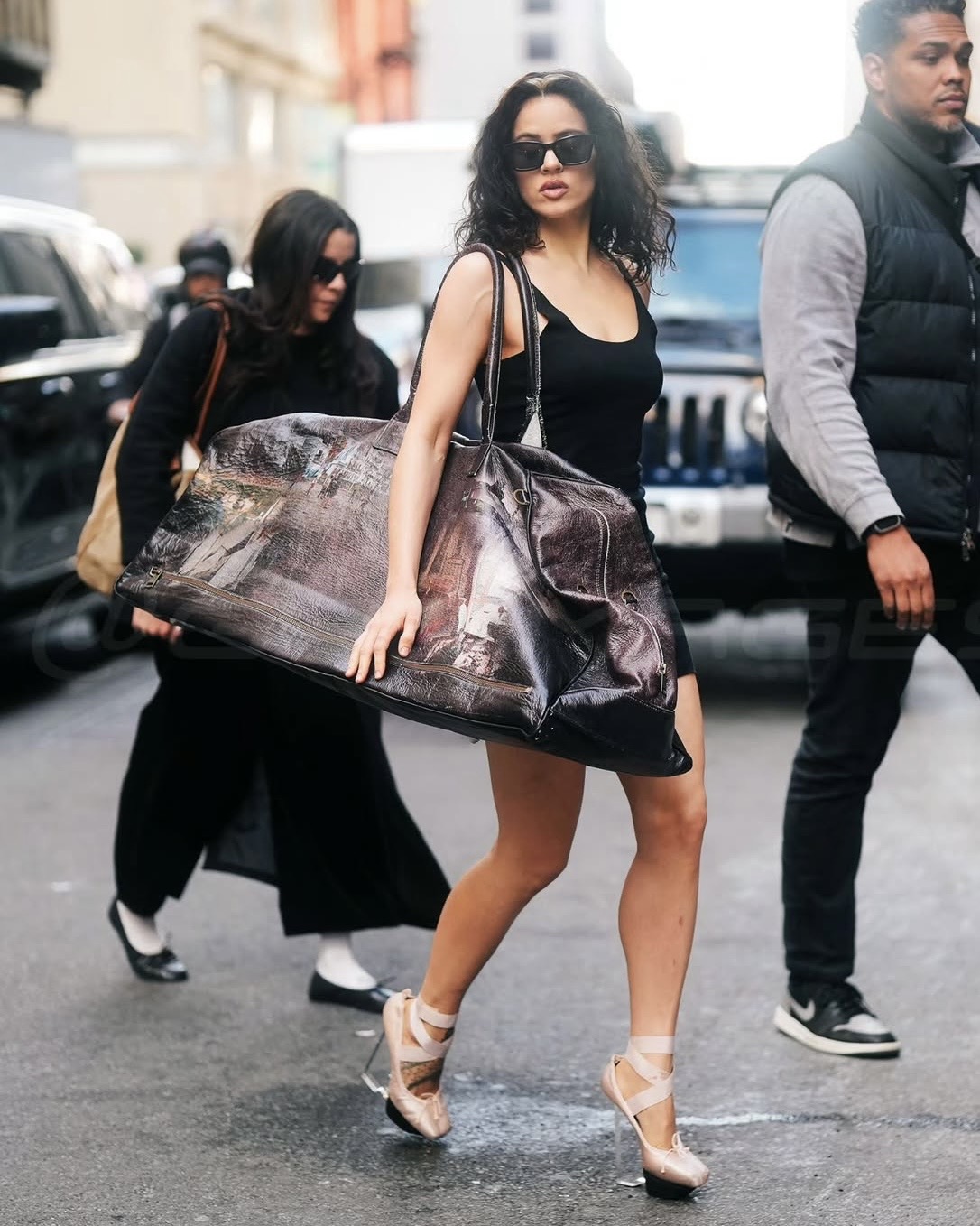
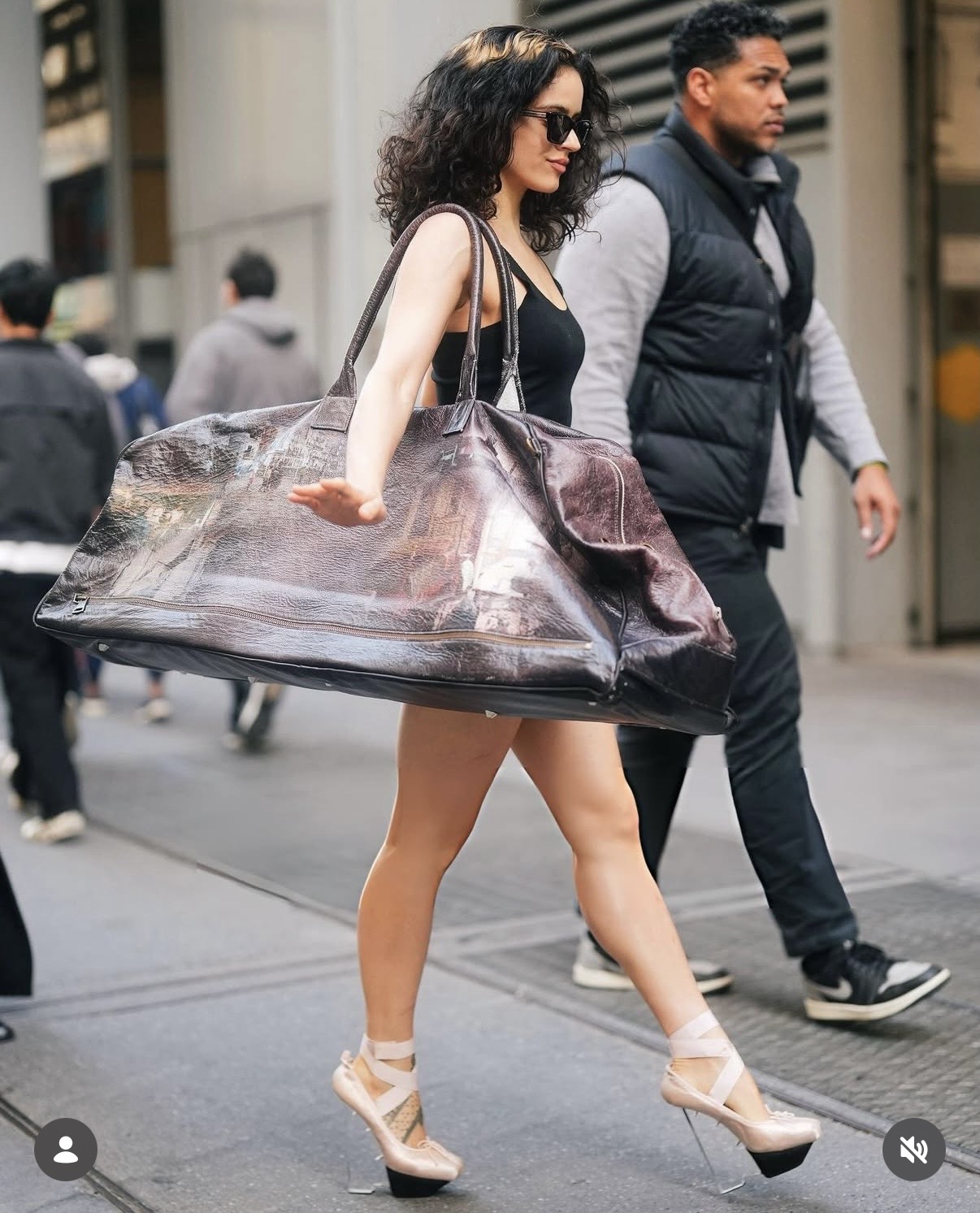
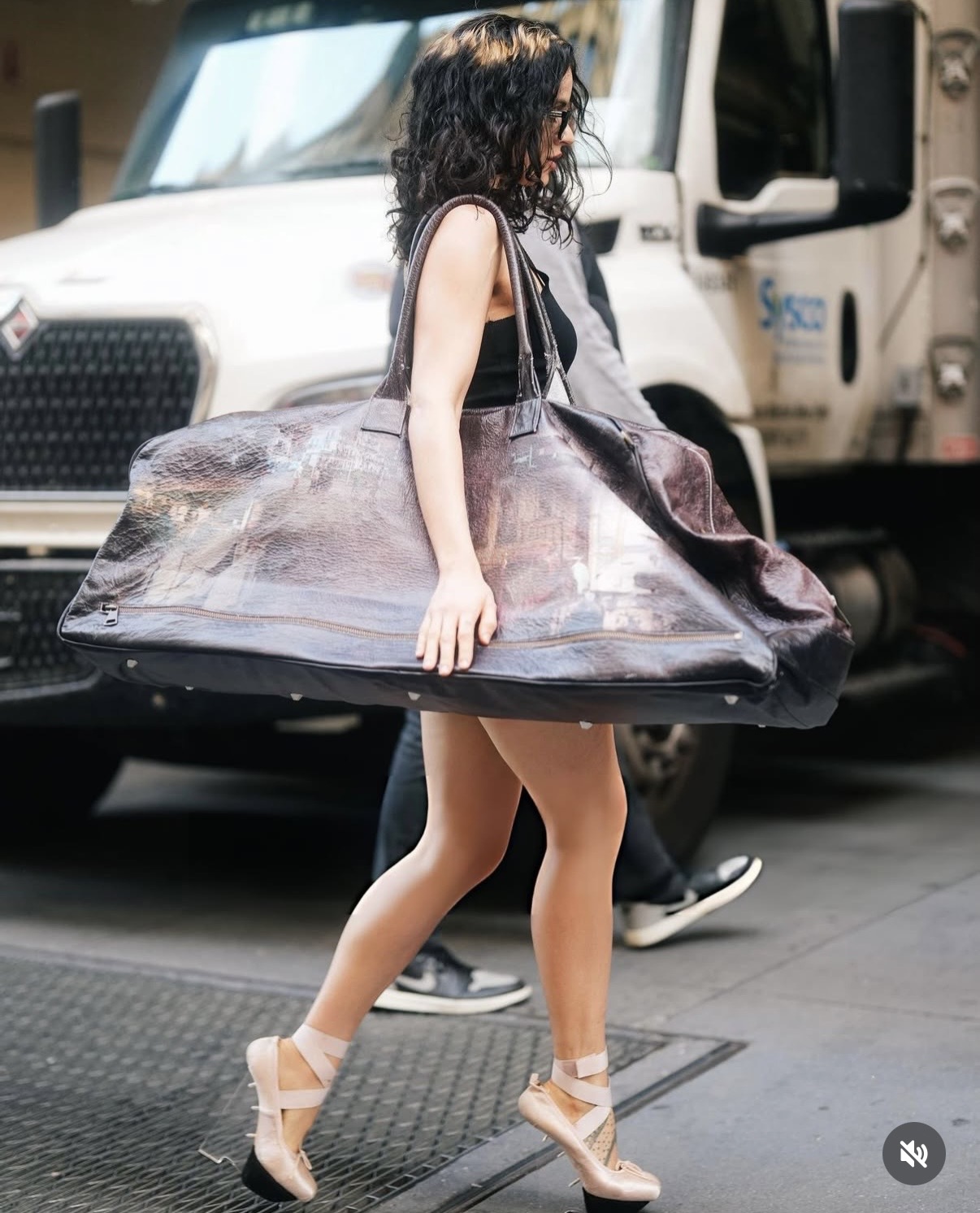
(H.) – You’ve explained that the original bag isn’t for sale and will instead be part of exhibitions connected to Krähe. In a culture where almost everything that goes viral is immediately expected to become available for purchase, do you think there’s something powerful about creating objects that aren’t necessarily meant to be sold?
(D.T)- Yes. I’ve been getting lots of messages telling me I’m not tapping into the moment enough. I had no stock when it happened. but I don’t see it that way. I’m here for the long run, not for quick restocks and quick sales.
The original is very special to me. When I look at it, I don’t see a garment. I see more like an art piece, and part of what makes an art piece special is that it’s one of a kind.
Fashion has so many standards that have nothing to do with the work itself: seasons, speed of manufacturing, always being able to supply. I kind of like going against that. I’d rather make pieces that aren’t impulse buys but meaningful purchases.
That said, maybe I’m naive or out of touch, and I should probably be quicker at releasing and stocking. I’m working on that, and on smoother manufacturing, because I want to keep doing this full time. But, in a time where everything revolves around money i think it’s kind of refreshing to see something that is purely for the sake of being created.
Even so, I’m planning to work on a small series of custom pieces. The limited edition will go on sale soon and will look a lot more like the bag Rosalia was carrying. It will be a little smaller, so it’s easier to carry, and it will have a slightly different design so that Rosalia’s bag remains unique, although they’ll look very similar.
The RTW model will go on sale in 2027 and is much better suited for everyday use; it’s less structured and considerably smaller, but it’s still made of the same leather and features the same pattern.
(H.) – So we mortals will be able to enjoy a ready-to-wear version of the bag for your 2027 collection. How do you approach transforming such a conceptual piece into something meant to be used and purchased by others without losing its original meaning?
(D.T)- I see the ready-to-wear version as an interpretation of the cinematic piece. The original remains the work of art created for the film, while the 2027 version is designed for people to live with it.
What needs to be preserved is the emotion. I think the size of the bag was what really caught people’s attention, and that scale works very well as a concept to represent the weight of what we carry—both physically and mentally.
But, for me, the print is the most interesting part. It’s made up of images from my own archive, Lili’s archive, and Sabine’s—the actress who plays the lead in the handbag scene. I edited and mixed them together to make them look like distant memories.
It explores different generations of women and how we all experience our relationship with objects in a similar way. The film seeks to give older women a place in the world of fashion. That’s why, even without that size, the bag retains much of its meaning and remains conceptual—simply transferred to an everyday context.
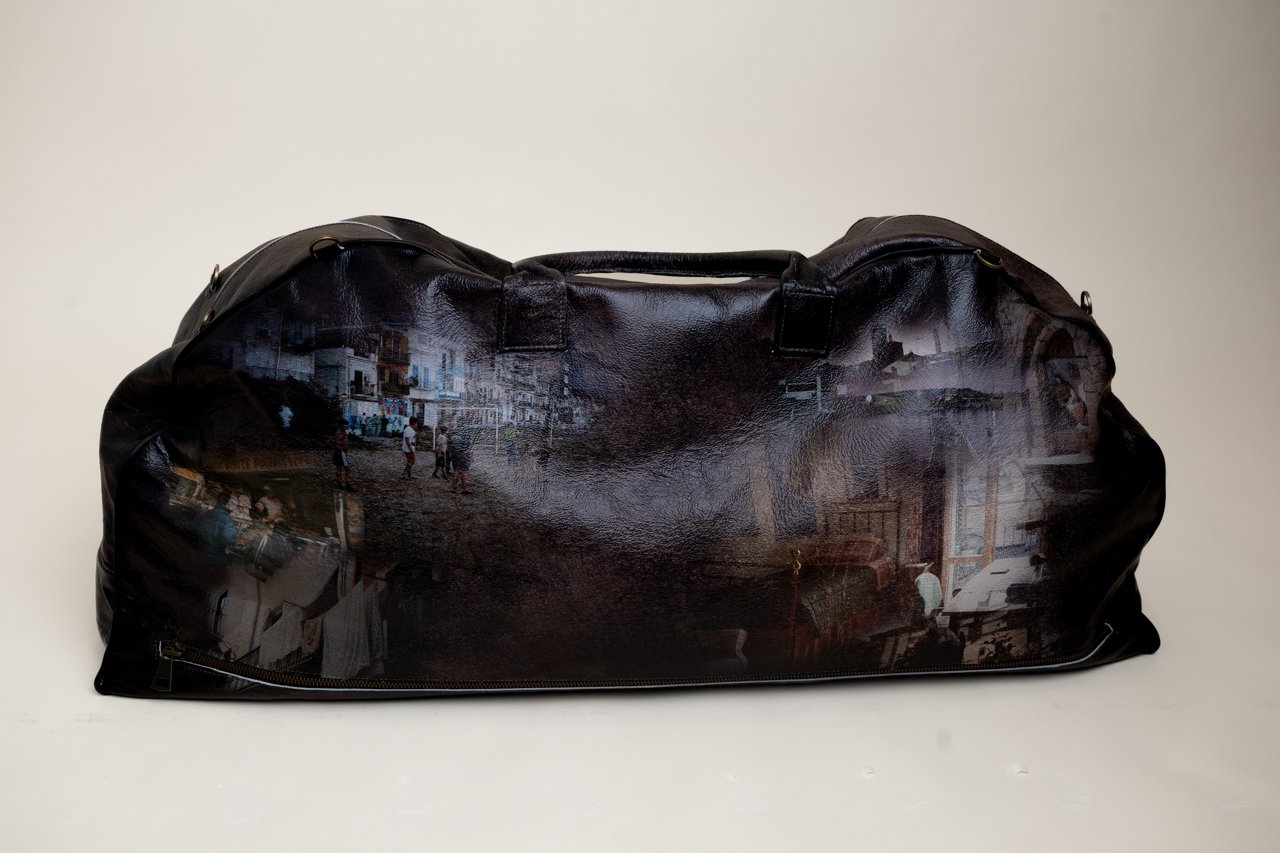
(H.) – I get the sense that your work explores the relationship between clothing, memory, and identity. Do you think the things we wear can reveal parts of ourselves that we sometimes find hard to express in words? What makes fashion such an interesting medium for exploring personal stories?
(D.T)- For me, it’s not really about expressing things we struggle to put into words, although that is a big part of dressing up. It’s more about the parts of ourselves we tend to hide, and those parts come up during the act of getting dressed.
My main research throughout my BA, and since, is the psychological and mental side of getting dressed: choosing clothes and looking in the mirror. For me, and for many others, it’s a very emotional moment. We face who we want to show up as, and the anxieties about where we’re dressing up for. While we think about future scenarios, we’re also in the past, because clothes hold so many memories and experiences, whether it’s a garment related to a certain person or something you wore at a certain time in your life.
It brings up the subconscious: how we view ourselves, how we think others view us, and the memories and feelings that surface. A lot of the time we go through this and then ‘cover’ it with a black tee or something. My work tries to bring this experience to the surface instead of hiding it, creating garments that feel like distant memories, that hold experiences and that are part of our emotional selves and not only our physical selves.
I think fashion is an interesting medium for this because it’s almost radical to me not to think of clothes that way. They’re such a big part of us and our identity, the only thing we always have on, and items that are really tied to us. I also think textiles in general hold memories.
(H.) – Fashion is constantly obsessed with what’s next, while your creative universe seems deeply connected to memories, personal archives and the past. Do you think looking backwards can actually be a radical creative act in an industry that constantly demands
novelty?
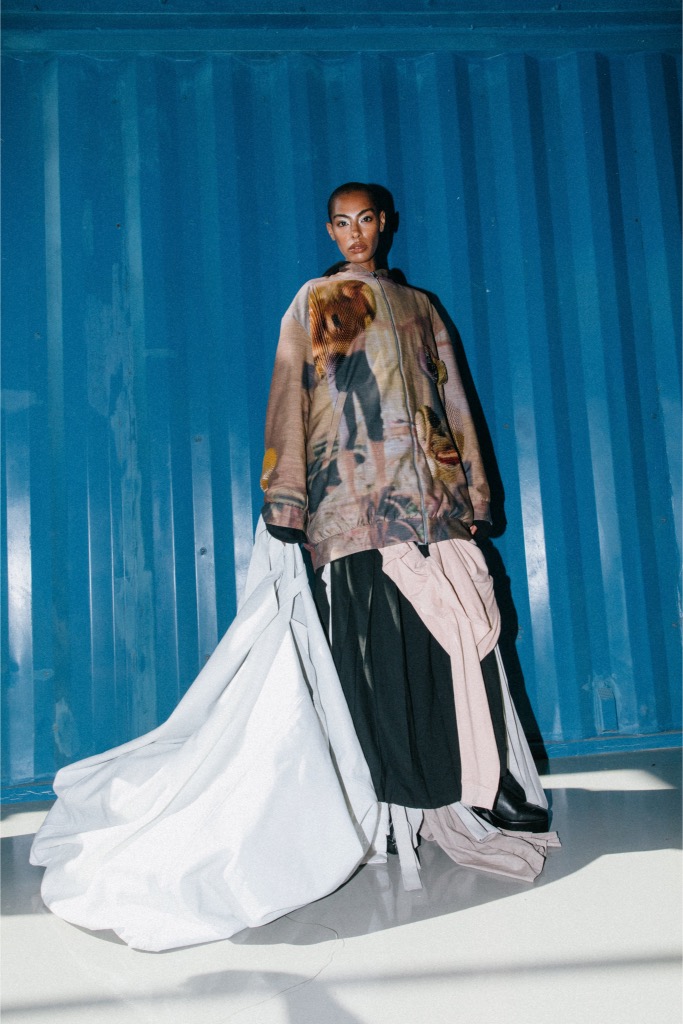
(D.T)- It’s super interesting to think about it that way, and yes, it definitely sounds quite radical. But I think a good designer has the courage and the eye to decide for themselves what counts as novelty. For example, I’m working on a new collection and all the imagery I’m using are images I took around 2020 to 2024, but I’ve decided it’s relevant now.
I also think looking backwards is necessary to look to the future. Combining old imagery, traditional methods and manufacturing, and natural fibres with new 3D fibres and technological methods I researched creates a good fusion of being inspired by the past while leaning into the future.
It’s also a way for me to process my own experiences and life, so looking back is good for me.
(H.) – There’s something fascinating about the contrast between the exaggerated proportions in design. Are you consciously interested in exploring that tension between humour, absurdity and vulnerability? And how important is it for you to challenge conventional ideas of what fashion should look like?
(D.T)- I definitely like to explore absurdity in my pieces. Exaggerated proportions make people smile first, and then there’s room for something more vulnerable. I don’t try to challenge what fashion should look like for the sake of it, but maybe more how people view it and its role in our lives. And maybe the ways its manufactured and the meaning of our garments
(H.) – We live in a moment when fashion seems increasingly driven by virality, where the strangest or most unexpected pieces often attract the most attention. Do you think we’re entering an era in which fashion needs to become more exaggerated to capture our attention? Where do you draw the line between genuine creative experimentation and designing for the algorithm?
(D.T)- Definitely, I think this era demands exaggerated fashion to get attention. When people are scrolling, they won’t stop for something that doesn’t catch the eye immediately. It might sound sad, but to some extent it might make designers think outside the box. At the same time, fewer designers want to do the less flashy work, like very fine tailoring, and a lot of people who deserve attention won’t get it because people are drawn only to what pops out visually when scrolling.
I think the algorithm matters if you want to survive as a brand, but the only way to work with it is to create something that’s fully personal creative experimentation. The deeper inside yourself you dig, the more eye-catching it becomes, because no one else could have made it.
I think all designers today already imagine how a piece will photograph, or look on Instagram or in an editorial, while they’re designing. That’s not necessarily bad, and it can even make for better work. I try to keep it in mind, but I don’t do anything that doesn’t come from my core just for the sake of going viral. That said, being viral is a blessing, and I’m grateful to have made something that got this attention.
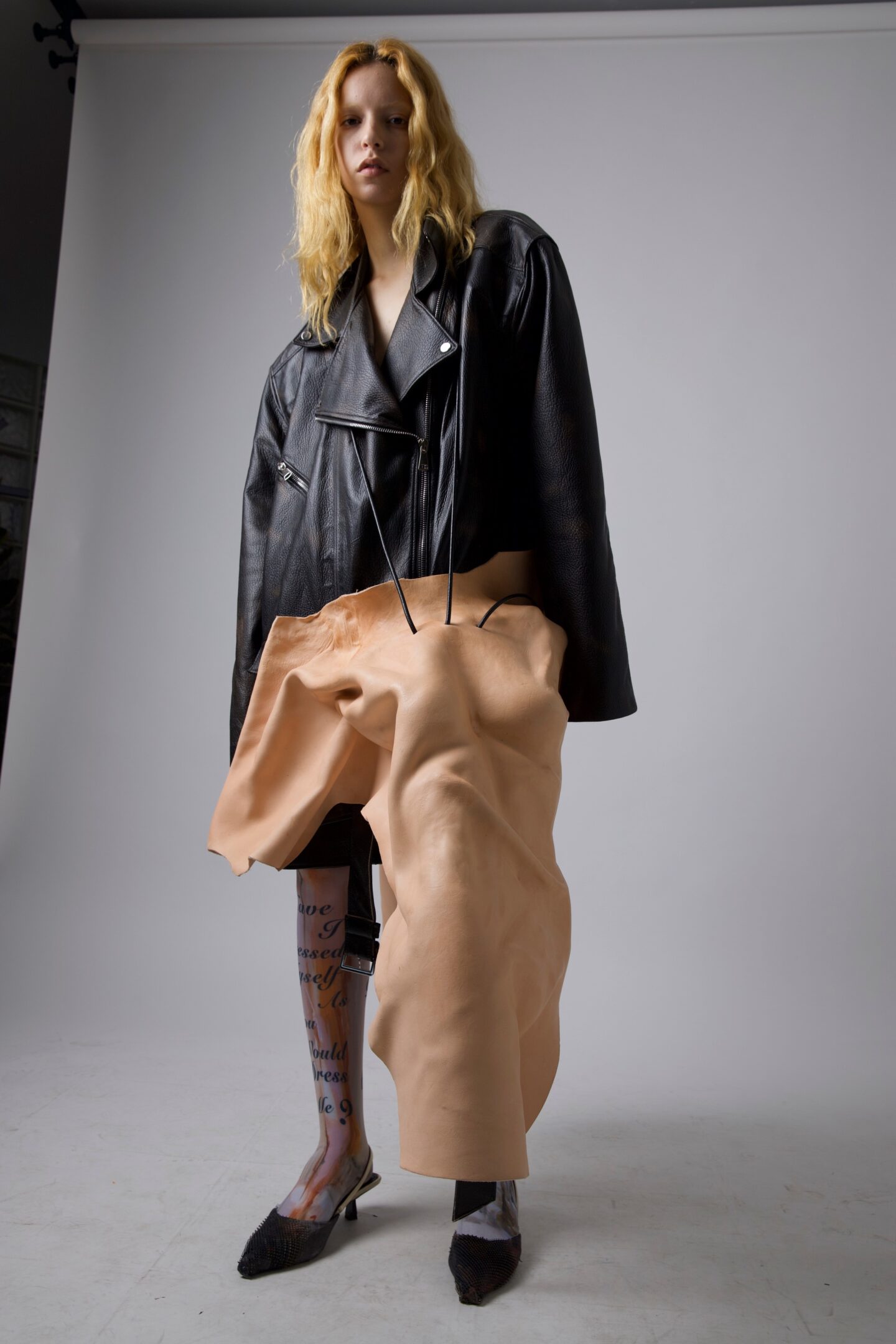
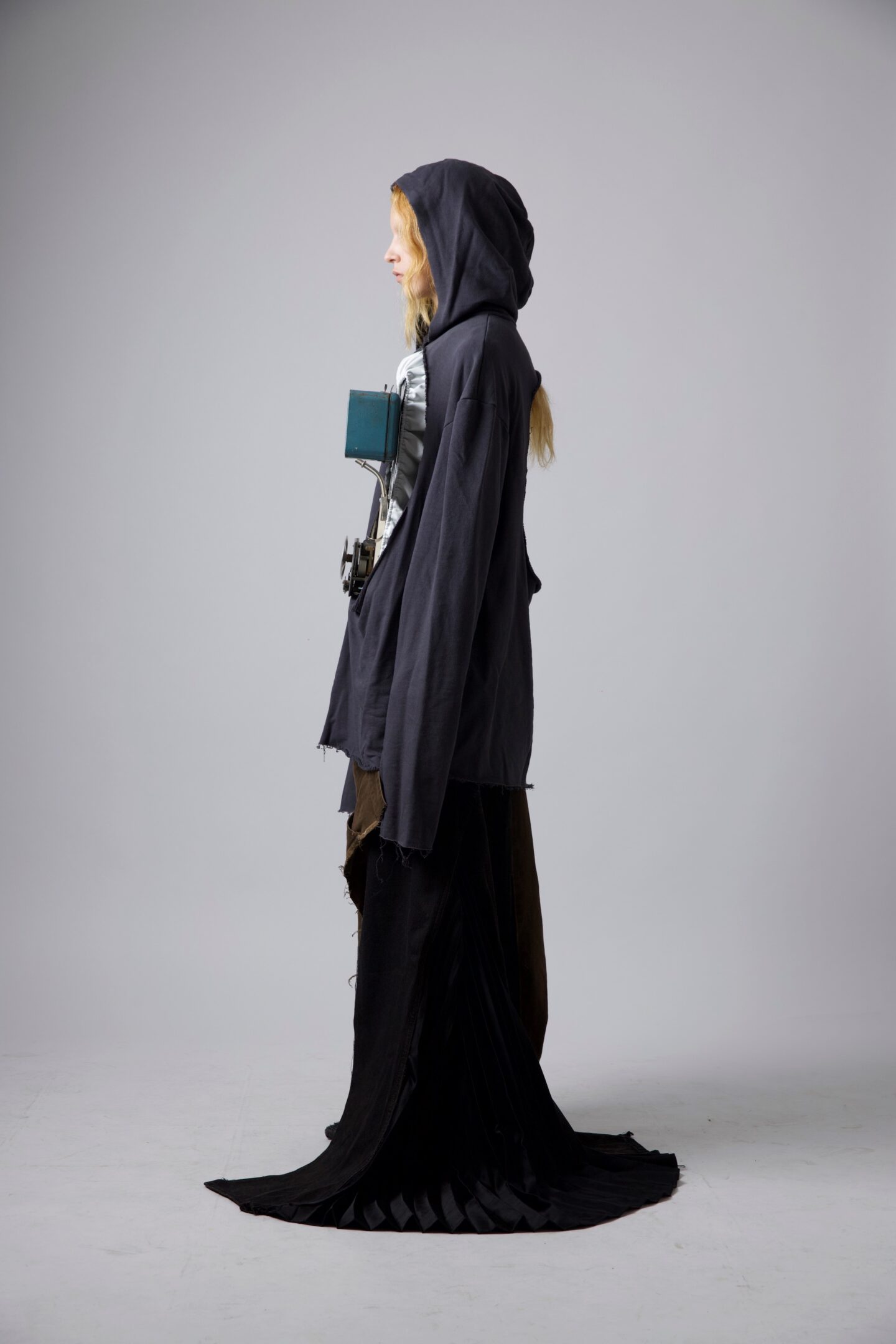
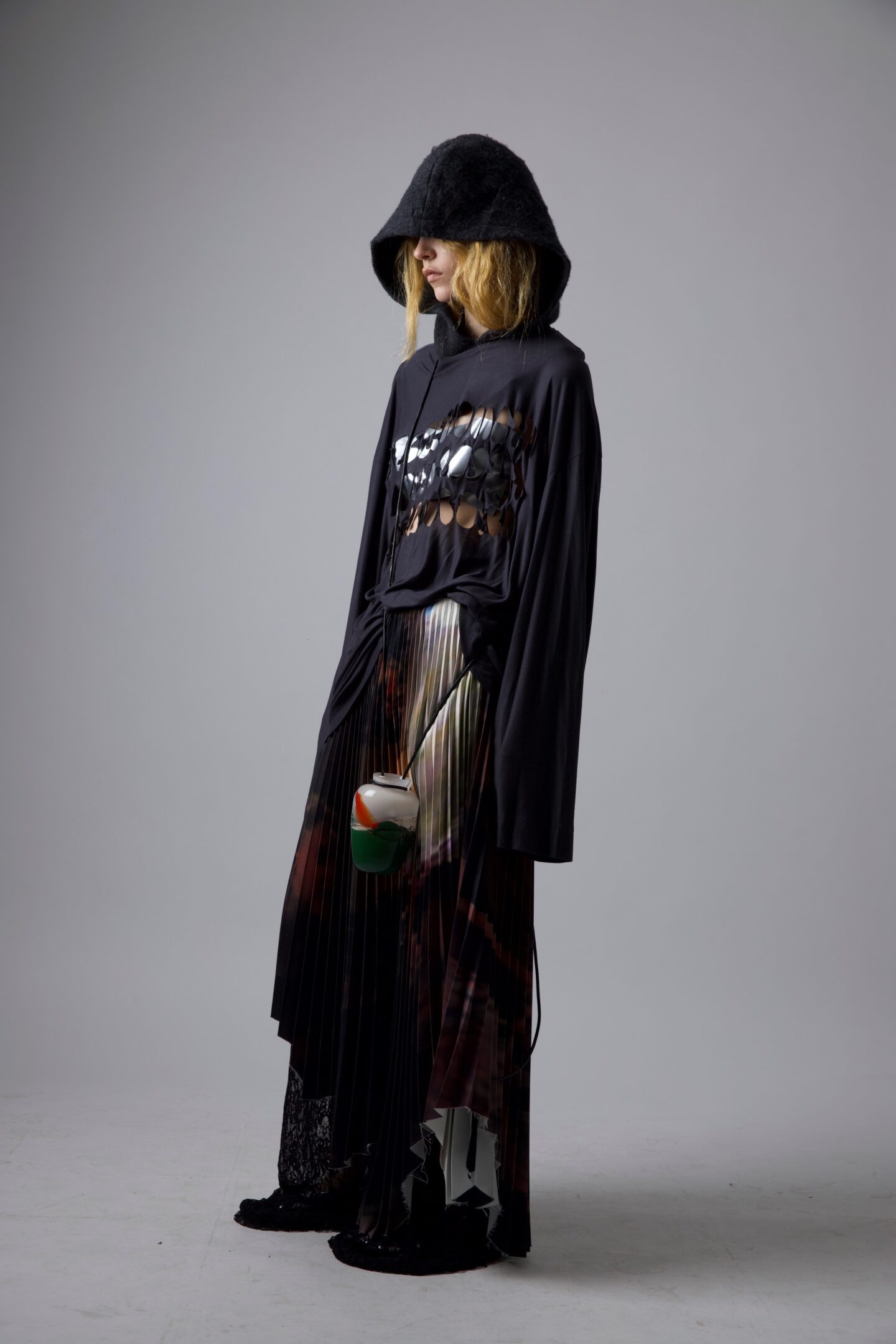
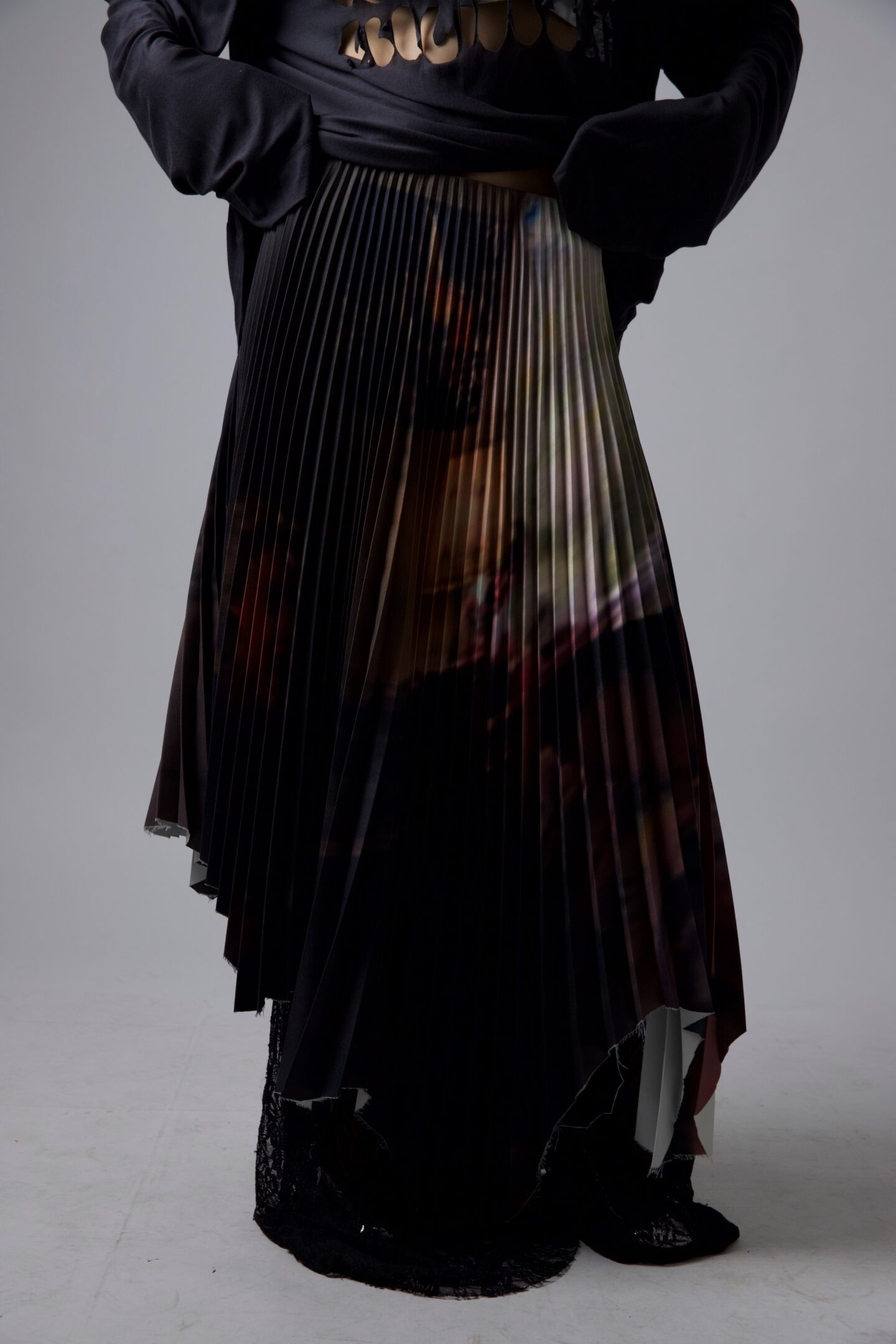
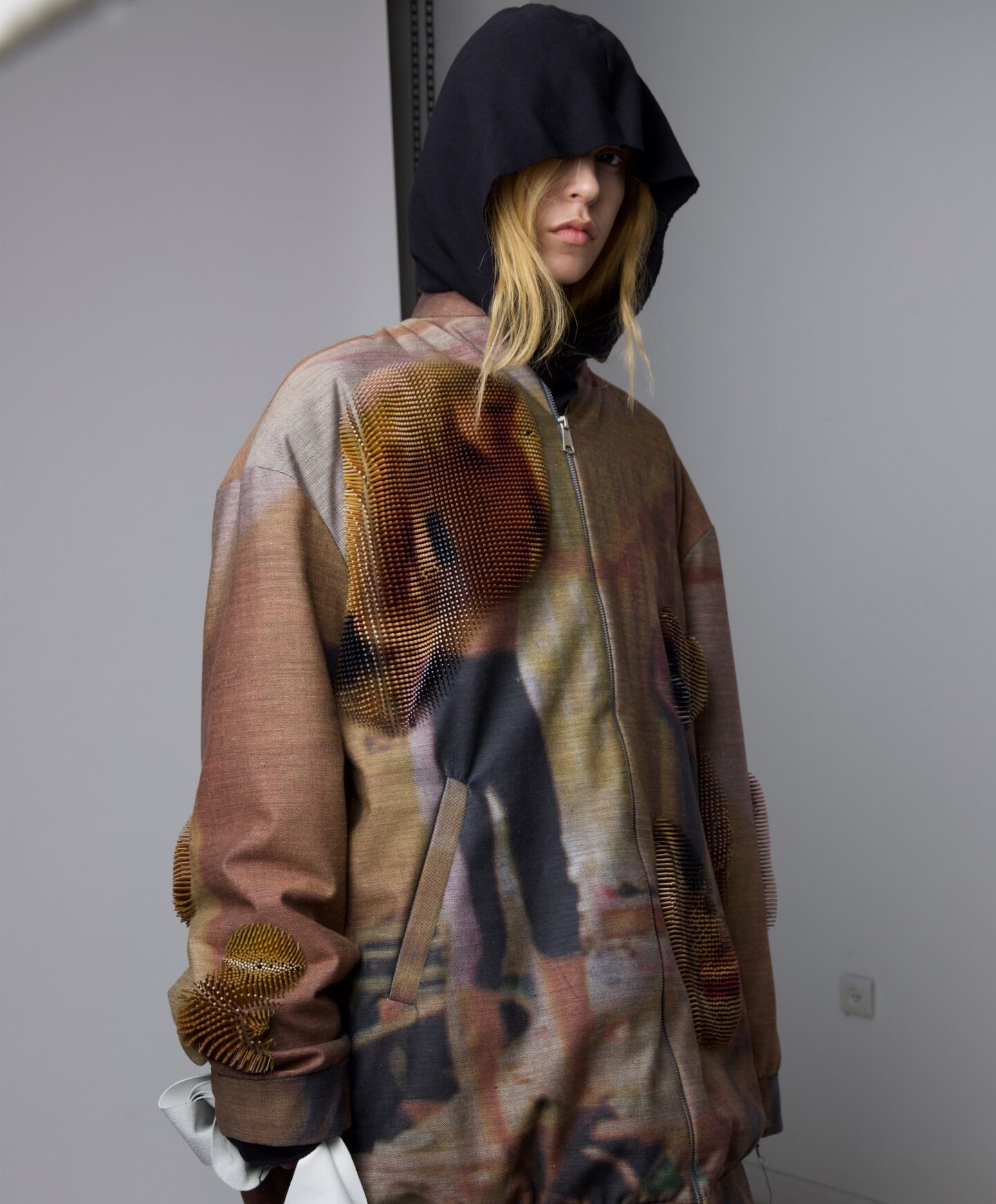
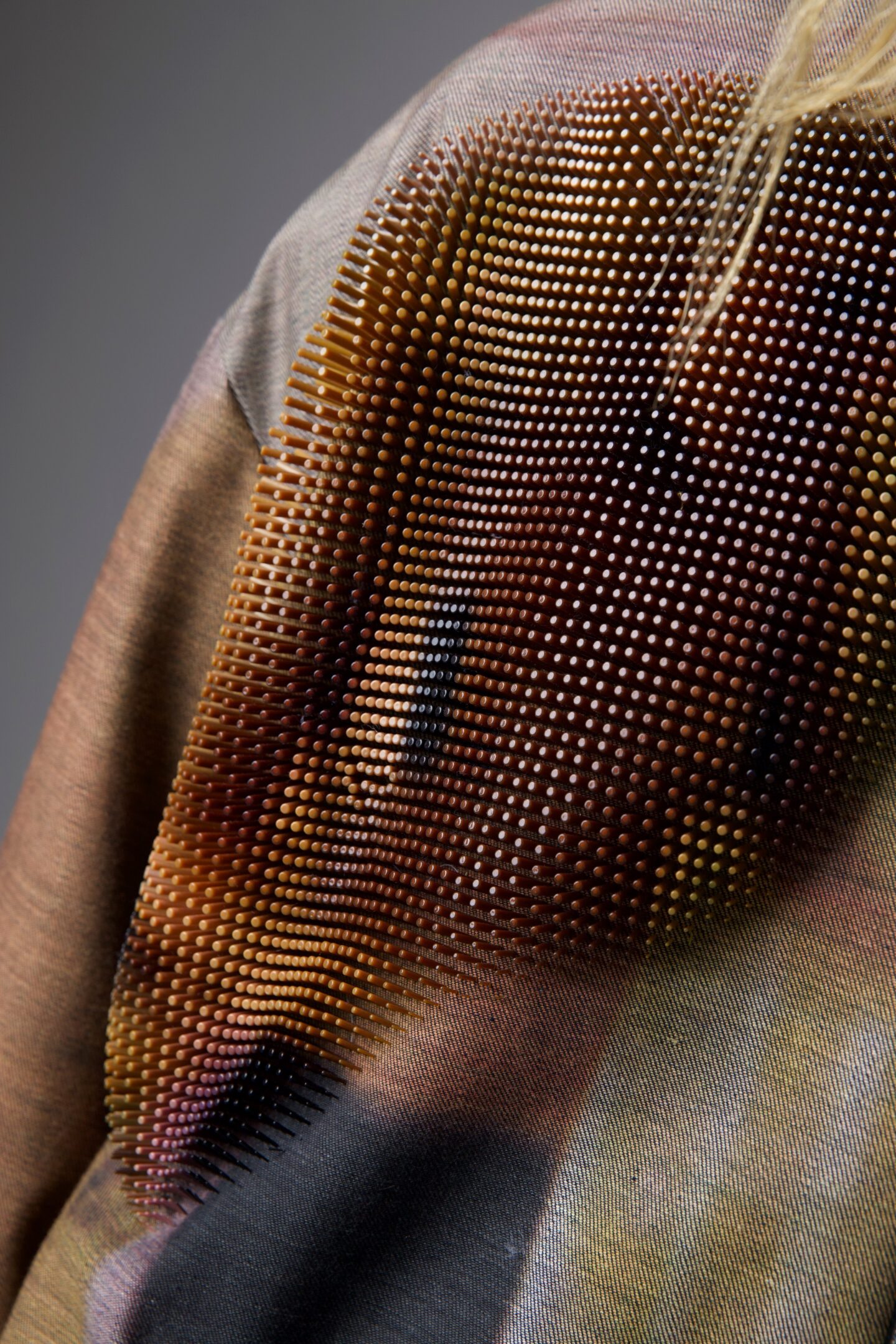
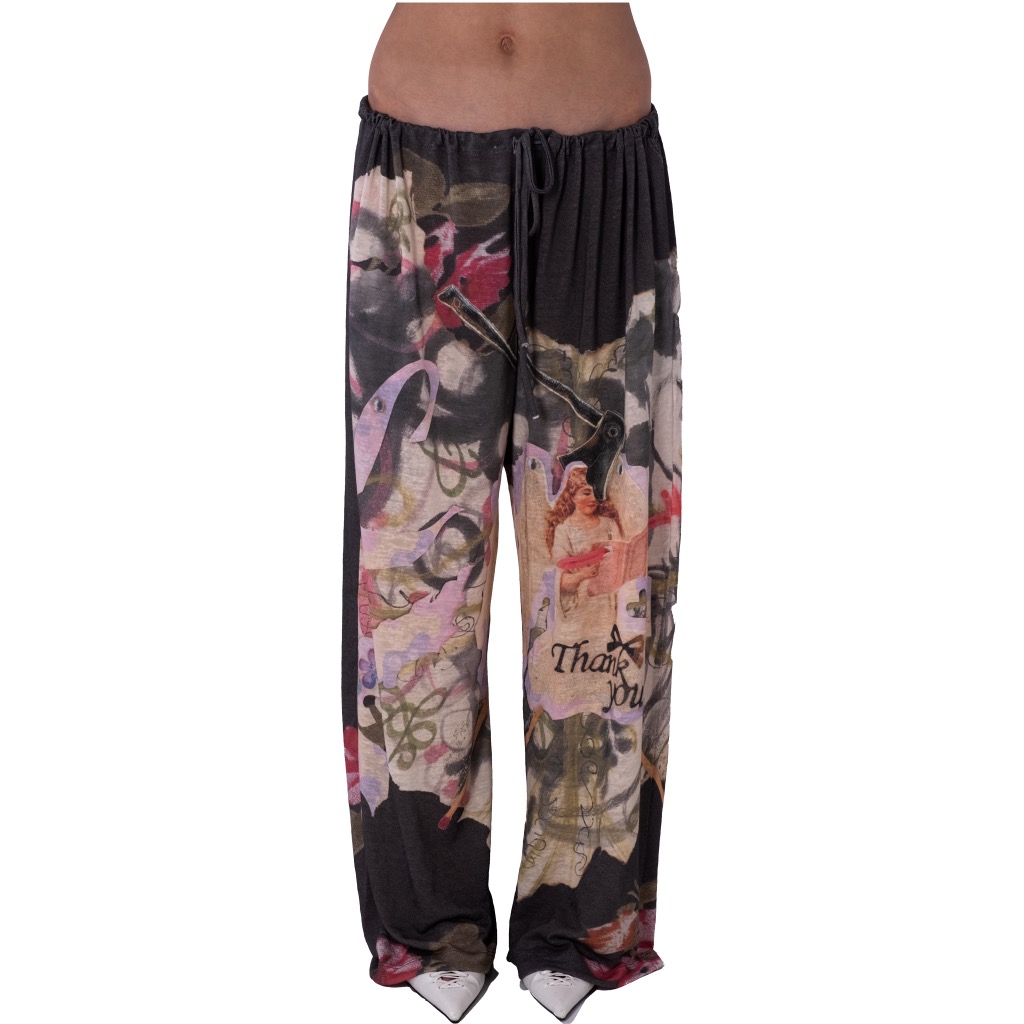
(H.) – In an increasingly digitized industry, where artificial intelligence seems capable of creating anything, your work highlights the value of craftsmanship and imperfection. Do you think human intervention is becoming a luxury?
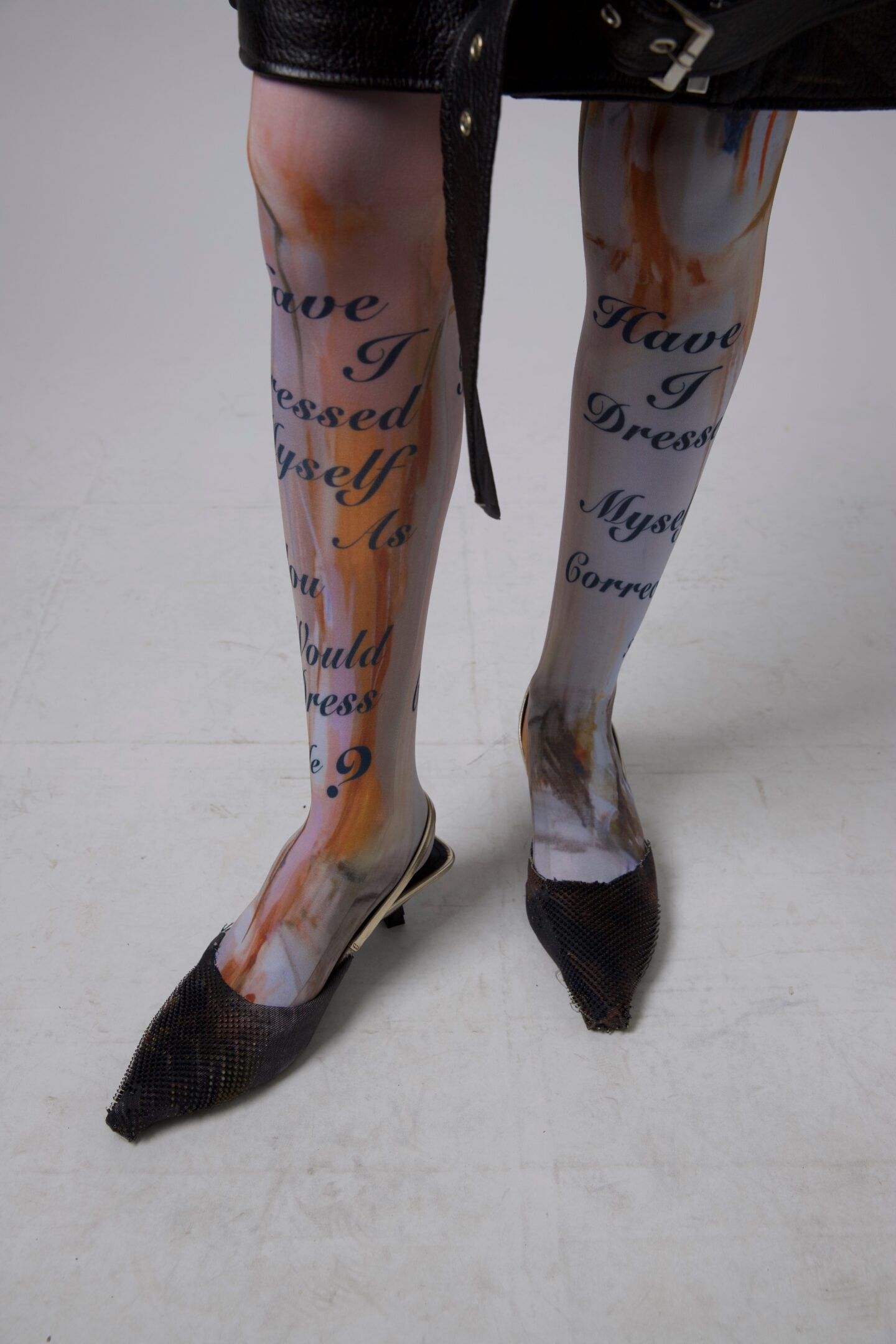
(D.T)- For sure. I think people crave human involvement, and so do I. So much of my work is on the computer (not AI, haha): designing patterns, prints and files, and emailing. So whenever I go physically to the craftspeople, seamstresses and printers, I’m super excited. There’s nothing like holding something and knowing it’s handmade by talented people and that ittook real hands to make.
I’ve been working with the leatherworker for a few years now, and he’s been doing this for many years, so a lot of knowledge lives in his hands.
In general I also love imperfections, maybe a little too much. During my BA I always got critiques that my pieces weren’t perfect, and I’d think: if it’s messed up, I like it. If there’s a hole in the leather, I keep it. If the print gets weird colours, I might still want it. If the print fades, I love it. I love seeing clothes distress over time and pick up imperfections.
(H.) – For an independent designer, having someone like Rosalía wear your work can bring enormous visibility overnight. But attention doesn’t always translate into long-term creative or commercial sustainability. What do you think are the biggest challenges facing emerging designers today? And how do you protect your creative freedom when the industry suddenly
starts paying attention?
(D.T)- I agree. I try to remind myself that this is a marathon, even though a moment like this can really throw your course and your plans off track. With or without this moment, I know my vision and my goals. This was definitely one of them, but it doesn’t change the path.
The biggest challenges are several. First, people don’t always take designers seriously unless they’re at a big house. People won’t pay if you haven’t had recognition, and the first step of real growth is very hard to get. Then there’s fast fashion, and getting copied very quickly. Why would someone buy from a small designer when there’s something much cheaper at a fast fashion house? It’s hard to convince people your pieces are worth the money before you have a name or someone respected thinks it’s cool. But you have to believe wholeheartedly that at the right time it will get to the right people, who appreciate the work.
The attention just makes me keep up with my plan and my next collection. I don’t feel any pressure to change my creative direction. If anything it’s the opposite: I know I’m on the right path and I just have to keep doing what I’ve been doing.
(H.) – Finally, if someone discovered your work today because of Rosalía’s bag, what would you want them to understand about Dana Toder beyond that single viral image? What can we expect from your upcoming 2027 collection, and what creative directions are you most excited to explore next?
(D.T)- The upcoming collection will include more experiments with leather and prints across different pieces, new evening and silk pieces, and ready-to-wear similar to what I’ve released so far, but quite different vibe. It’s much more elevated than what I’ve done before, and it creates a very strong emotional image. It will also include a similar ready-to-wear version of the bag.
I’m also really excited to start visiting showrooms and stores. Beyond clothing, I’m also exploring textile and fashion installations, as well as light installations combined with textile manipulation. It’s something I definitely want to delve deeper into. Since I operate in both the commercial and artistic sectors, I see my brand as a hub for research and creative innovation—and, at the same time, as a clothing brand.
Sigue toda la información de HIGHXTAR desde Facebook, Twitter o Instagram
You may also like...