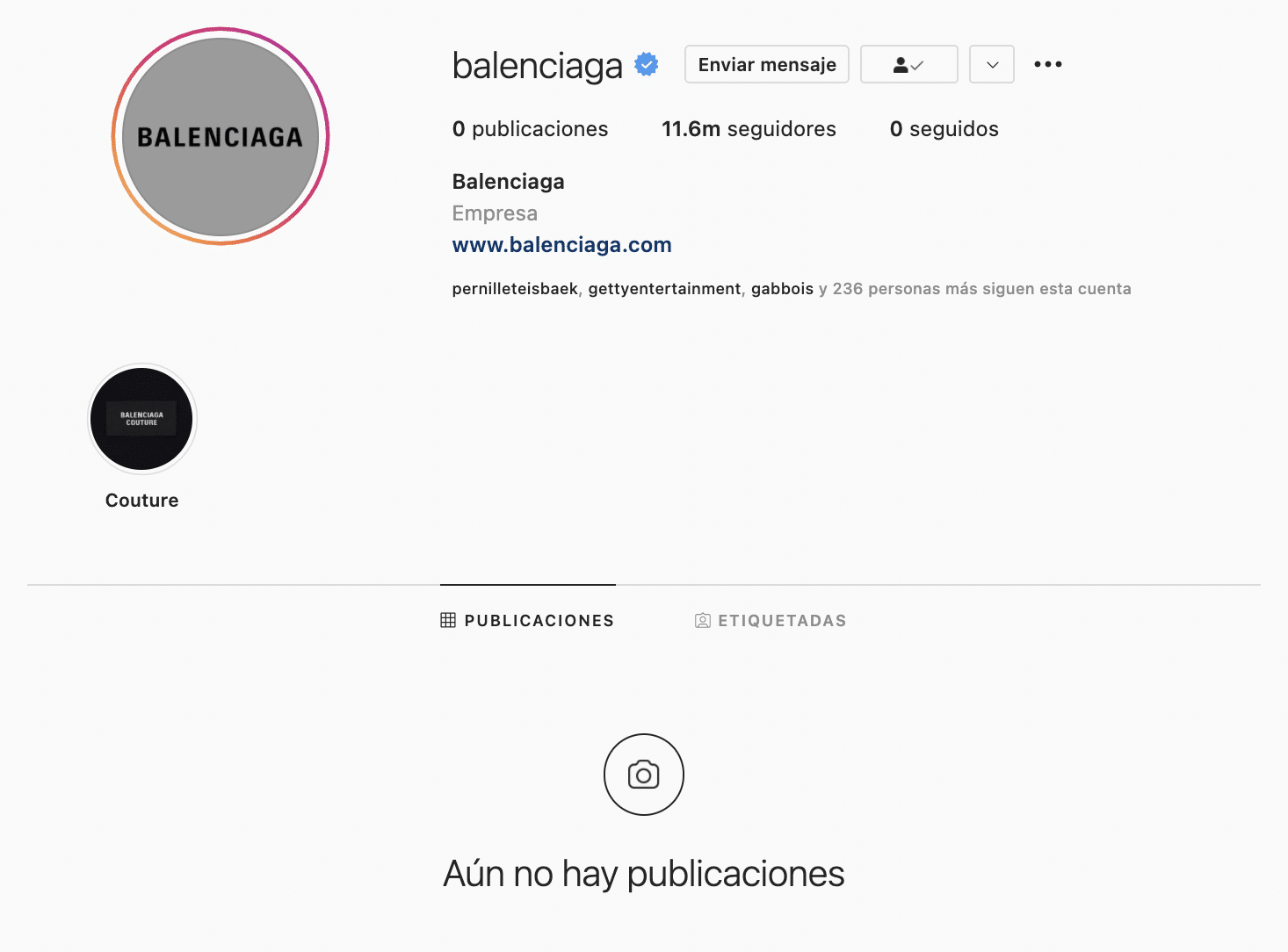
The wave of brands that are deleting and resetting their social media archive is making us question the real meaning behind this enigmatic strategy. It all started with Bottega Veneta’s digital exodus, followed by brands such as Kylie Cosmetics, Diesel and Balenciaga, which also surfed this techno-expressive trend of reinvention.
Content overload on social media in particular, and on the internet in general, is driven by countless fashion and beauty brands publishing hundreds of posts a week. Whether on Instagram, Tiktok or Twitter. That seemed to be their guiding tactic: addiction to overstimulation and infinite scrolling, despite its impact on the mental health of the FOMO generations.
The real script twist came with the “going dark on social media” movement. Brands started experimenting and reinventing themselves through the art of deleting content and/or logging out of their platforms. But what is the logic behind it all?
The chain of evasion in the networks
Bottega Veneta took it upon itself to break the social media mold by deactivating its social profiles earlier this year. Balenciaga followed suit when it decided to sporadically delete its Instagram account. Kylie Cosmetics likewise joined the movement, evaporating all its IG posts prior to a major change/rebranding announcement.
That’s the risk all these brands can take from their position of privilege. Those that don’t: small or emerging brands that don’t have the backing of big conglomerates or celebrities. They rely on social media to boost their sales.
The business strategy they follow is to think long-term, intermittently pausing their network activity in search of transcendence and effectiveness. “When brands come back to life, and with their new update on the new brand positioning and their voice and their tone, if it’s done correctly, they can recover that [loss of sales],” André Bessa, brand director at VM Groupe concedes to BOF. “It’s a short-term loss, but it’s a long-term gain.”
Crossing that threshold into the underground must have an objective behind it; either to reach new customers or to modernize/upgrade the brand. But in order to do so, brands must signal to their followers that they are taking a break on social media. Something that Bottega did not initially do when it decided to avoid social media. Sometime later, François-Henri Pinault, CEO of Kering, referred to the switch-off, saying that the brand “was not disappearing from social media, it was simply using it differently”. He added that Bottega was letting its ambassadors and fans speak for them on social media and providing them with the necessary material to do so.
Can a brand survive without social media?
Bottega‘s tactic basically worked because of the obsession of an entire fandom, which, through unofficial accounts such as @newbottega, continued to publish content. Even so, putting such rule alteration into practice is different for a sector such as beauty, where the fact of “belonging to the community” is everything, as in the case of KKW Beauty. Nevertheless, Kim Kardashian executed the reset of her brand to present a completely new one, condensing her beauty and fragrance lines under one brand.

In this sense, the decision to remove existing posts or deactivate accounts directly influences the view that consumers may have of them, relying on these platforms as powerful search and discovery tools. Because we are still algorithm-driven “products” for a reason.
Sigue toda la información de HIGHXTAR desde Facebook, Twitter o Instagram
You may also like...