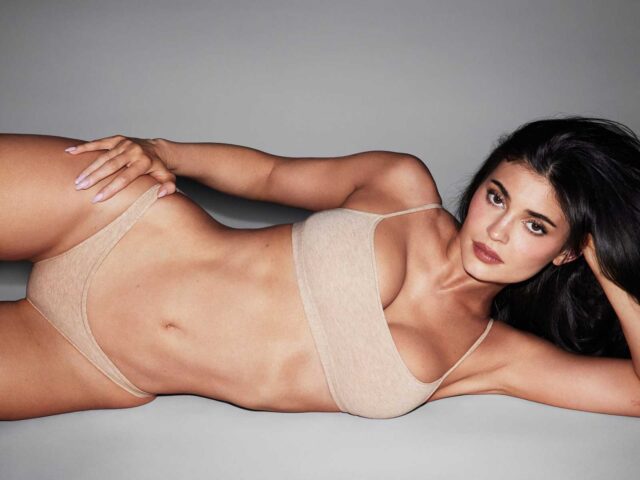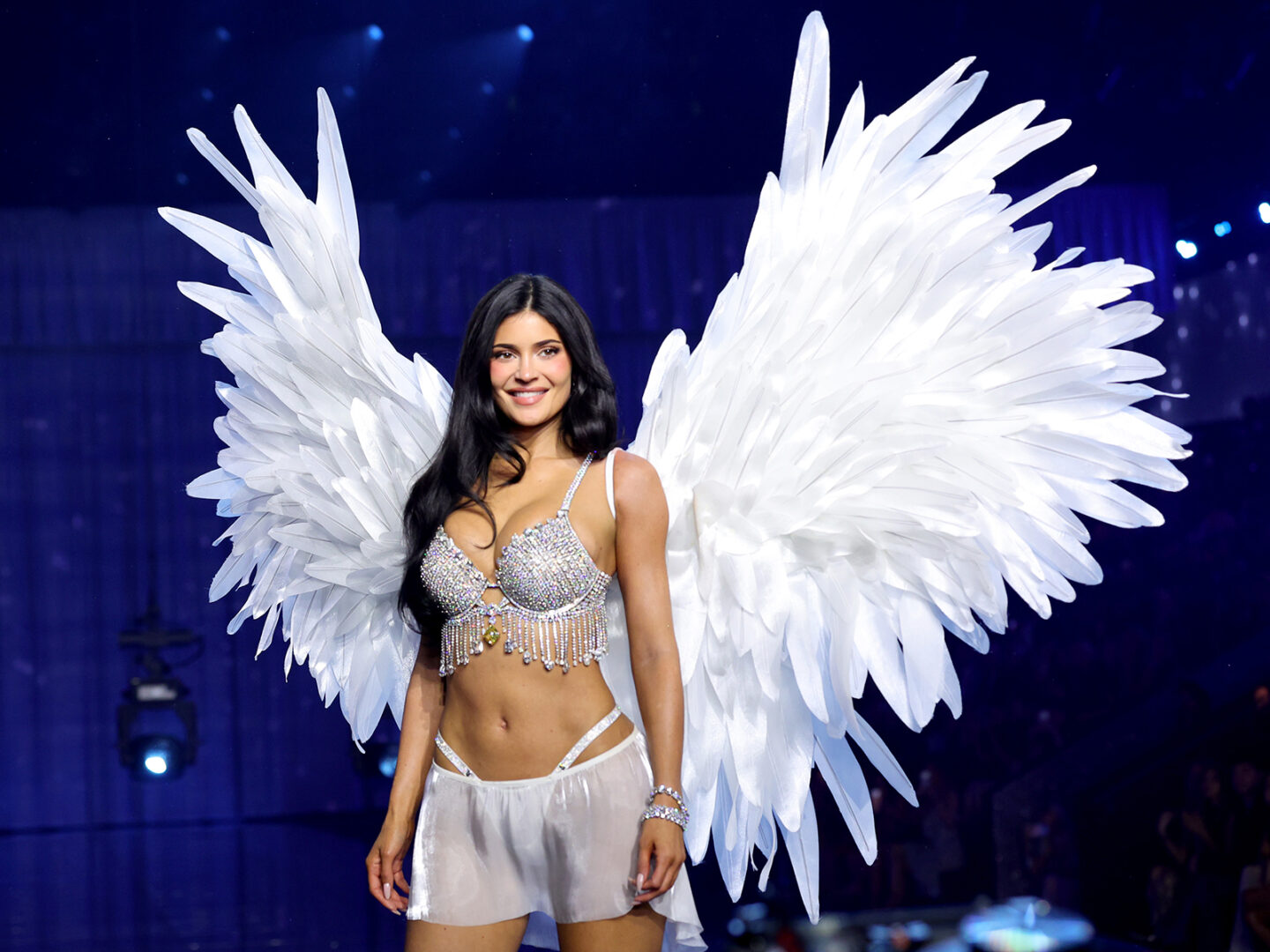
Wearing the Victoria’s Secret Fantasy Bra has always been one of the greatest honors a supermodel could aspire to. Claudia Schiffer, Gisele Bündchen, Tyra Banks, and Adriana Lima were among those chosen to wear a piece that, beyond its monetary value, represented the pinnacle of success in an extremely competitive industry. This year, that privilege has fallen to Kylie Jenner, a billionaire entrepreneur whose career has not been built on the runway. And it didn’t take long for the internet to question the choice. Beyond whether Kylie Jenner deserves to wear the Fantasy Bra or not, what does this say about a society in which those who already possess money, fame, and power seem to have access to virtually any arena?
The Fantasy Bra was introduced in 1996 as the ultimate expression of Victoria’s Secret’s aspirational world. Claudia Schiffer was the first to wear it, and over the following decades, the privilege went to models who had dedicated a significant part of their lives to the profession. The piece served as a marketing tool, of course, but also as a symbol of recognition within the company itself. This year, however, Victoria’s Secret has revived the concept after an eight-year hiatus with a bra valued at $50 million and a model who had never walked the runway for the brand before.
As Diet Prada pointed out in its post, the controversy is particularly significant when considering Victoria’s Secret’s recent history. In 2018, Ed Razek, then the company’s chief marketing officer, argued in an interview with Vogue that transgender and plus-size models did not fit the fantasy the brand was selling. His remarks sparked a strong public backlash and became a symbol of an industry whose beauty standards were beginning to be openly questioned. In 2019, the fashion show was canceled and did not return to the runways until 2024, after several attempts to redefine its identity.
It is paradoxical that, just a few years after that crisis, Victoria’s Secret has decided to bring back its most extravagant symbol through one of the world’s most powerful celebrities. Because while the debate used to revolve around which women could be part of the fantasy, now it seems the question is how much media power is needed to star in it. The industry has shifted its narrative, embraced new body types, and revised some of its codes, but it continues to perpetuate a logic in which privilege determines who takes center stage.
Adam Selman, creative director at Victoria’s Secret, justified the choice of Jenner by describing her as a cultural powerhouse—a figure capable of transcending fashion and mobilizing massive audiences. And from a business perspective, the strategy makes sense. Kylie doesn’t need Victoria’s Secret to turn her into a star; it is the brand that needs to capitalize on her cultural relevance. This is a rather revealing power dynamic: for decades, brands helped build icons. Now they turn to already established icons to ensure their own visibility.
But there is something even more significant. Kylie Jenner represents a generation of celebrities for whom fame serves as a virtually universal credential. Being one of the most-followed people on Instagram allows them to build businesses, star in campaigns, grace magazine covers, and gain access to professional opportunities that traditionally required establishing a specific career path. This doesn’t mean these figures lack talent or entrepreneurial skills, but rather that their starting position allows them to accumulate opportunities that others can hardly access.
Fashion has never been a perfect meritocracy. Family names, connections, money, and physical standards have always shaped the careers of those who aspired to be part of it. Nor has the Fantasy Bra ever been an objective reward for hard work. But there is a difference between recognizing a model who has built her career within the industry and awarding one of its most important symbols to a celebrity whose main contribution is guaranteeing millions of impressions. When visibility becomes the dominant criterion, professional recognition runs the risk of being subordinated to media performance.
And perhaps that is where one of the great contradictions lies. We live in an era in which brands constantly talk about inclusion, diversity, and democratization, while the most extraordinary opportunities continue to be concentrated among an elite that accumulates ever-greater wealth, influence, and visibility. The privilege of billionaires no longer consists solely of buying what others cannot afford, but of gaining access to experiences, professions, and recognition that require years of dedication for everyone else.
The very choice of the most expensive Fantasy Bra in history is symbolic. In a context marked by economic inequalities and scrutiny of great fortunes, Victoria’s Secret once again presents a $50 million piece as the ultimate expression of fantasy. And it does so on the body of a woman who belongs precisely to that economic and media elite. Wealth ceases to be merely the material value of the object and becomes, in turn, a defining characteristic of the person who represents it.
Perhaps that’s why Diet Prada’s question makes so much sense: What happened? How did we go from questioning the ideals of beauty and power that Victoria’s Secret represented to embracing its most ostentatious fantasy without asking ourselves too many questions about what it means?
The industry may have learned to adapt its narrative to the cultural demands of the moment without completely changing the structures that determine who has access to recognition. Kylie Jenner didn’t invent these rules, nor is she responsible for the way the industry operates. She simply embodies, with particular clarity, an era in which success seems to grant access to new forms of success, regardless of the professional field. And perhaps that is the real controversy surrounding the Fantasy Bra: not that a billionaire is wearing a $50 million bra, but that even the symbols of professional recognition end up revolving around those who already have practically everything.
Sigue toda la información de HIGHXTAR desde Facebook, Twitter o Instagram
You may also like...